
In the 1780s Ferdinand IV built the Villa Communale, which originally housed the Farnese sculptures, and a large park from land reclaimed form the sea on the coast between Naples and the port of Mergellina. The Passeggio Reale, or Royal Promenade in the park, was originally reserved just for the nobility but was opened to the wealthy bourgeoise of Naples for special holidays such as the Festa di Piedigrotta, celebrated annually on 7th and 8th September.
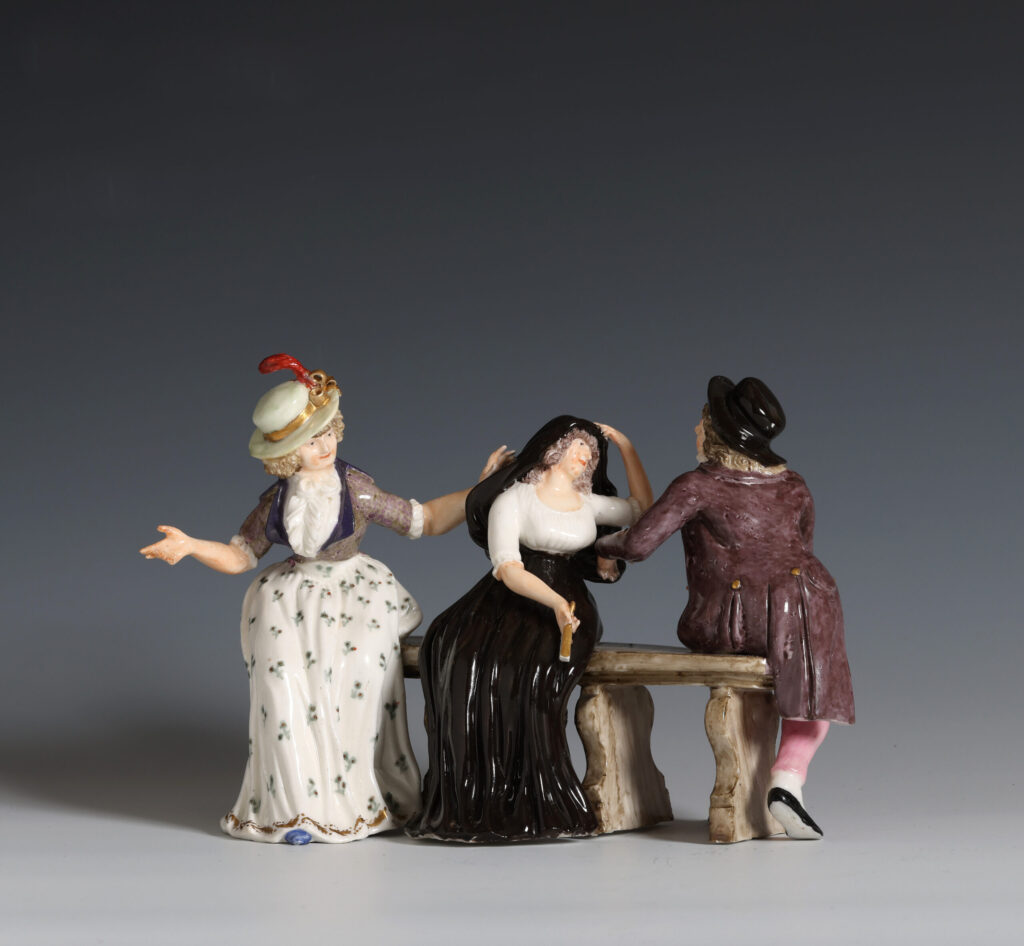
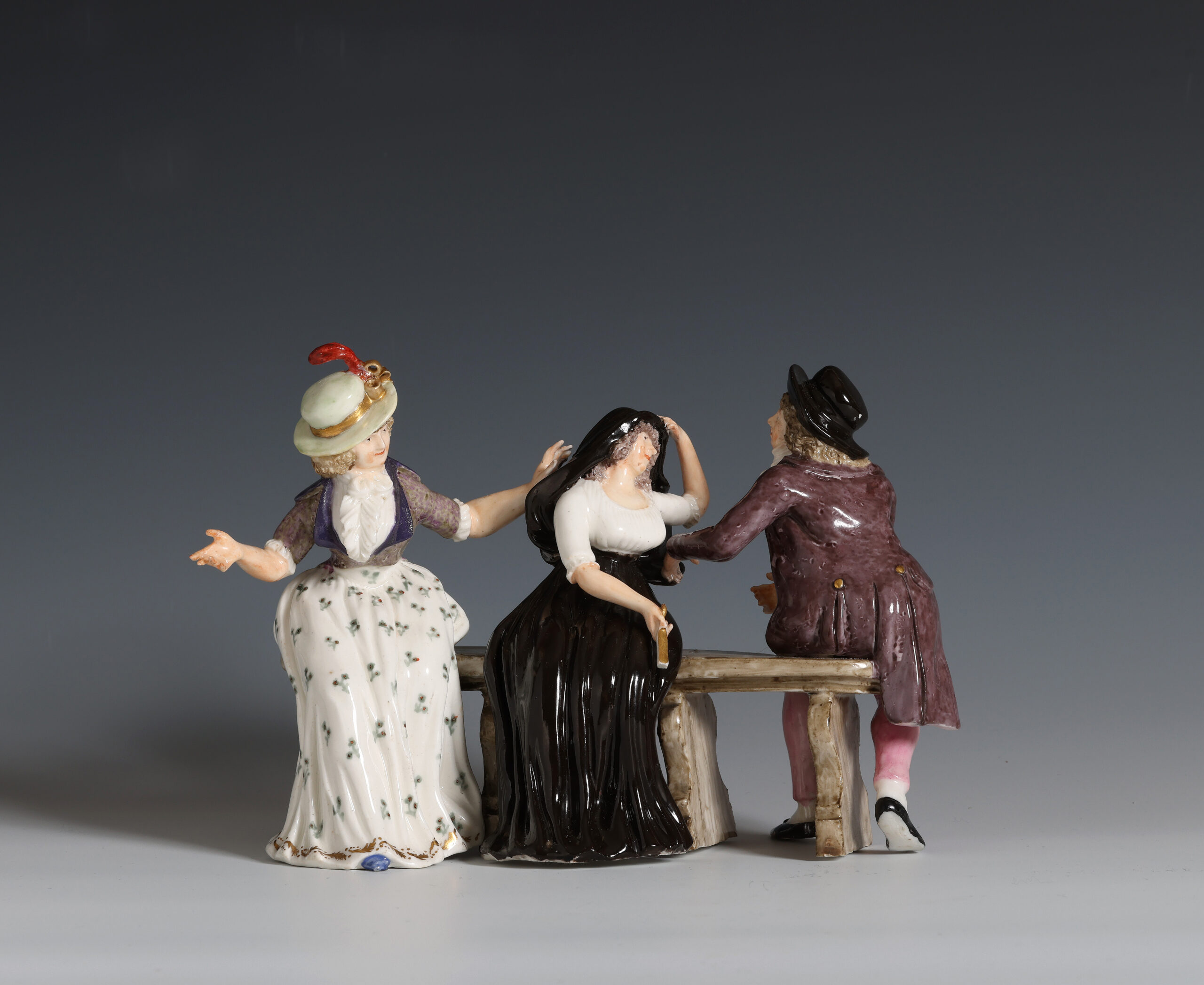
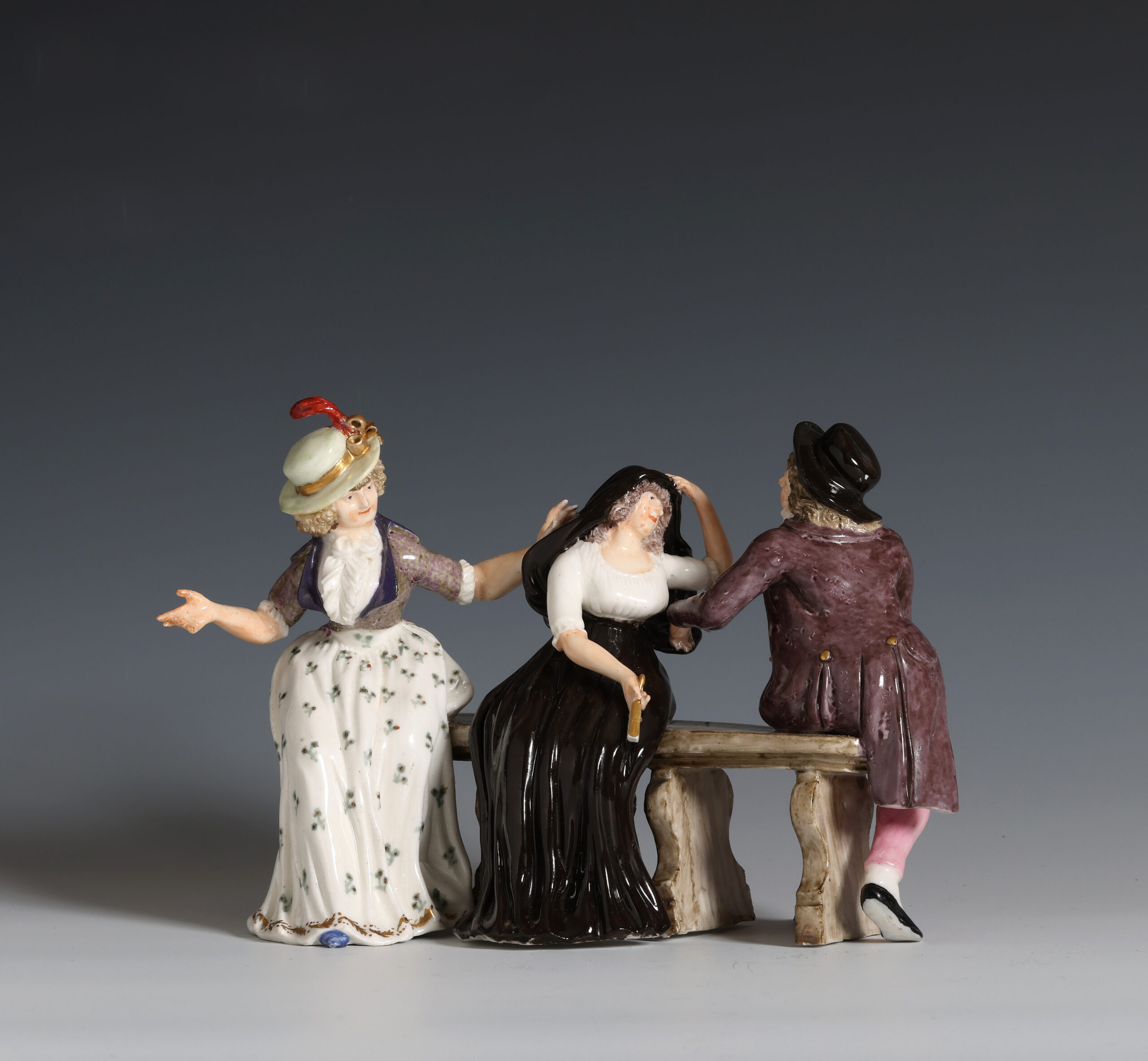
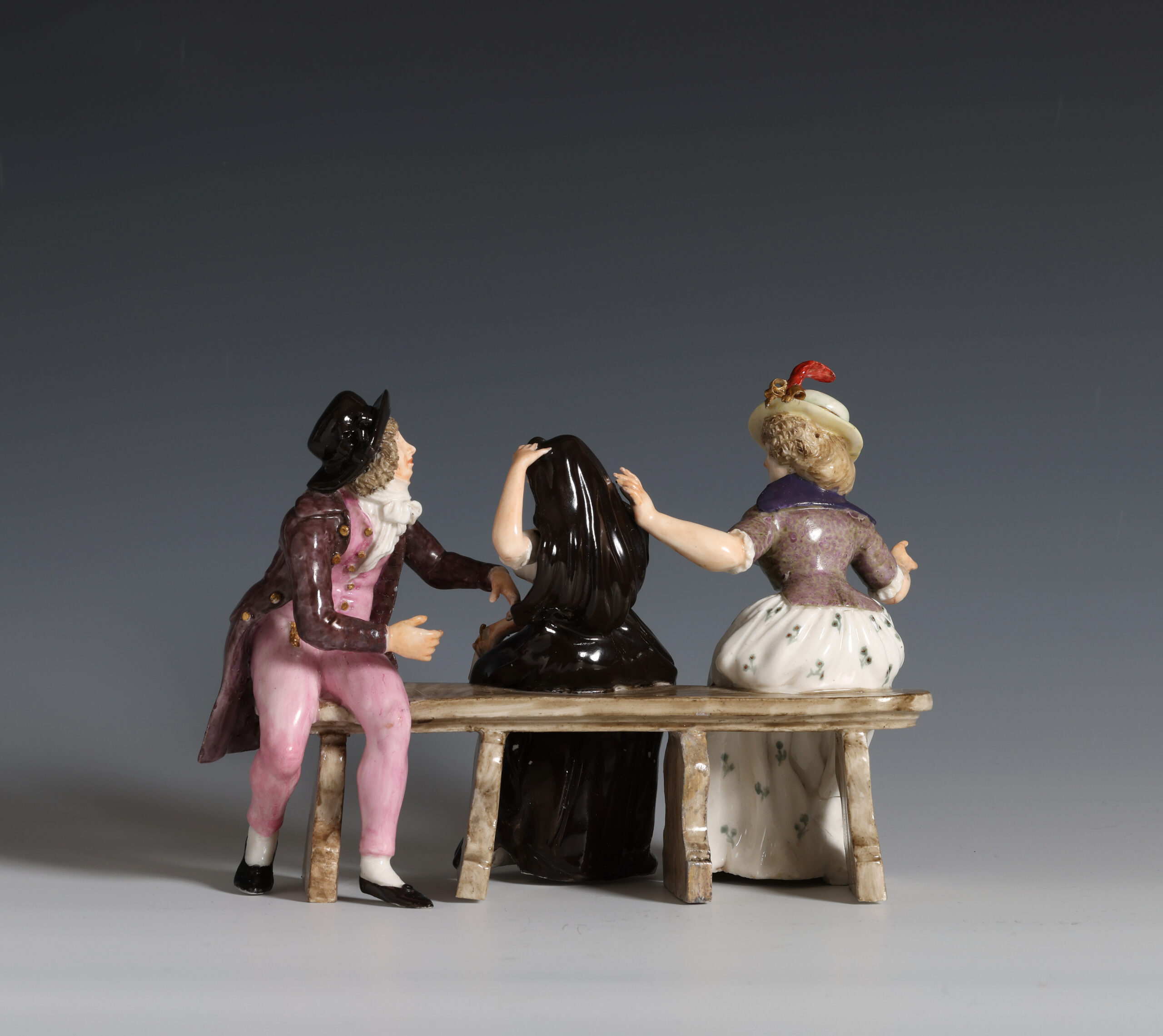
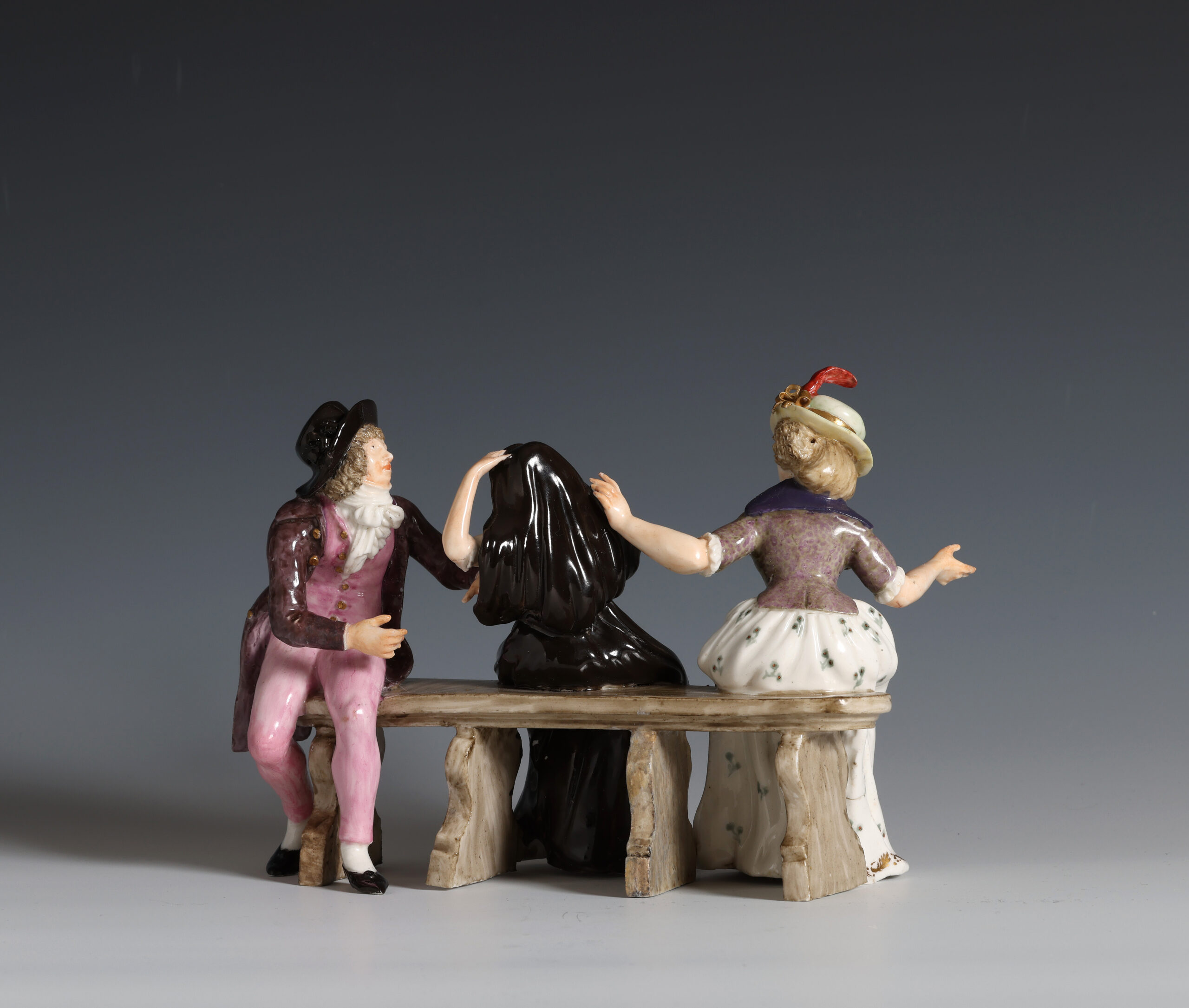
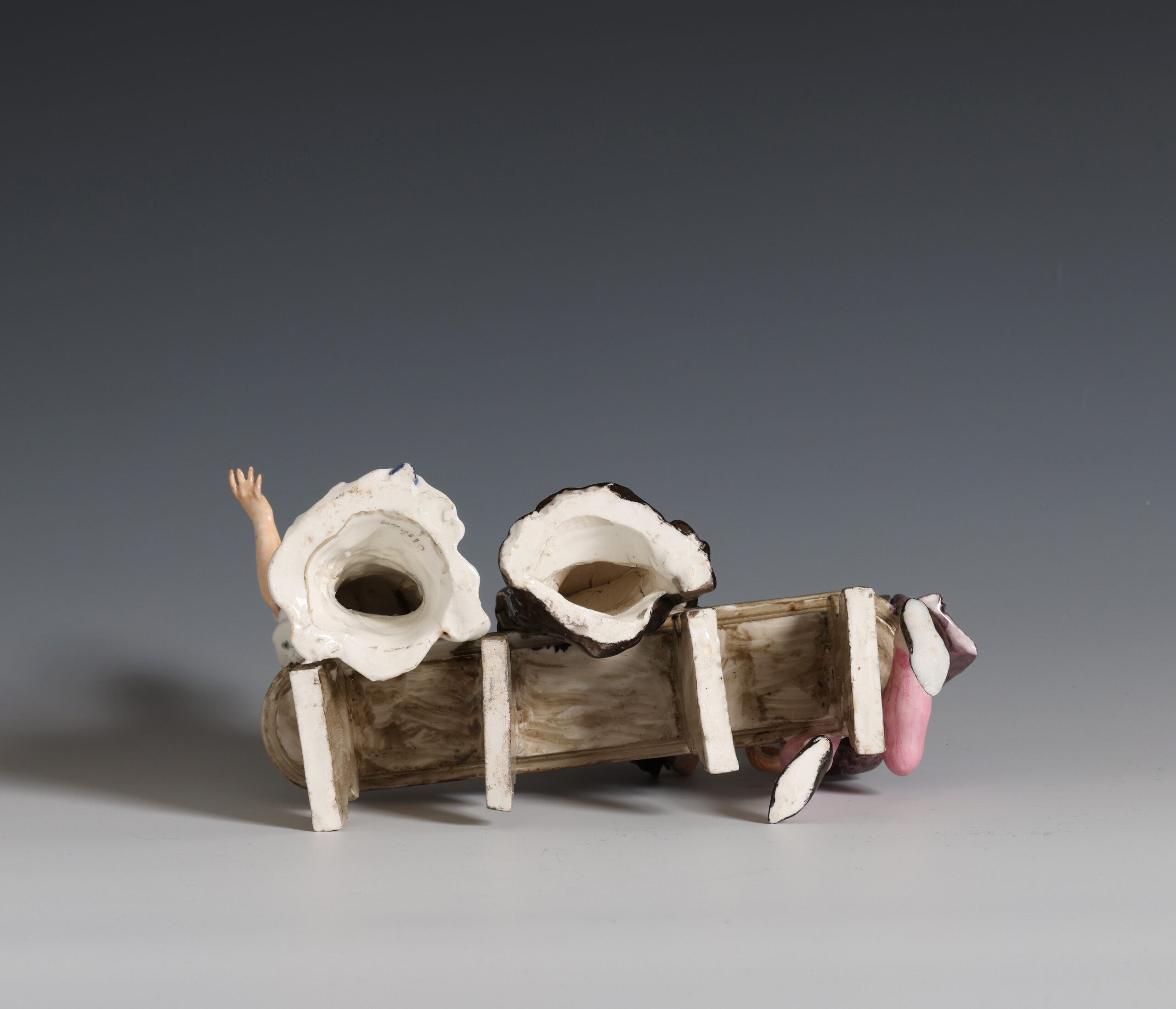
This seated group depicts a young lady meeting an admirer in the company of her chaperone. It is from the table decoration of the royal desert service commissioned by the king in 1792 from his porcelain factory, The Real Fabbrica Ferdinandea, to accompany the Servizio delle Vedute Napolitane also known as the Servizio del’Oca, one of the most important of the court commissions. This large table decoration depicted figures and groups representing the Neapolitan bourgeoisie promenading in the Real Passeggio in a gently satirical way.
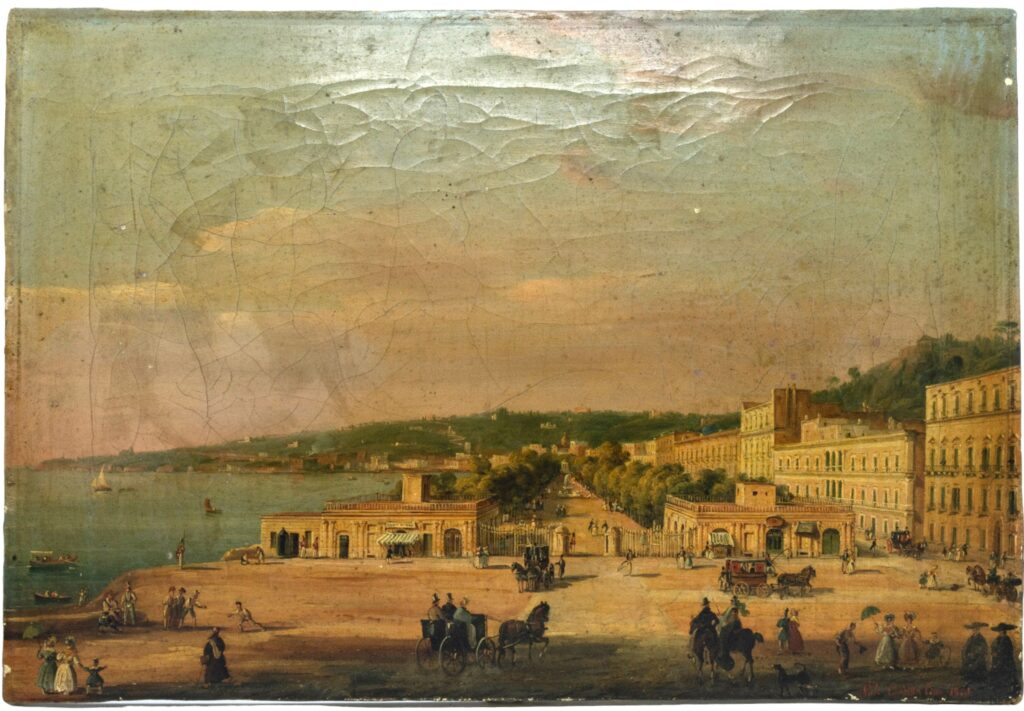
Salvatore Candido, ‘Real Passegio’, Naples
Ten of these groups from the royal service are known to survive; The present example, and four in the Museo e Gallerie Nazionali di Capodimonte from the De Ciccio bequest, two in the Capitoline Museum, Rome, two in the Legion of Honor Museum, San Francisco (which were acquired from us in 2019), and one in the Castello Sforzesco, Milan. One further fragment – half a group – is in a private collection. All but this current group and the one from the Castello Sforzesco are published by Angela Caròla-Perrotti, Le Porcellane dei Borbone di Napoli (1986), nos. 430 to 433. According to one source the service was also accompanied by 75 single figures. Ours may be the last example of such a bench group remaining in private hands.
The sculptor Filippo Tagliolini, the head modeller at the factory, is best known for his classical biscuit porcelain figures produced at Naples which largely copy the newly unearthed models from Pompeii and Herculaneum and famous works from the Farnese marbles in the Royal Collection. His versatility is only now becoming clear from his early training in Baroque Rome to some remarkable works produced in Venice for the Cozzi factory and in Vienna before his move to Naples in 1780. Alvar Gonzalez Palacios in the exhibition ‘Civiltà del ‘700 a Napoli’ (1979-80) attributed most of the popular sculpture in the Real Fabbrica Ferdinandea to him but Angela Caròla-Perrotti has argued convincingly that Tagliolini was only responsible for the more important royal commissions such as these pieces (for a full discussion see Angela Caròla-Perrotti, Le Porcellane dei Borbone di Napoli (1986), IV. 1. I modelli di Filippo Tagliolini p, 477 f.). Caròla-Perrotti also notes that the painter Giovani Battista Polidoro was paid to paint the figures for this service.
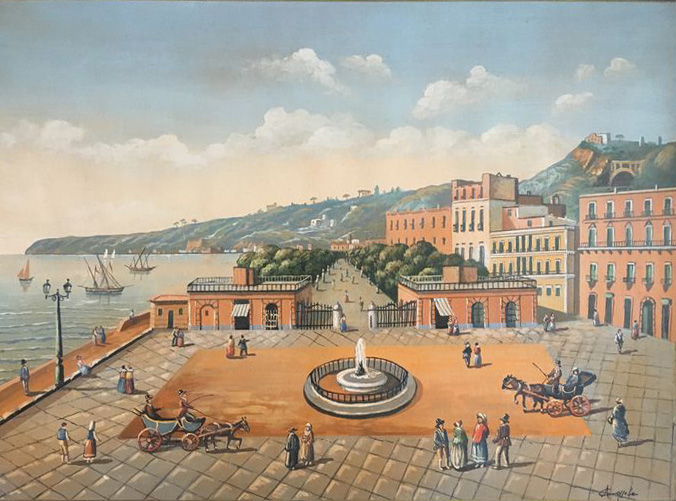
Saverio Della Gatta (active 1777-1827), Veduta della Villa Reale
The ladies are dressed in the fashions inspired by the style adopted by Marie Antoinette (Queen Maria Carolina’s sister) and her circle at the Petit Trianon. A chemise a la Reine or Gaulle which consisted of thin layers of muslin belted at the waist, sometimes worn with an apron or a shawl, just in the very years when their world in Paris was falling apart. The men are in the latest fashions adopted by the wealthy bourgeoisie.
Condition:
Lady with floral dress: fingers of right hand, feather and two loops of gilt bow, and tip of finger on left hand restored.
Man: right hand and leg from below knee restored.
One bench support has an old ceramic repair. Chip to another support restored.
Provenance:
With Segre Padre & Figlio, Rome (applied paper label)
Il Ponte Casa d’Aste, 16 April 2014, lot 256
Literature:
Caròla-Perrotti 1986
Angela Caròla-Perrotti, Le Porcellane dei Borbone di Napoli (1986)
SOLD