
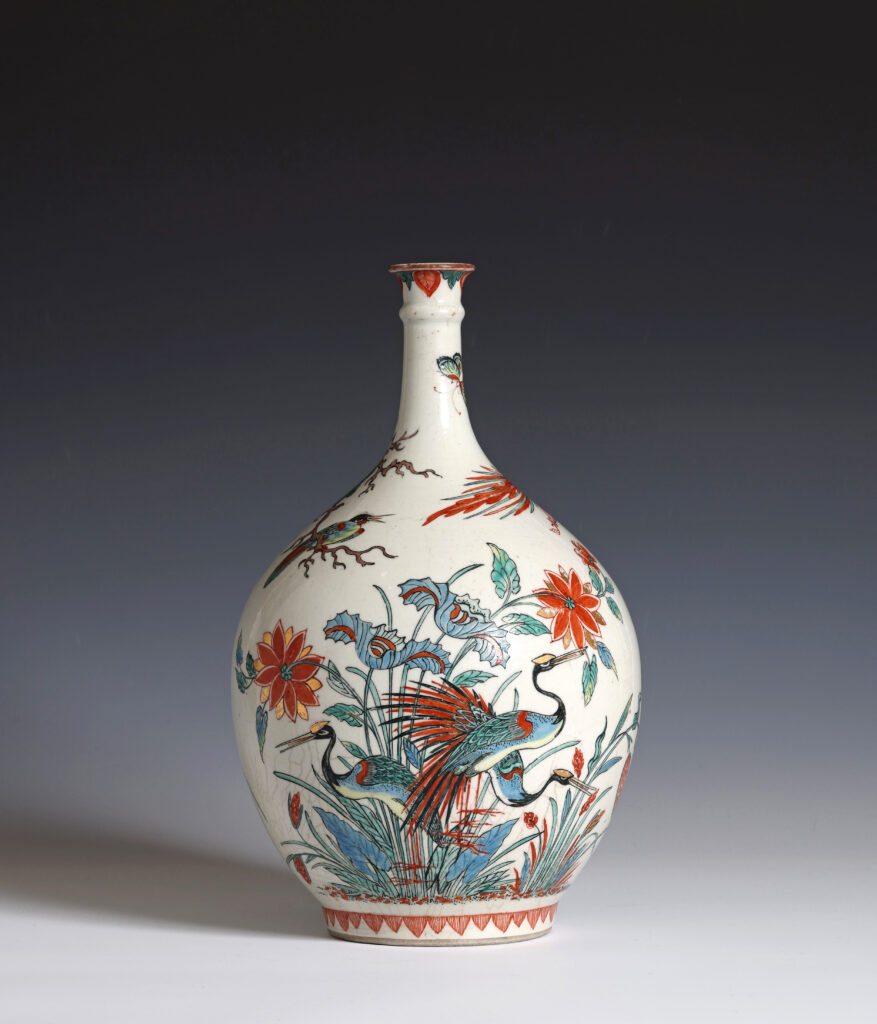
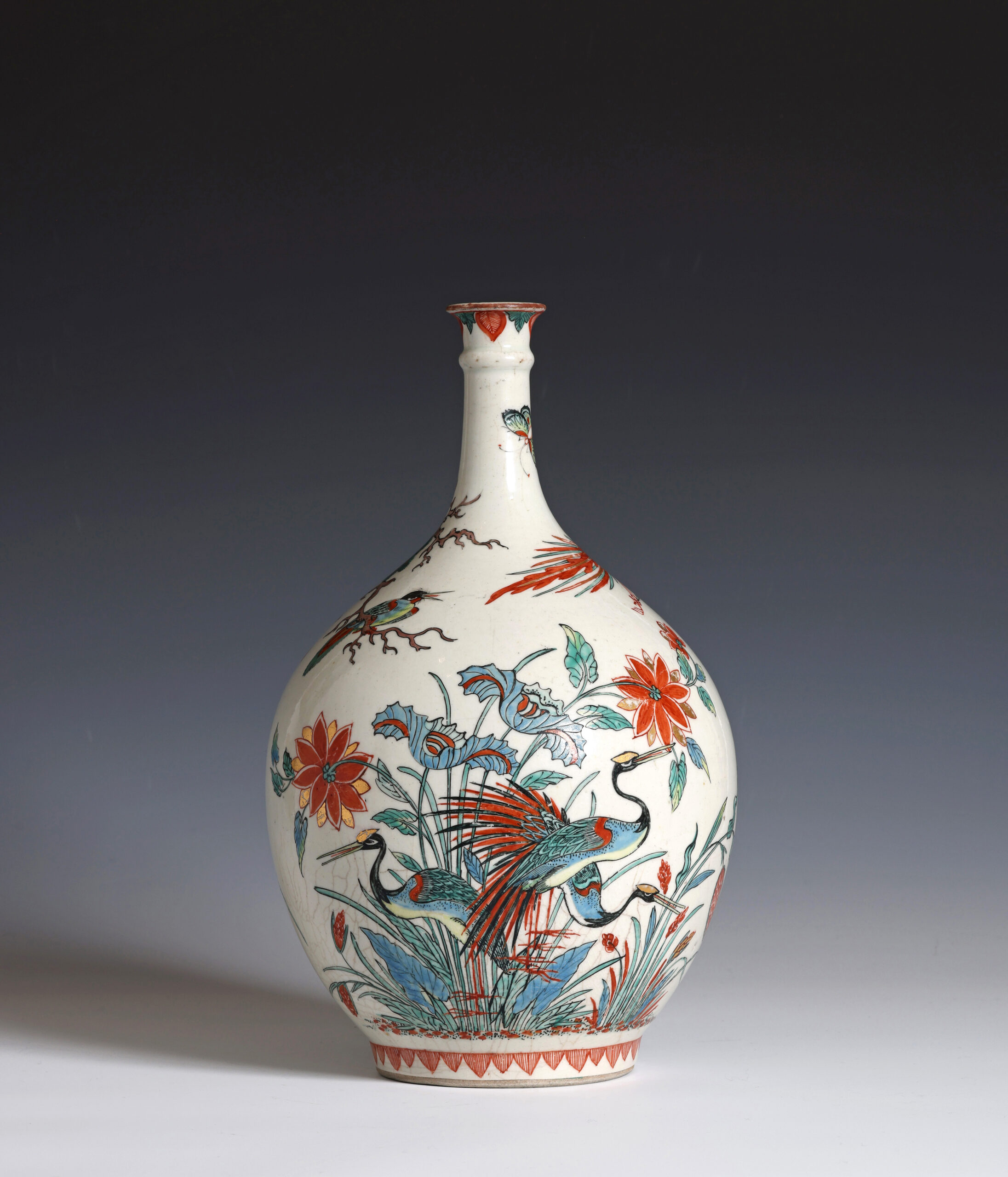
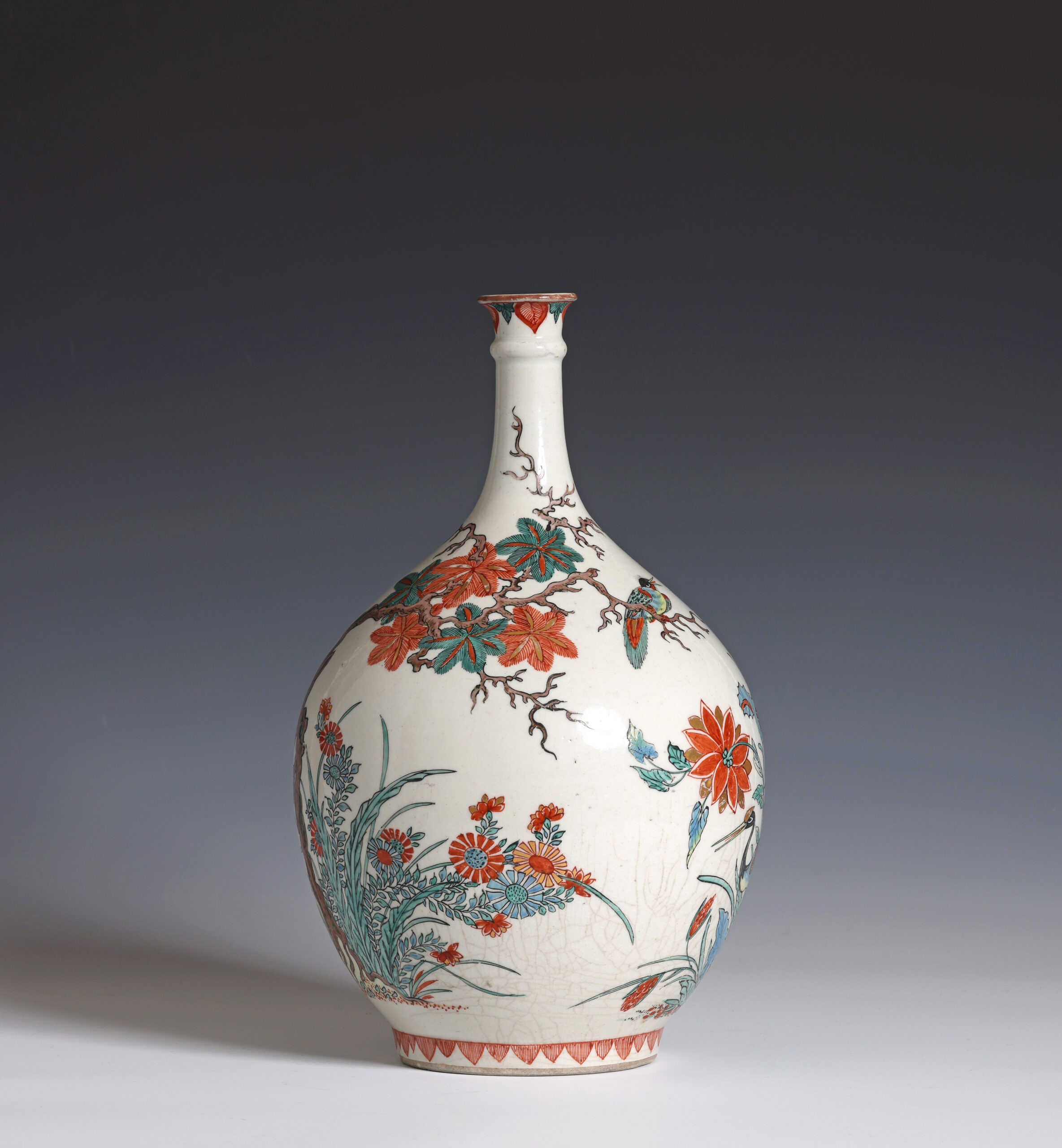
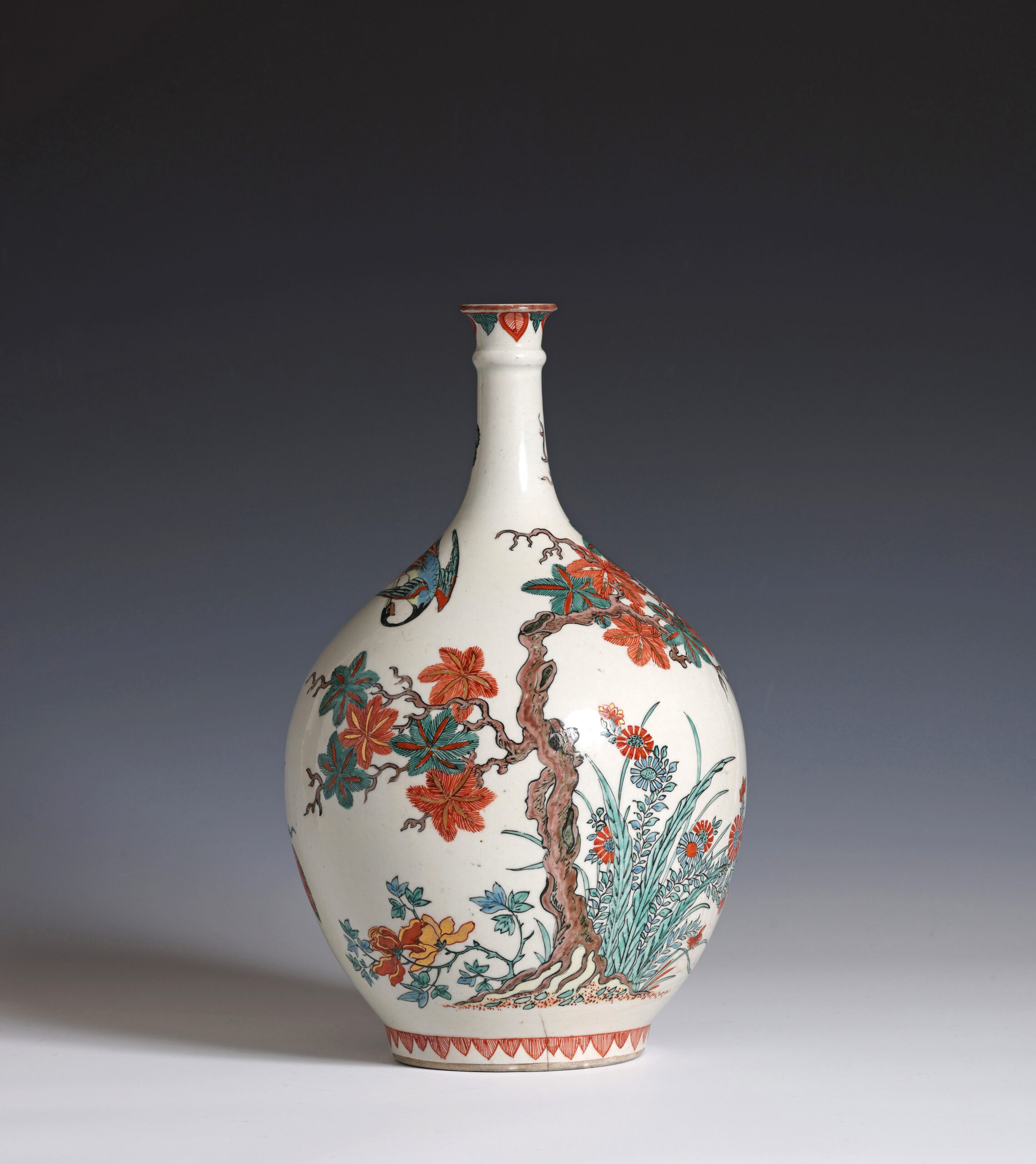
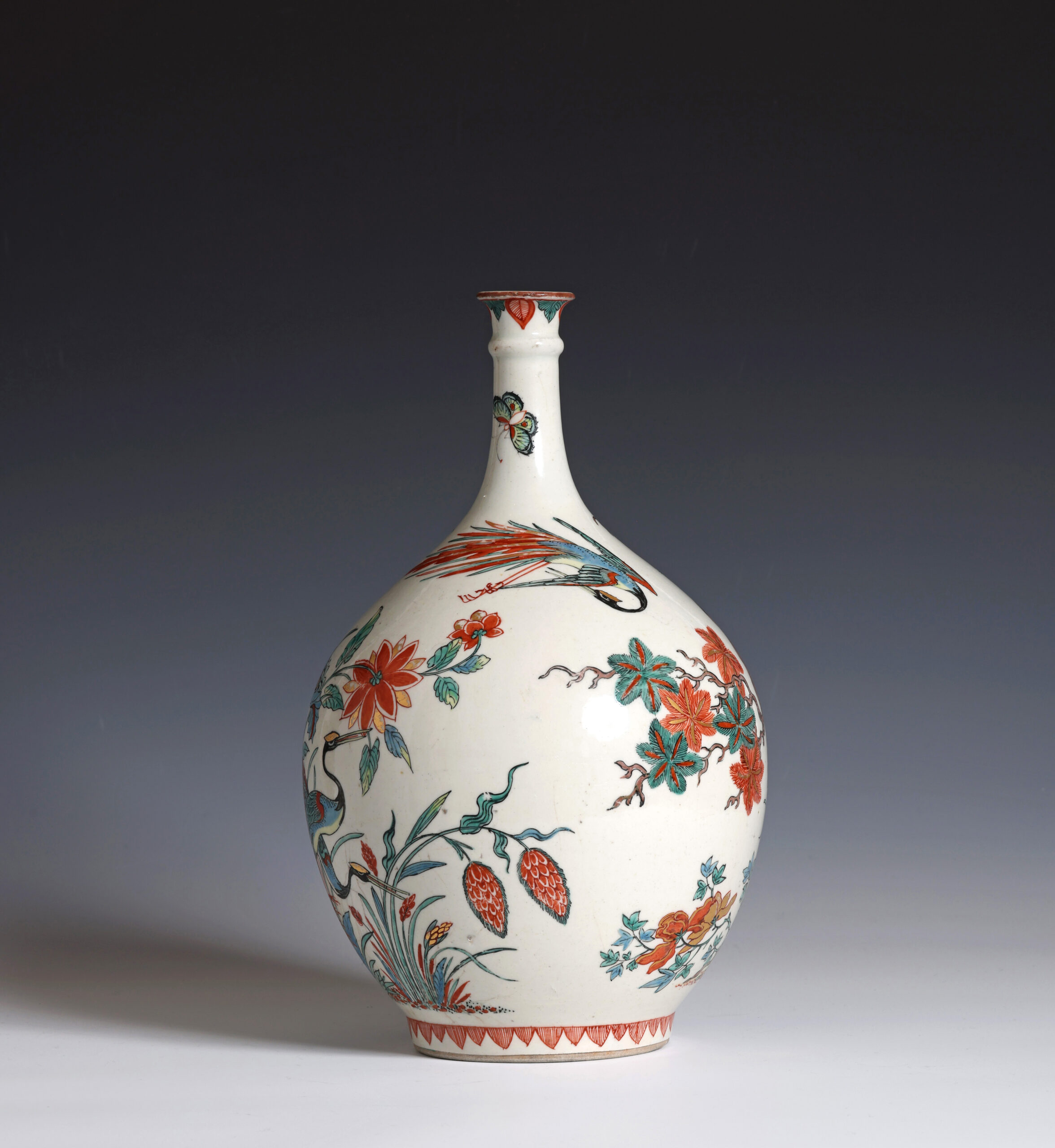
A LARGE DUTCH-DECORATED ARITA BOTTLE VASE
The porcelain Japan, circa 1690
The decoration, the Netherlands circa 1710-30
31.6 cm high
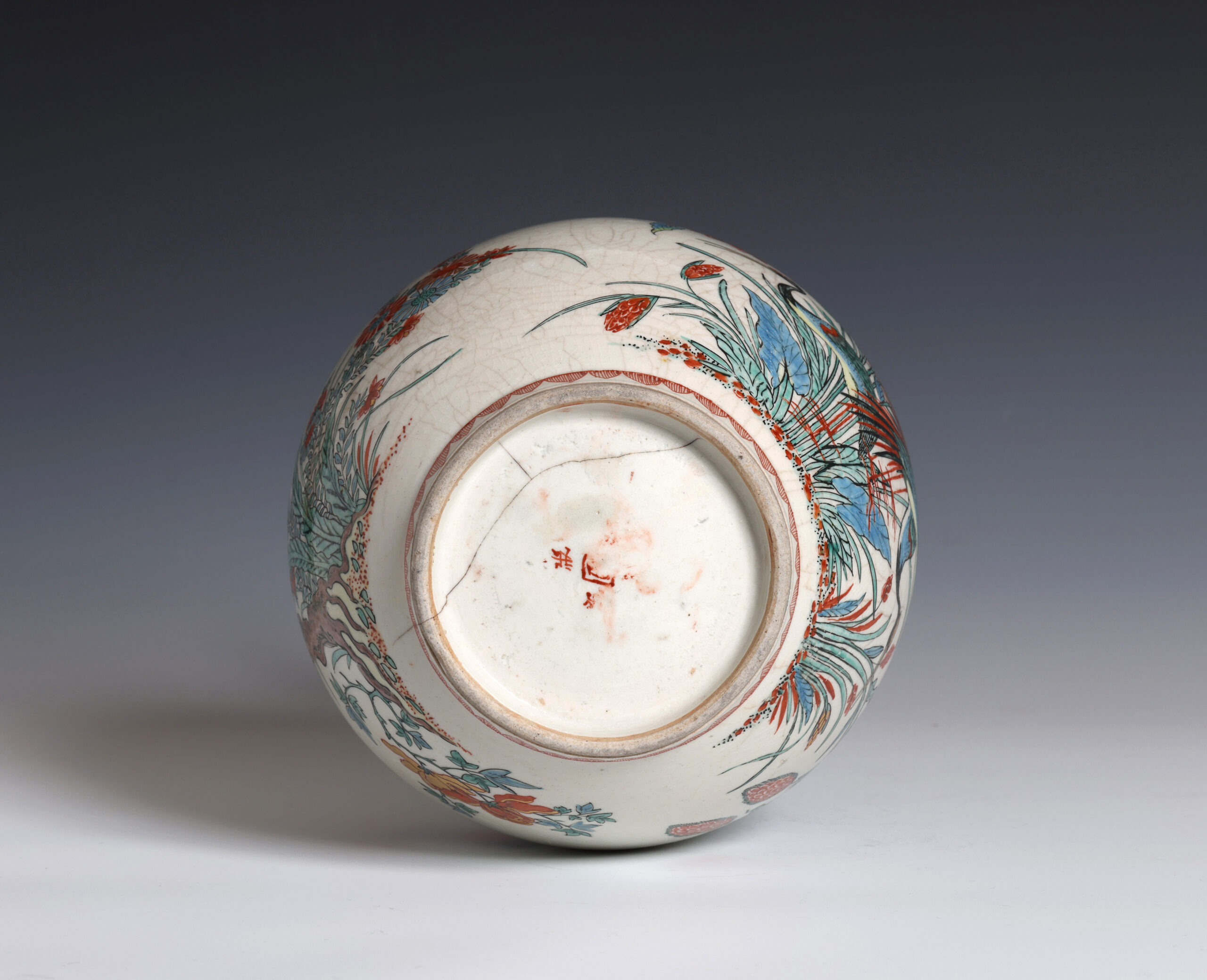
Iron-red pseudo-Chinese mark
Boldly decorated with three storks amongst lotus, and further birds, plants and trees.
The supplies of true Kakiemon porcelain from Japan had dwindled by the end of the 17th century, yet it was still the most sought-after type of porcelain amongst the great collectors of France and Germany causing prices to rise. The Dutch enamellers were quick to take advantage of this booming market by producing brilliant imitations which are characterised by a greater density of decoration than the Japanese originals.
They used whatever undecorated porcelain that was available, Chinese, Meissen or, as in this case, Japanese Arita porcelain.
For other examples of large Dutch decorated flasks and vases see Impey 2003, nos. 281-283 and Jörg 2003 nos. 279 & 280.
Condition:
Body crack within the footrim, extending 2.5 cm up the side. Some stained brown crazing to areas of the glaze.
Provenance:
With Robert McPherson Antiques, 2009
Peter & Mary White Collection
Literature:
White 2021
Mary and Peter White, Drinking at the White’s House, 2021, Vol.2, p.72, fig.c
References:
Espir 2005
Helen Espir, European Decoration on Oriental Porcelain: 1700-1830, (Jorge Welsh Books, 2005)
Impey 2002
Oliver Impey, Japanese Export Porcelain: Catalogue of the Collection of the Ashmolean Museum, Oxford, (2002)
Jörg 2003
C.J.A. Jörg, Fine and Curious, Japanese Export Porcelain in Dutch Collections, (2003)
SOLD