


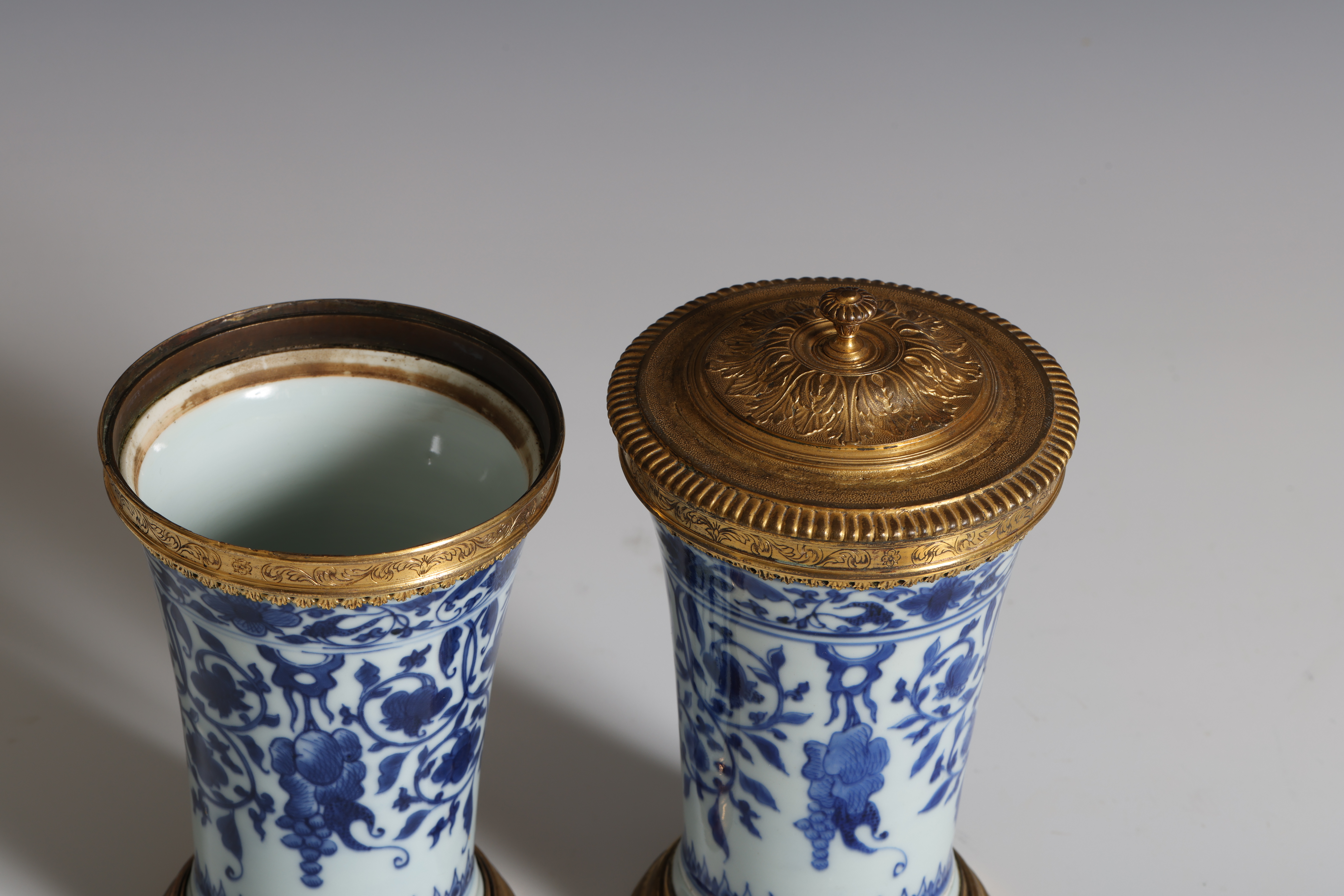

Christiaan Jörg has suggested that this form of beaker is perhaps the first model ordered by the Dutch East India Company, the VOC, directly from the Chinese.[i]
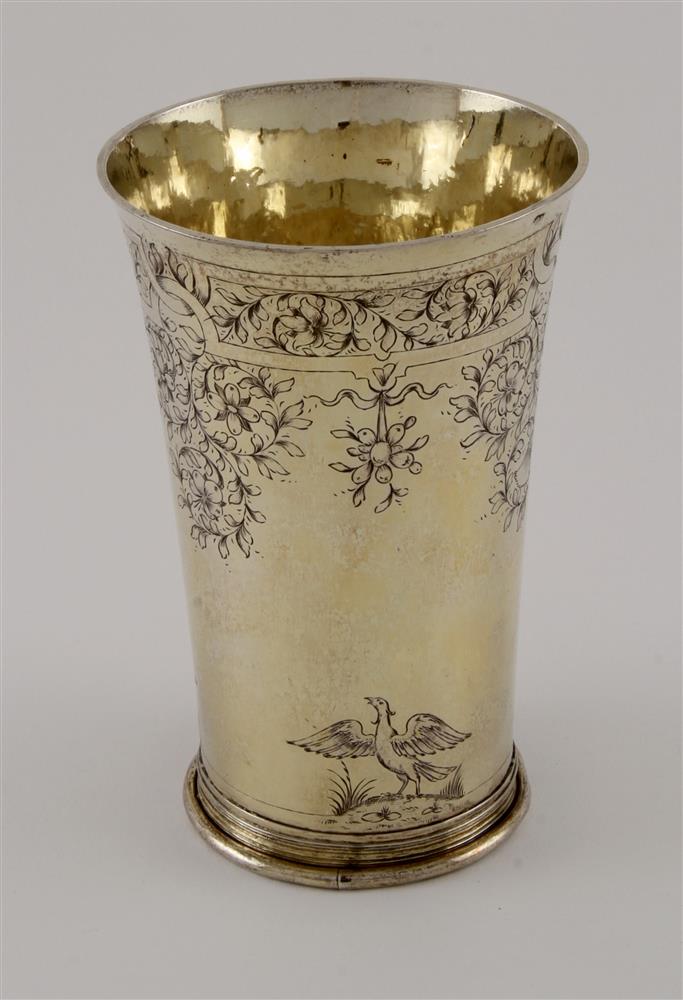
Silver with later gilding by Evert van Kapel, 1643, 17 cm high
Nederlands Zilver Museum Schoonhoven
After establishing a base and a fortress in Taiwan, then called Formosa, in around 1624, it still took the Dutch another ten years to gain access to the porcelain producers in mainland China. Beakers were described in VOC records as desirable objects to sell in the Netherlands and in 1639, for instance, a variety of 1552 beakers were sent from Formosa to Batavia. The directors of the VOC ‘The Heeren XVII’ in Amsterdam ordered 200 large and small beakers, all without covers.[ii]
Most beakers were decorated with Chinese figures, but ours follow the form and engraved design of a type of silver drinking beaker that was developed from around 1720 and remained popular until the end of the century. They are sometimes incorrectly referred to as chalices, although some were subsequently used as such. The painted decoration of three pendant flower scrolls divided by bunches of grapes below a band of ornament follows the Dutch silver originals closely.
Jörg argues that the VOC would have sent carved wooden versions to the Chinese potters in Jingdezhen, or perhaps pewter examples, rather than silver itself.[iii]

Willem Claesz Heda, (Haarlem 1594 – 1680/2)
A still life with a silver beaker and watch, 1638
Oil on panel, 40 x 29.5 cm
Courtesy of Bijl Van Urk Galleries, Alkmaar, The Netherlands
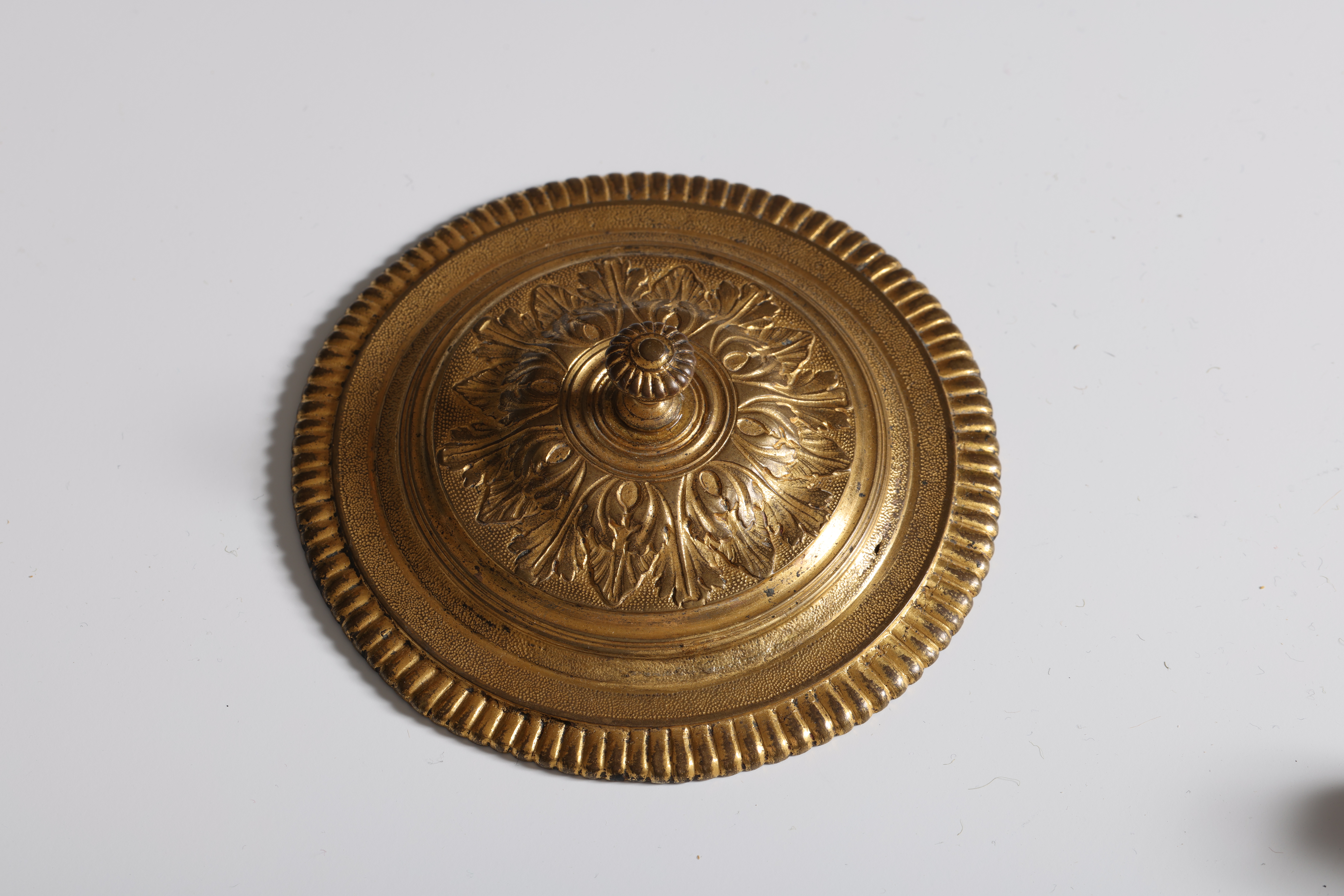
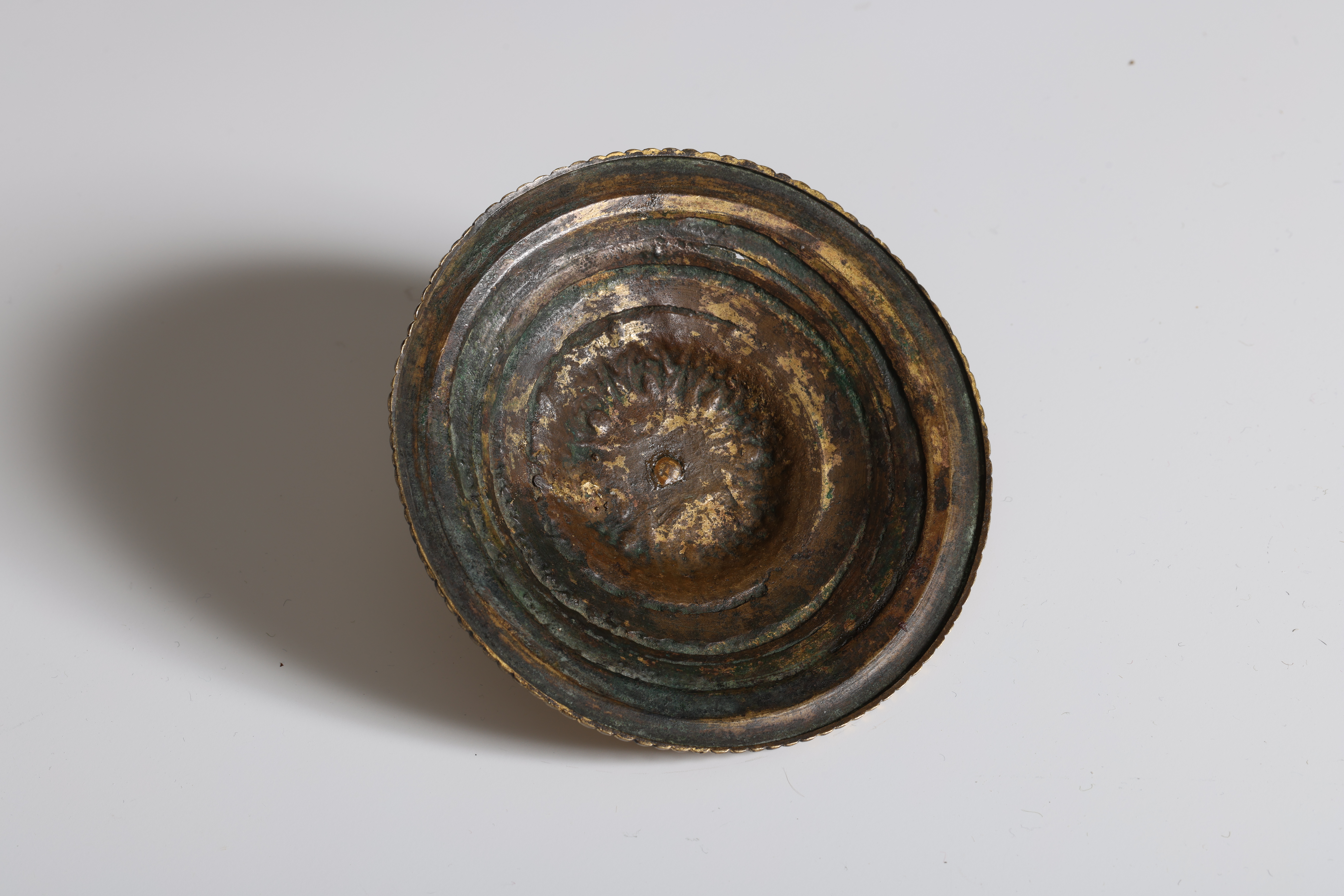
The gilt bronze mounts were added on the second half of the 17th century. It is difficult to be certain where; it could have been in The Netherlands or Germany and the cast and chased covers are similar to French work of the period.

A mounted Chinese beaker with a later cover
The Bayerisches National Museum, Munich
Another mounted Chinese example from the Wittelsbach Royal Collection with mounts attributed to Paris is in the Bayerisches National Museum, this has the addition of a later lid.[iv]
Condition:
The porcelain with minutes frits to edges.
One bronze finial reattached, restoration and regilding to four small areas of old solder repair. One cover is slightly loose and stabilised with museum wax.
Provenance:
The Fanny and Benard Watel Collection, Lausanne, Switzerland and by descent
References:
Jörg 2016
Christiaan J.A. Jörg, ‘A Beaker of Transitional Porcelain, the first Chine de Commande for the Dutch?’, Vormen uit Vuur, no. 232, 2016/3
———————————————————————————————————————————————————————–
[i] Jörg 2017 pp. 16-21.
[ii] Jörg 2017 pp. 18.
[iii] Jörg 2017 pp. 19.
[iv] https://www.bayerisches-nationalmuseum.de/en/collection/00012546 this is described as Kangxi period, but is presumably somewhat earlier.
RESERVED