

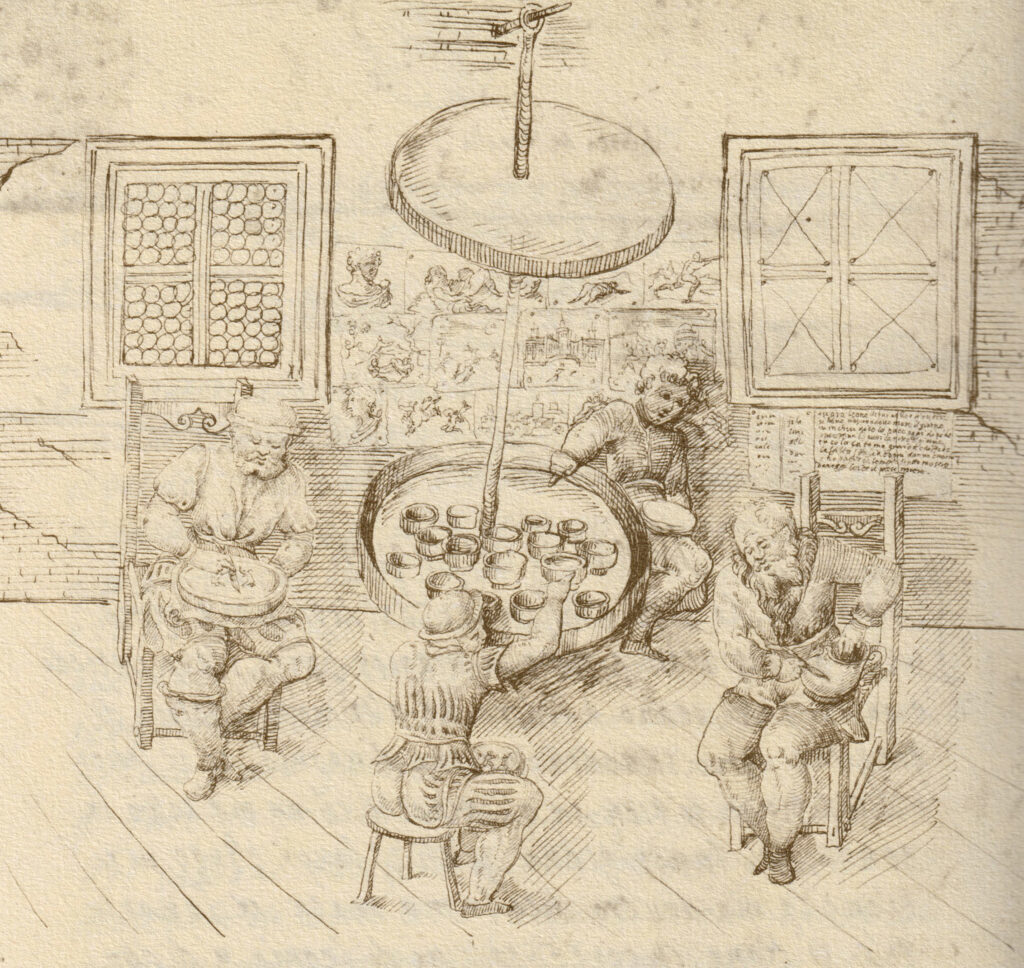
Drawing from: Cipriano Piccolpasso, Li tre libri dell’arte del vasaio, circa 1557
The Victoria and Albert Museum
Writing in 1557 Cipriano Piccolpasso illustrates a drawing of a maiolica painting workshop with a description of the ‘Manner of Painting’:
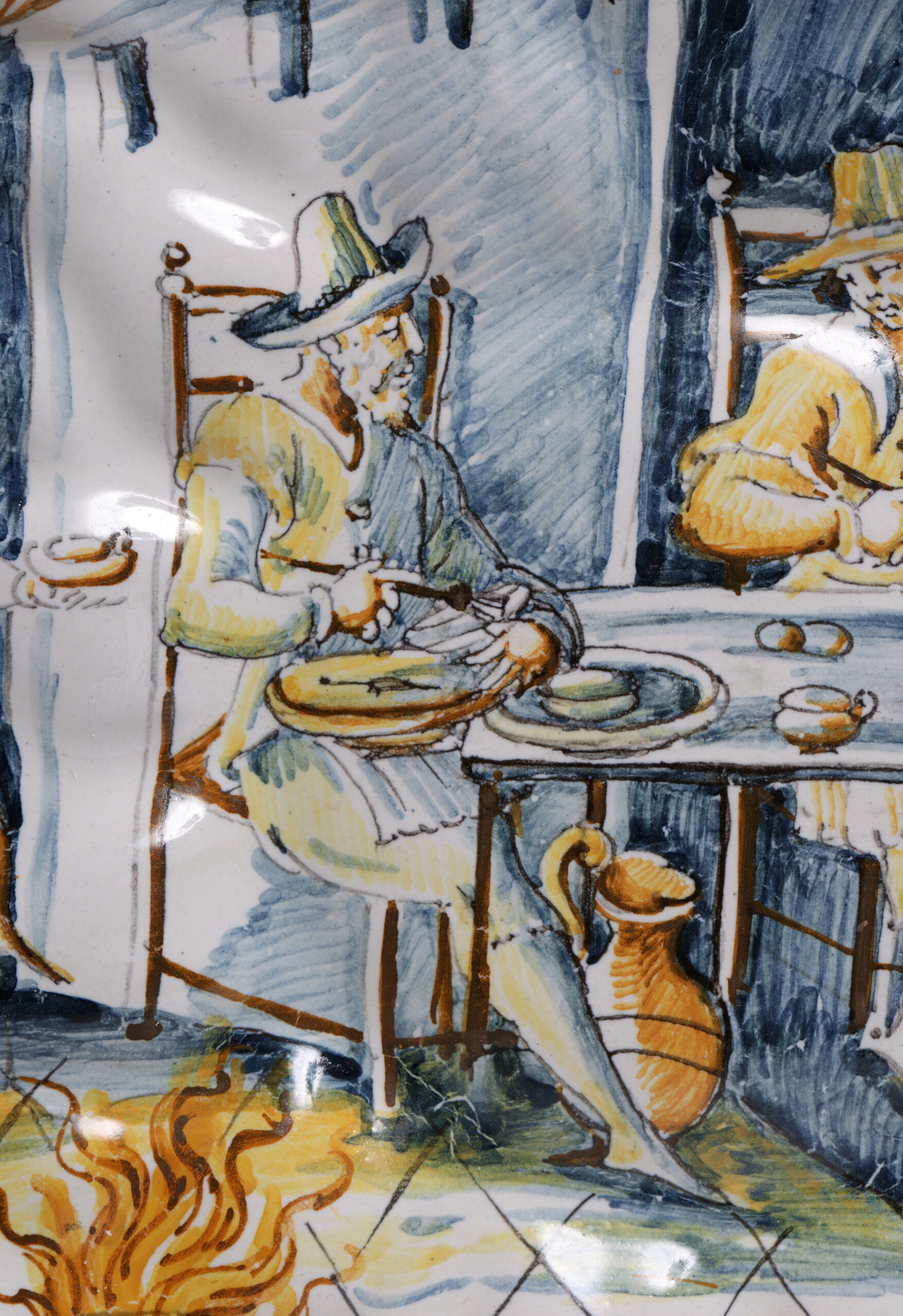
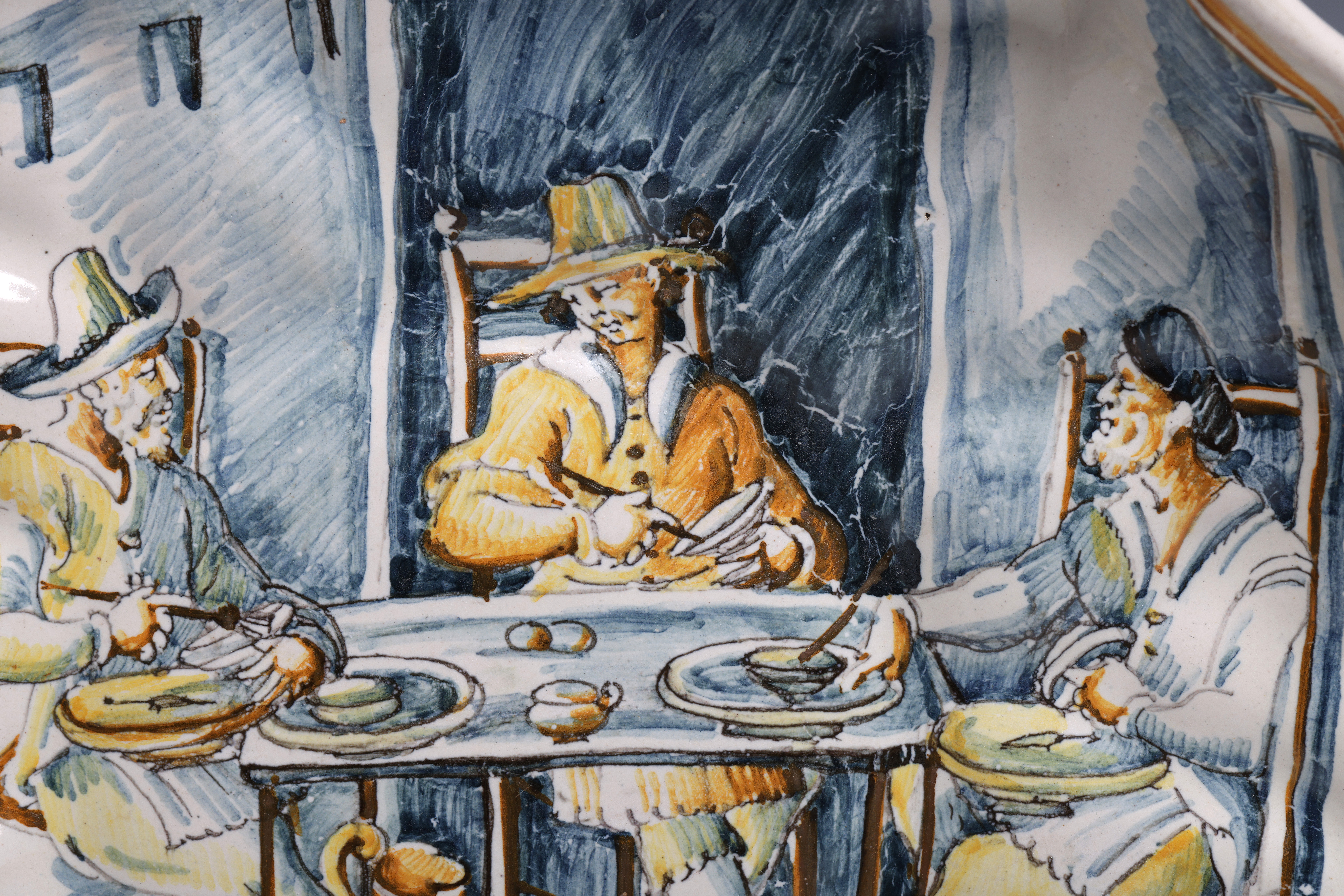
“Painting on pottery is different from painting on walls, since painters on walls for the most part stand on their feet, and painters on pottery sit all the time; nor could the painting be done otherwise, as will be seen in the drawing of it; and the ware that is being painted is held on the knees with one hand beneath it, I mean the flat ware, for the hollow ware is held with the hand inside it, I mean the left hand. Fine ware is held in certain wooden pans a finger’s width larger than the dishes; hollow wares are held by the foot on the left knee. Under the fine wares, that is, between the [wooden] pan and the ware, should be put some tow, so that in turning it round for painting the ware may not shift inside and be scratched, inasmuch as the white is tender”.[1]
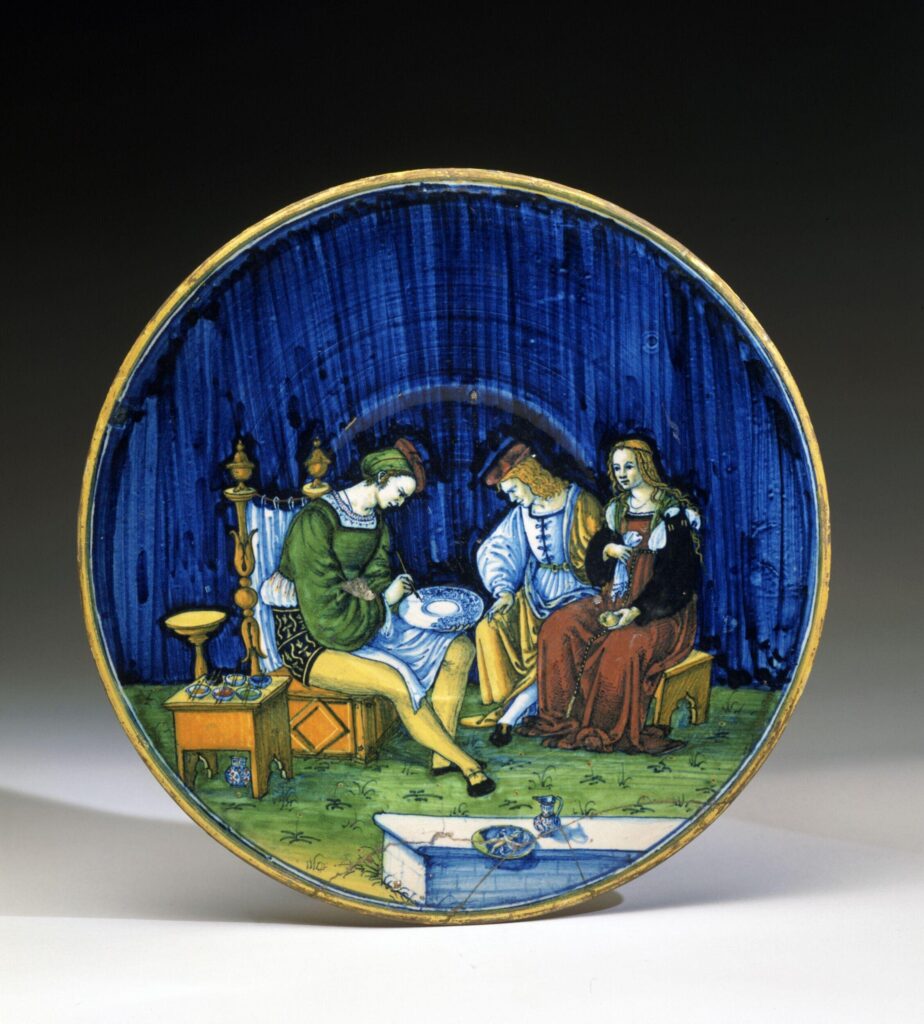
Cafaggiolo, by Maestro Jacopo circa 1510
The Victoria & Albert Museum
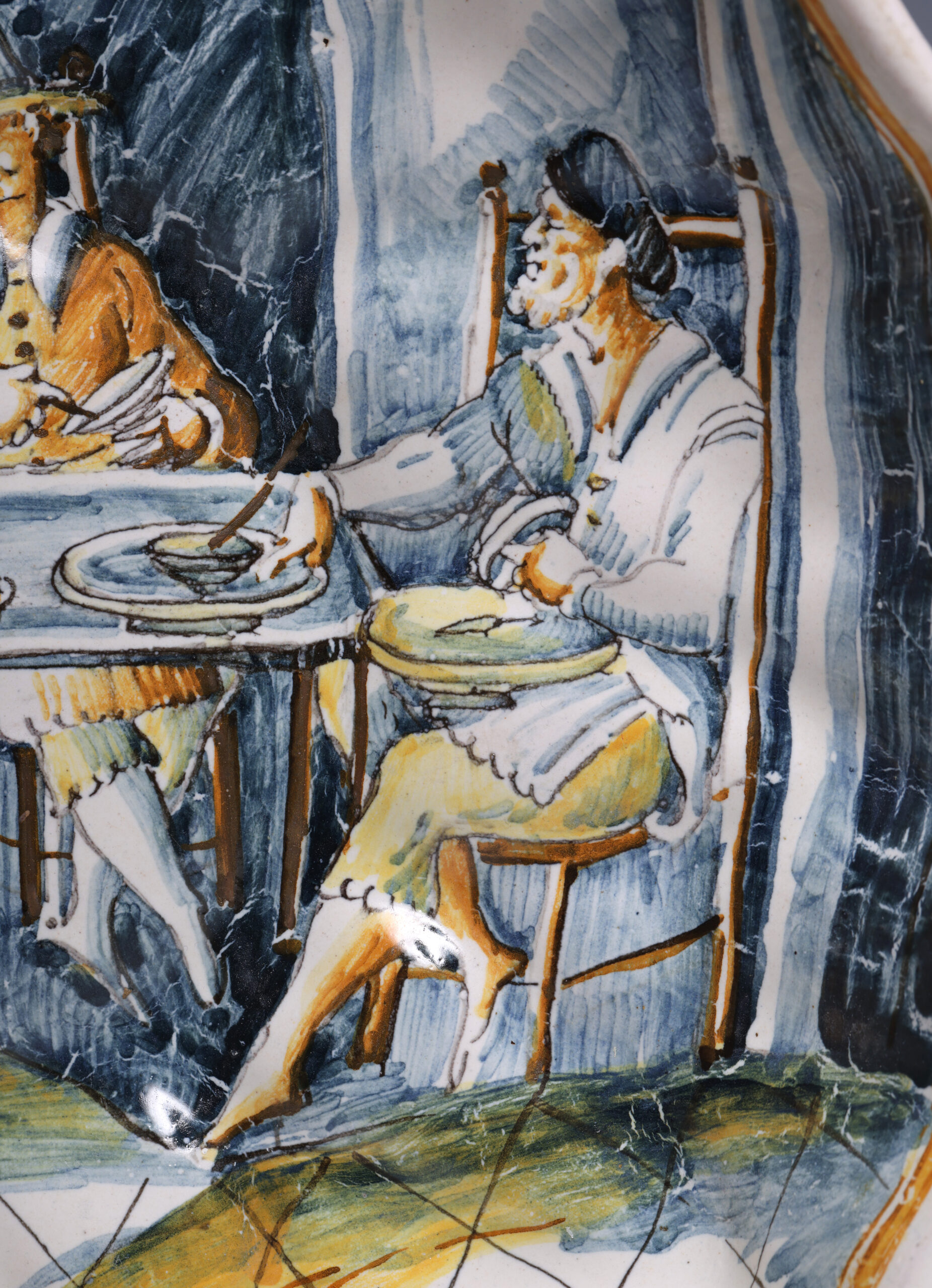
Only two further depictions of the painting of maiolica exist. The most famous being the Cafaggiolo dish the Victoria & Albert Museum, painted by Maestro Jacopo in around 1510 and a tile from the Vaselli Chapel in San Petronio in Bologna.
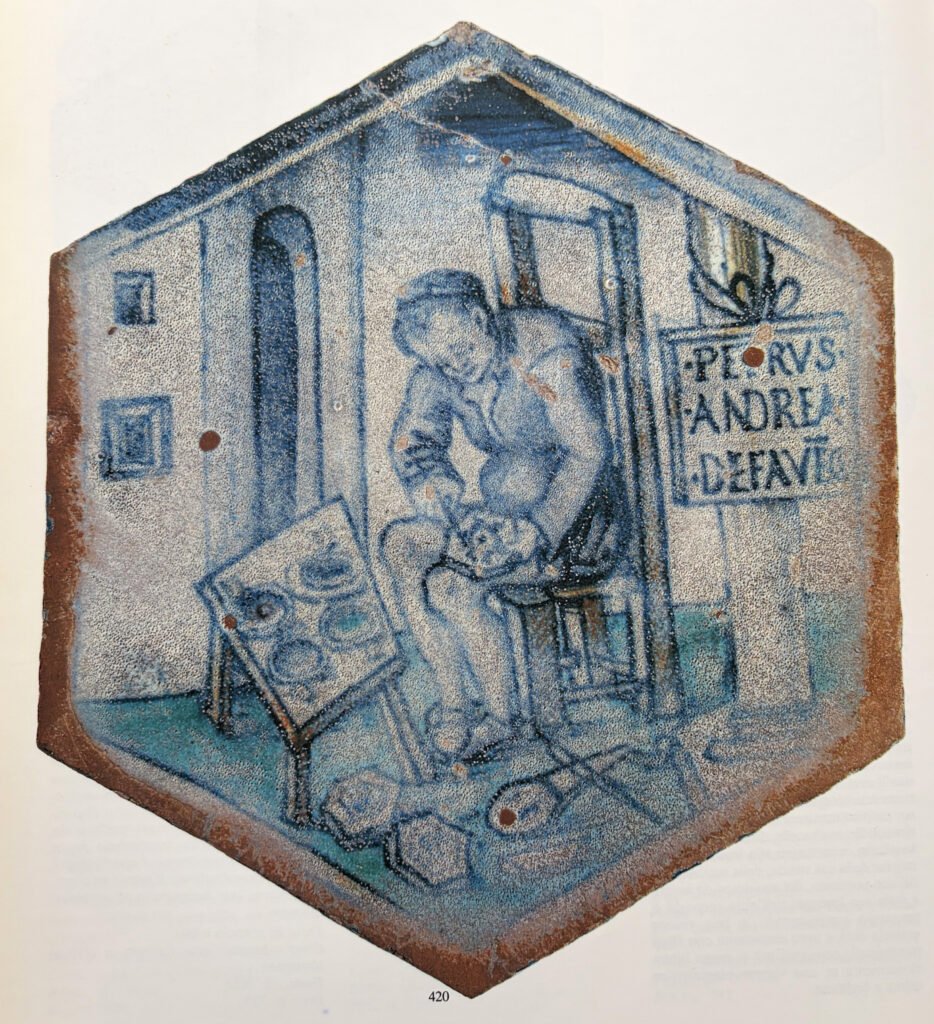
Tile from the Vaselli Chapel in San Petronio in Bologna, end of the 15th century
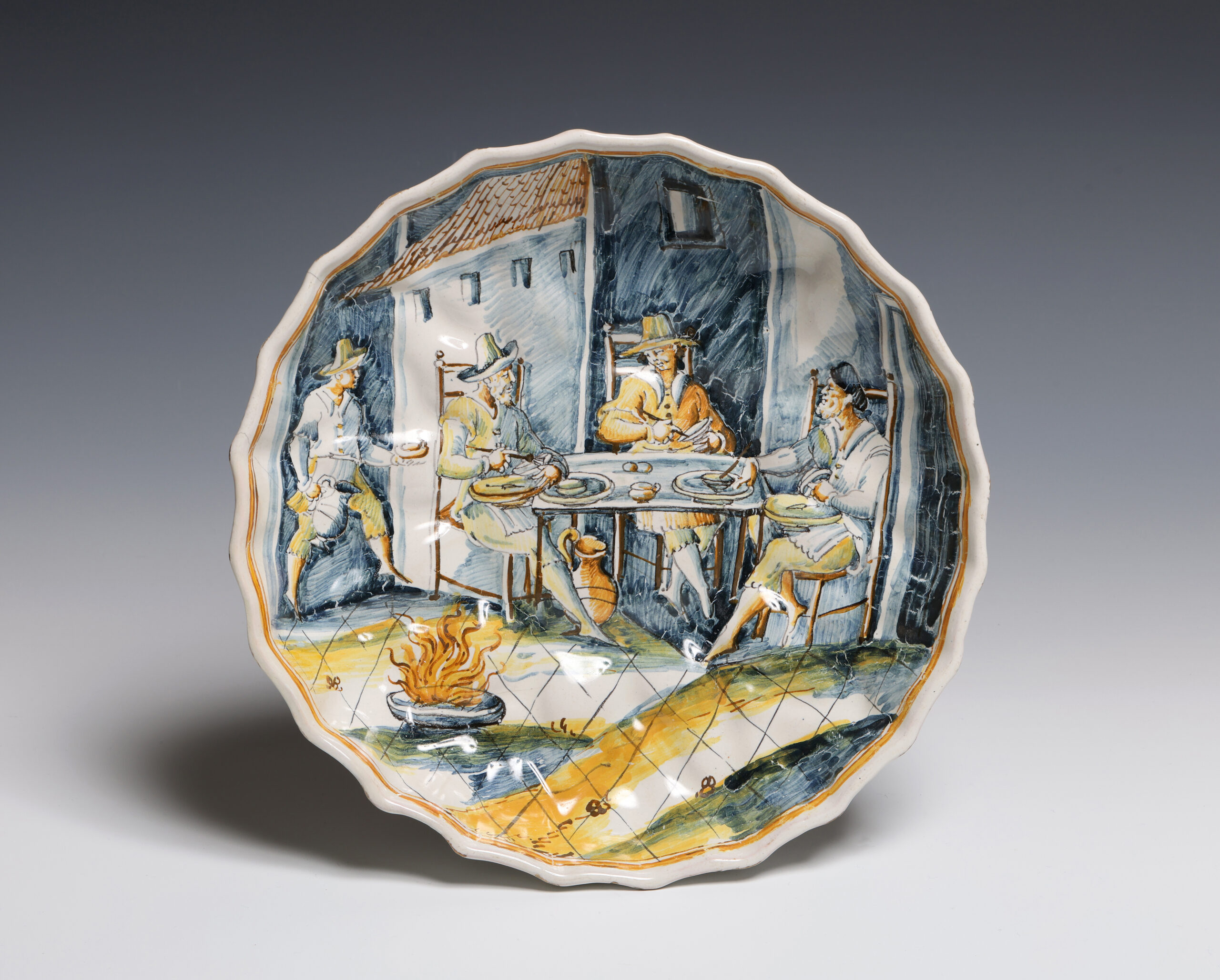
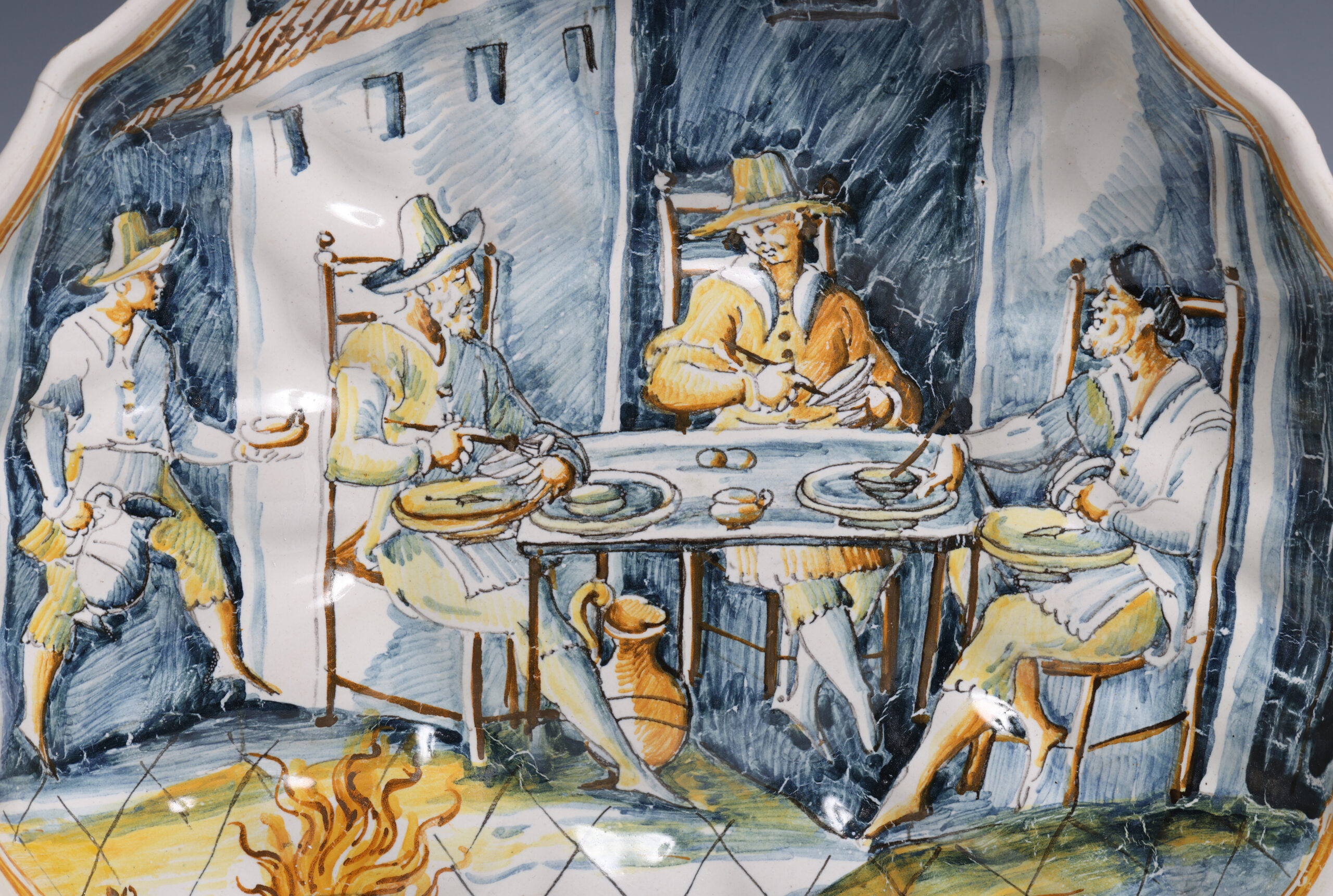
In each of these depictions the painters are seated on similar high-backed chairs holding the pieces that they are decorating on their knees in strikingly similar ways. Piccolpasso notes that sedentary painters (as opposed to the more physically active potters) get cold, this perhaps accounts for the burning brazier in the foreground of our dish. The wooden pans described by Piccolpasso for holding the finer wares are clearly visible in our dish.
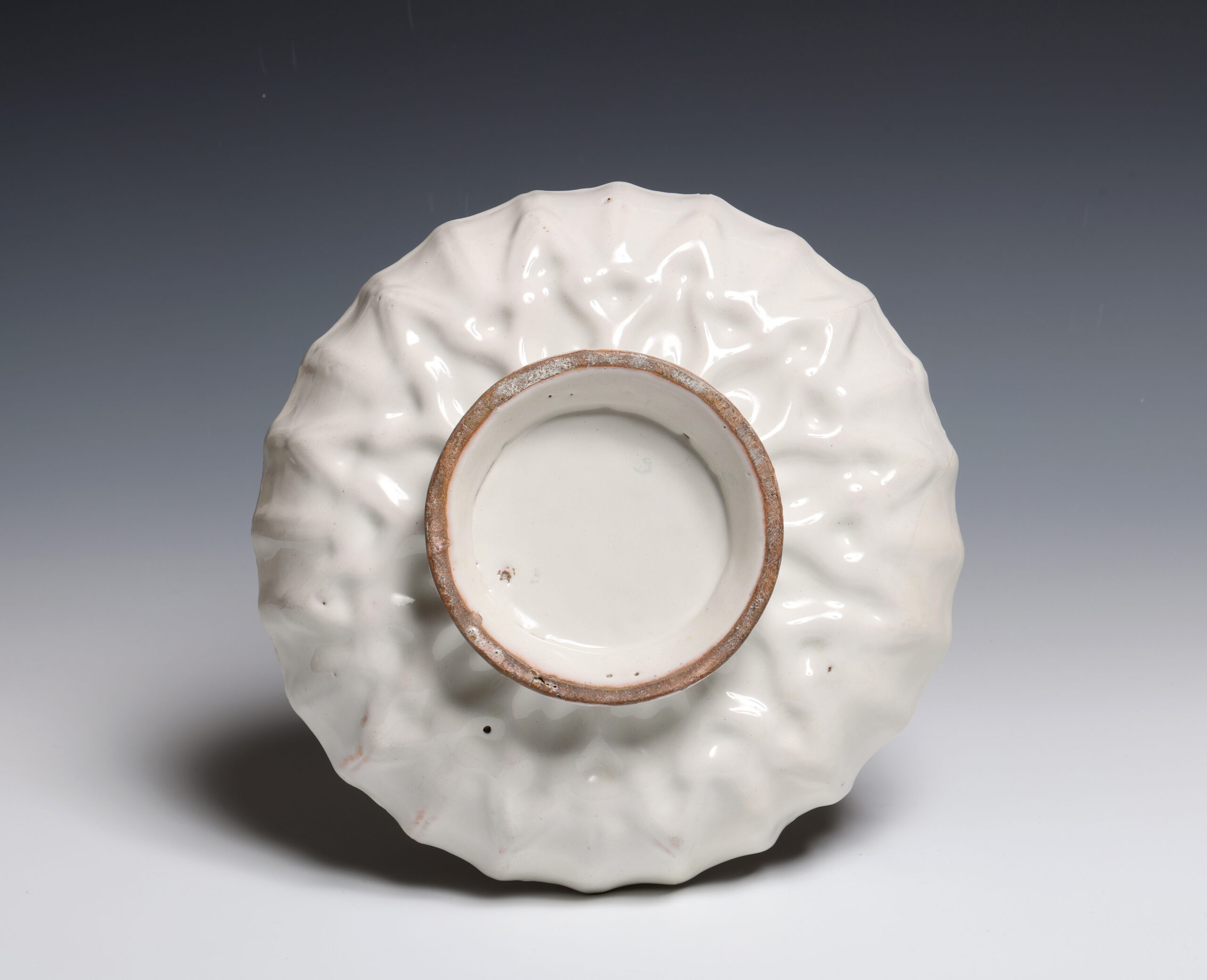
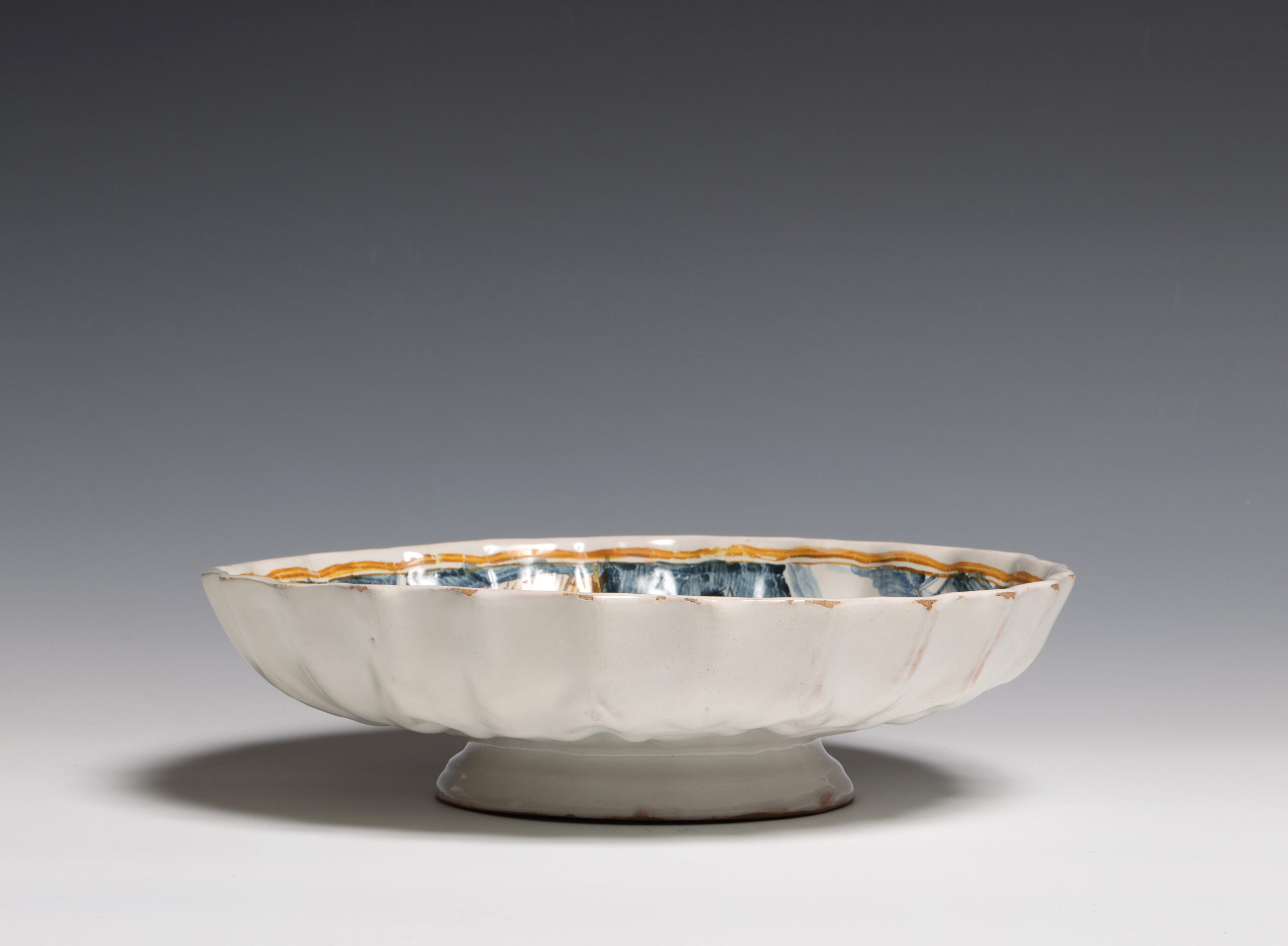
This style of painting on a pure white tin-glaze which became known as Bianchi di Faenza originated in Faenza in the 16th century and largely replaced the earlier Istoriato style.
The treatment of the architectural features, the lozenges on the terrace and the border indicate that our dish is by the same hand as a dish attributed to the “Maestro del servizio V numerato”.[2]
Provenance:
Robert Compton-Jones
Leonard Joel Auctions, Victoria, Australia, 3 March 2026, lot 336
References:
De Pompeis 2010
Vincenzo De Pompeis, La Maiolica Italiana di Stile Compendario i Bianchi, Volume I & Volume II, (Turin: Umberto Allemandi, 2010)
Guidotti 1988
Carmen Ravanelli Guidotti, Il pavimento della Cappella Vaselli in San Petronio a Bologna, (Grafie, 1988)
Piccolpasso 1557
Manuscript: Cipriano Piccolpasso, Li tre libri dell’arte del vasaio, circa 1557
Facsimile edition: Ronald Lightbown and Alan Caiger-Smith (editors), The Three Books of The Potters Art, (Scolar Press, London, 1980)
——————————————————————————————————————————————————————-
[1] Piccolpasso 1557, Vol. II, p. 196.
[2] De Pompeis 2010, se the dish from a private collection illustrated vol. I, p. 63 pl. 14, and described in vol.II, pp. 138 – 140.
ACQUIRED BY THE VICTORIA AND ALBERT MUSEUM 2026, Purchased with the support of Sam Fogg and the Murray Legacy