
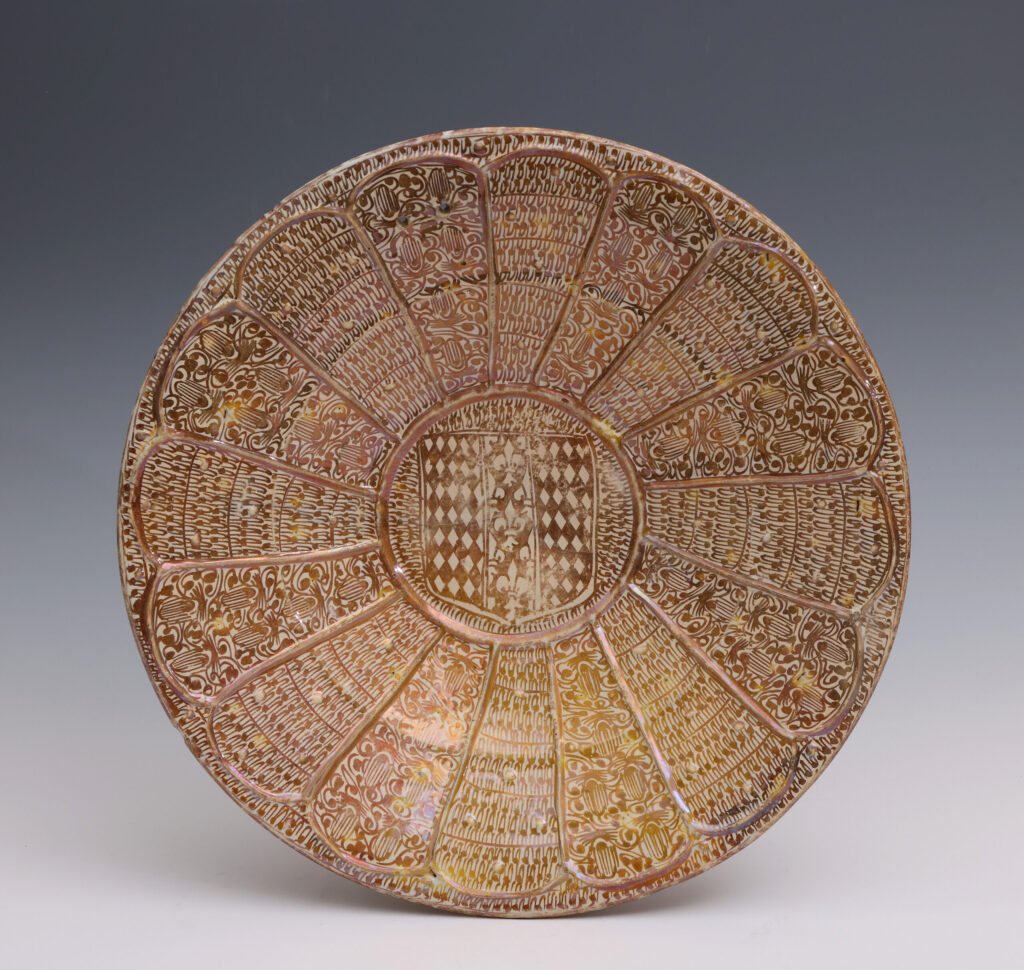
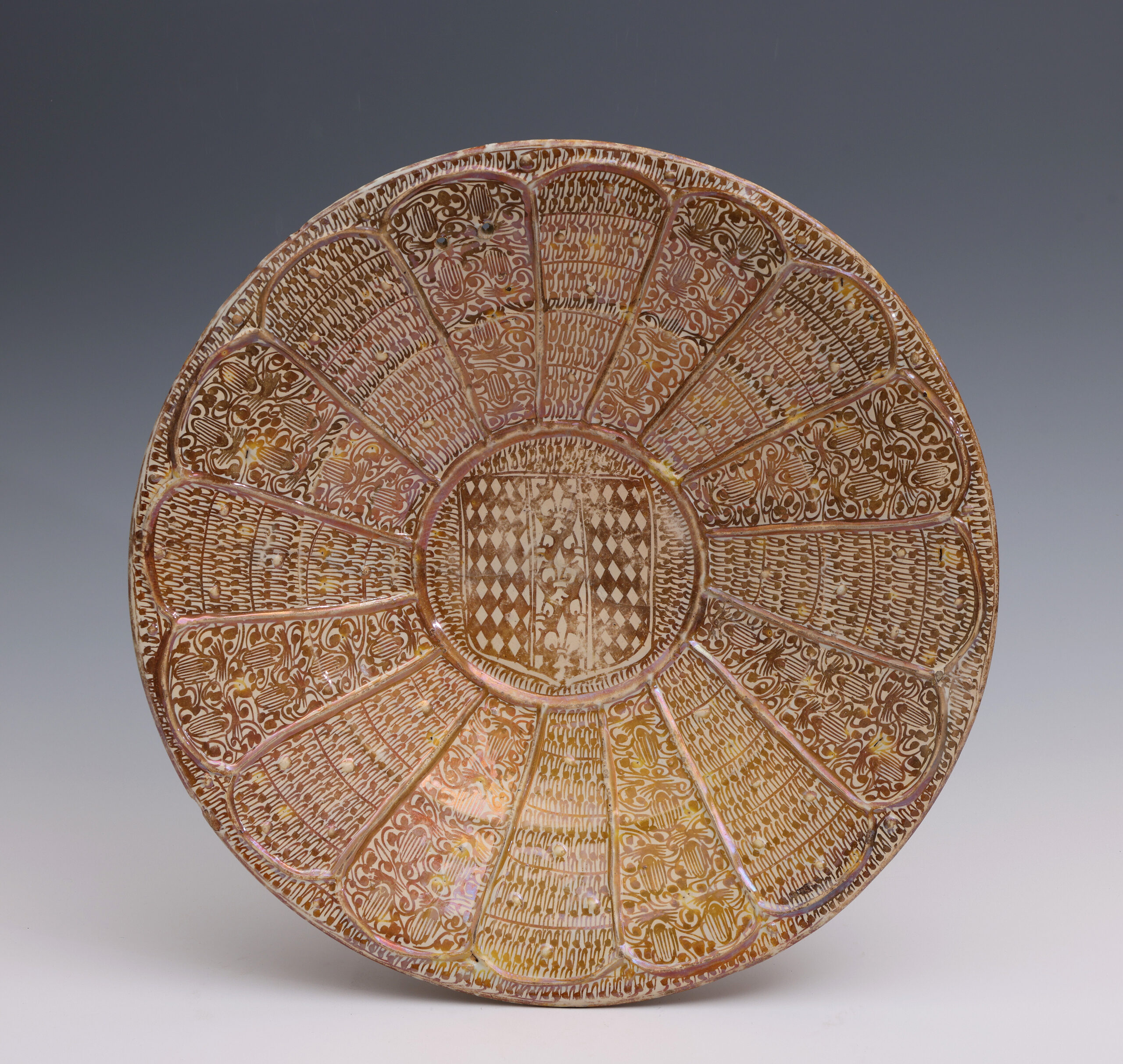
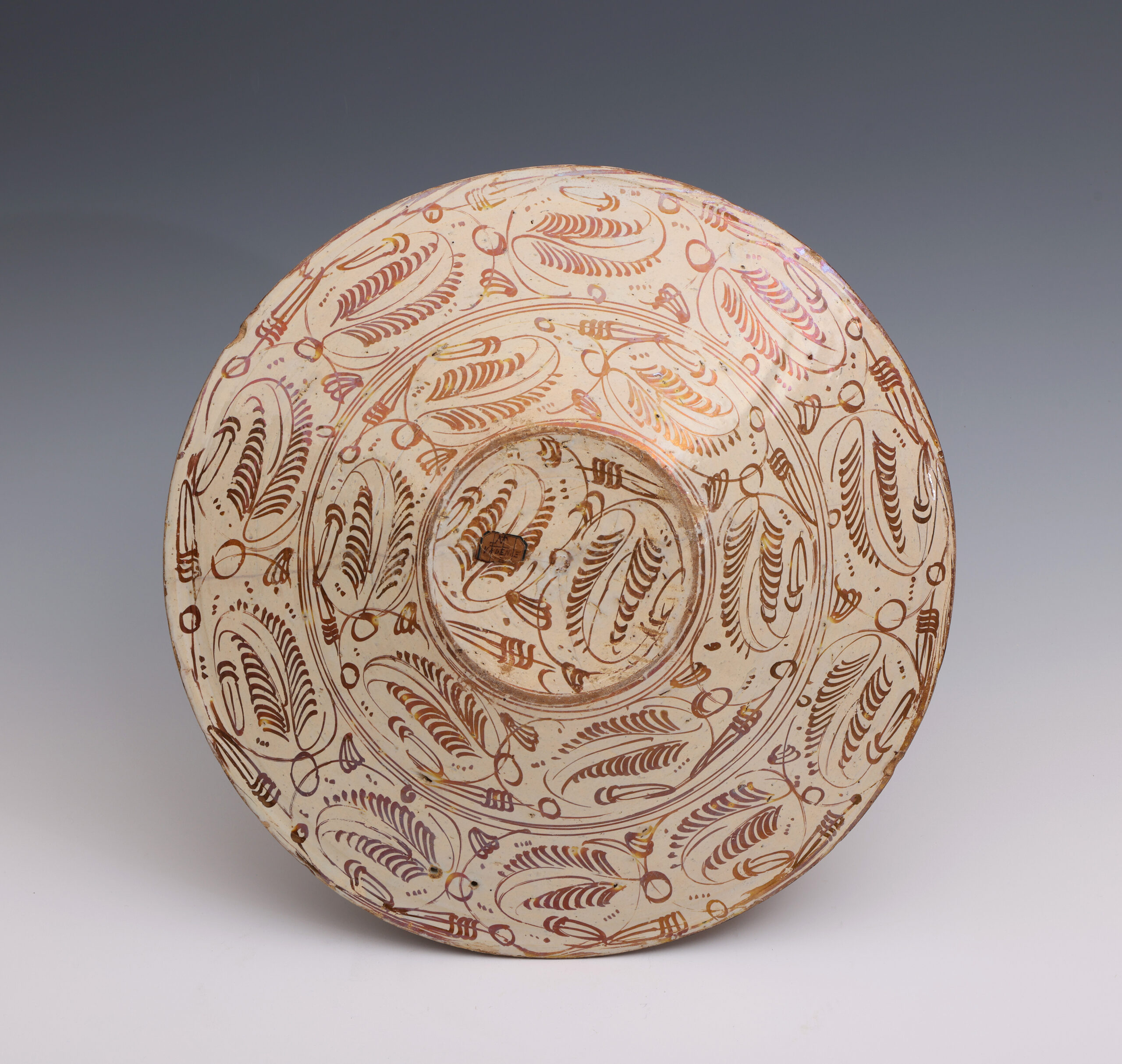
The border divided into sixteen radiating compartments decorated in copper lustre with alternating panels of dot-and-stalk and thistle buds, with raised studs on the rim in imitation of metalwork. The reverse with linked fern leaves. The top pierced, at the time of manufacture, with two holes for suspension.
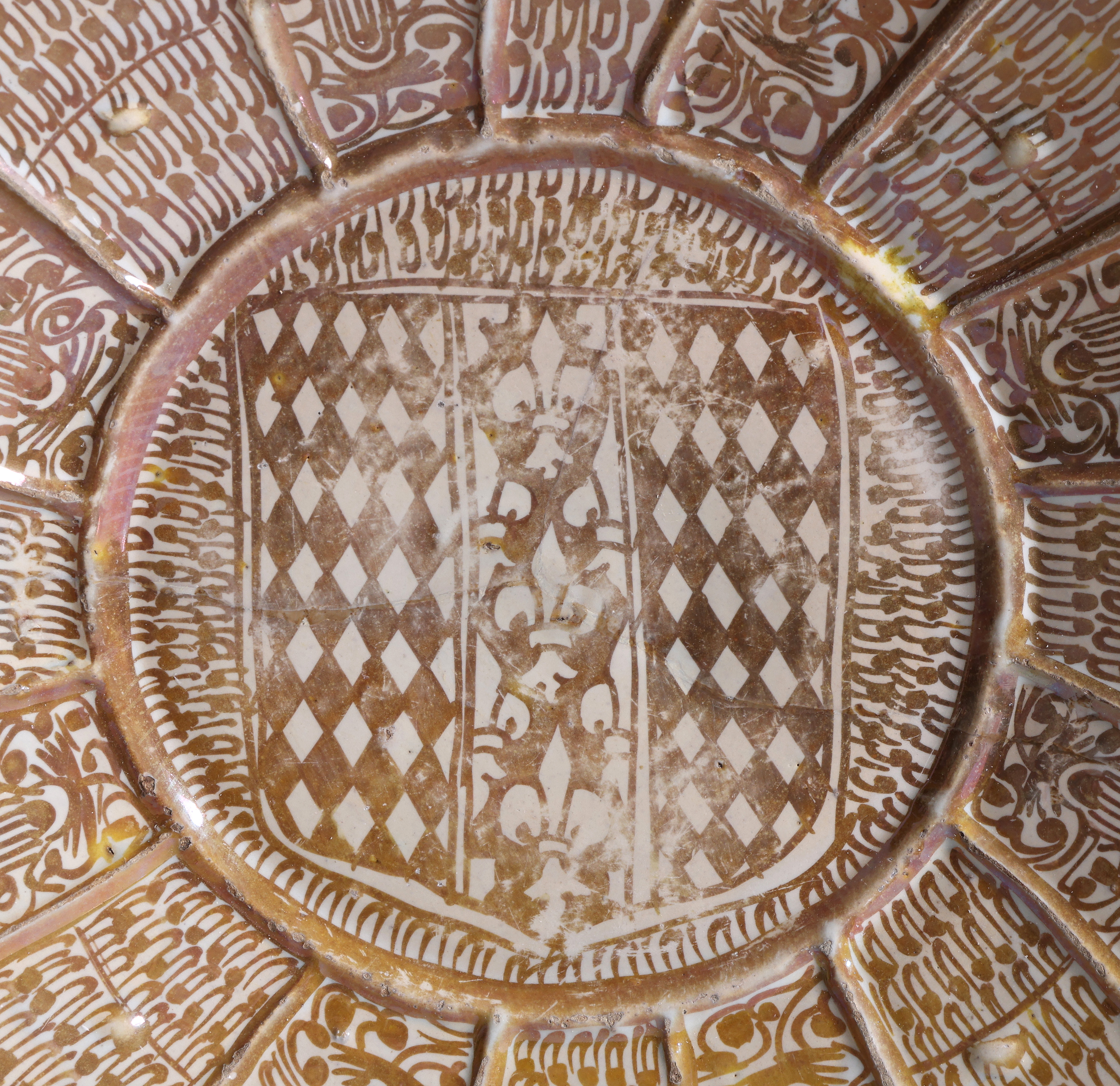
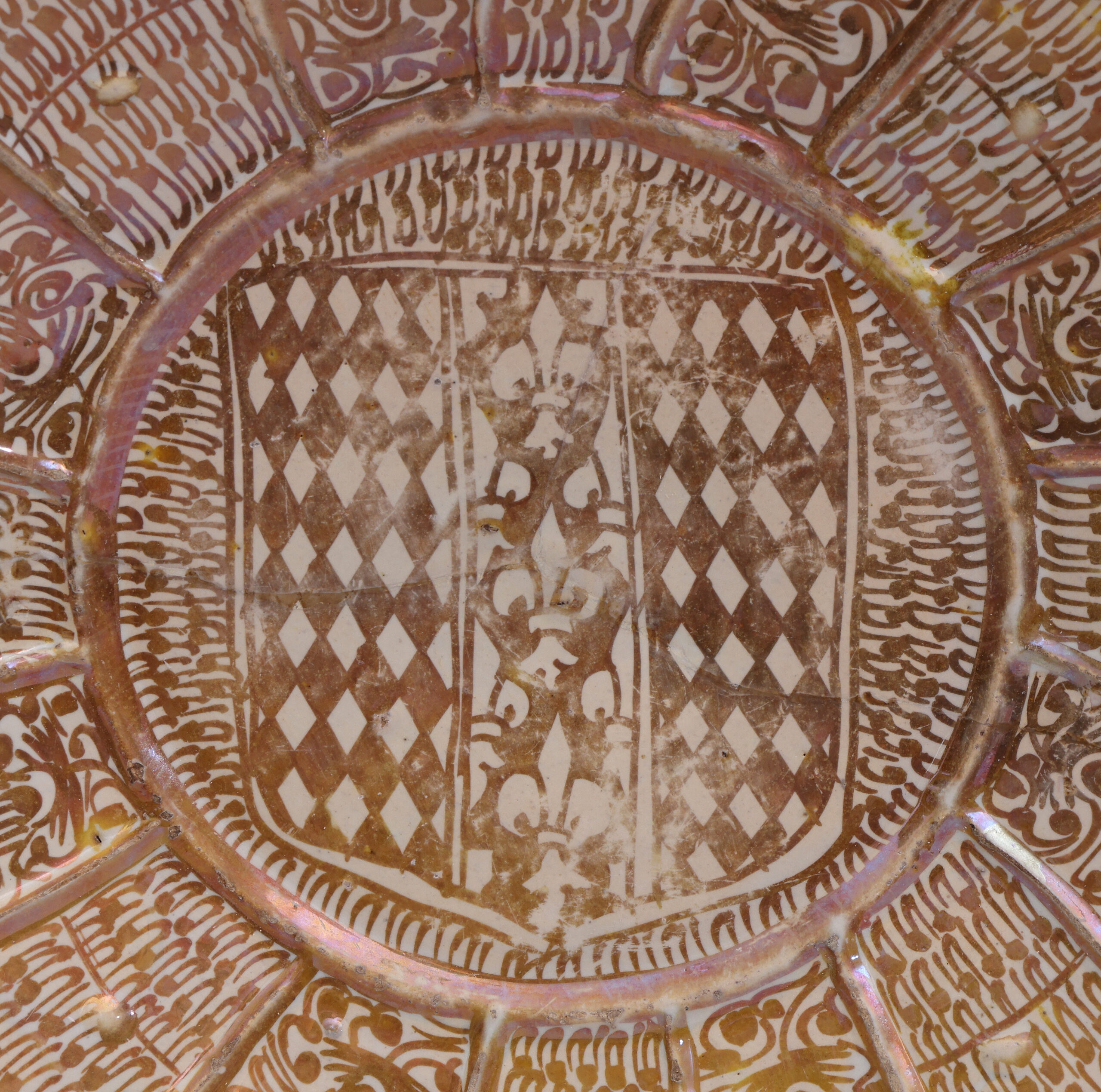
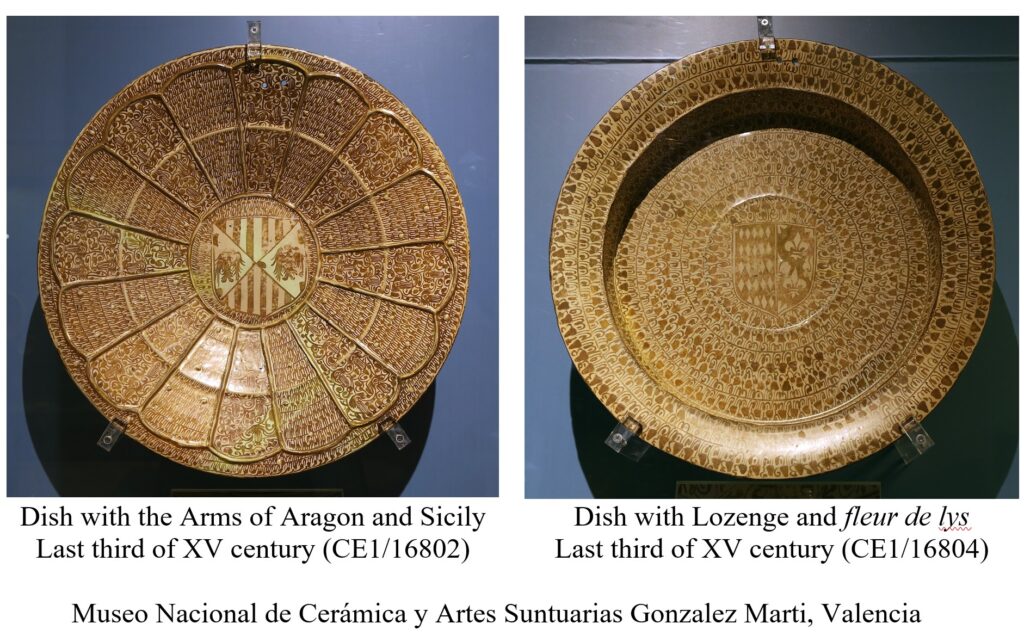
The central armorial comprises three fleur de lys in a vertical panel reserved on a lustre ground between panels of lozenges. Anthony Ray illustrates a similar dish which incorporates similar ‘lozengy’ elements which he suggests might represent the family of Catalá-Centelles, Counts of Oliva.[i] Another dish using the same elements of the armorial shield, the lozenges and the fleur de lys is in the Museo Nacional de Cerámica y Artes Suntuarias Gonzalez Marti, Valencia, along with a dish of similar form to ours with the arms of Aragon and Sicily.
Anthony Ray notes that documents of 1494 record the names of 25 people involved in the pottery trade, half of whom were Moors and half cristianos viejos.[ii] In the fifteenth century the potteries of Manises and nearby Paterna, just outside Valencia, were the only ones in Europe that knew the secret of metallic lustre on pottery. The technique, requiring a reduction firing, was developed in the Islamic world.
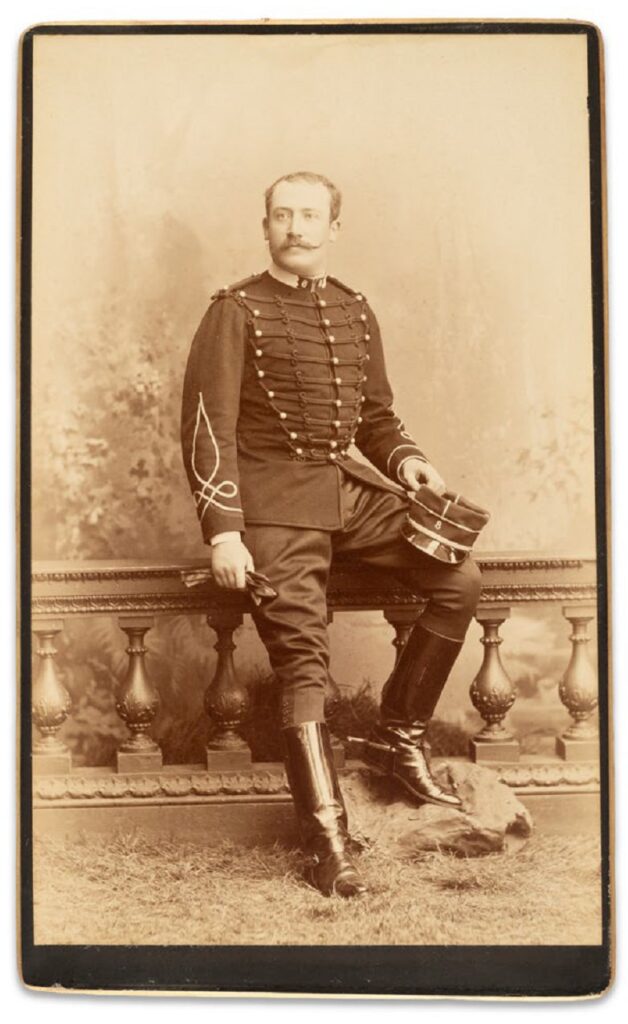
Our dish was in the collection of a French cavalry officer, Henri Blay (1861-1920) and was acquired before 1912. It descended in the Blay family until 2026. Drawings survive of how Henri Blay displayed his ceramics in symmetrical arrangements in his family home in Fontainebleau.
Condition:
Broken neatly across, rivet holes filled.
Provenance:
Collection of Henri Blay (1861-1920) and by descent
Collin du Bocage, 19 May 2026, lot 5
References:
Ray 2000
Anthony Ray, Spanish Pottery 1248-1898: With a Catalogue of the Collection in the Victoria and Albert Museum, (2000)
Price: £38,000

[i] Ray 2000. p. 94, no. 204, and colour plate 26.
[ii] Ray 2000, pp. 90-91.