
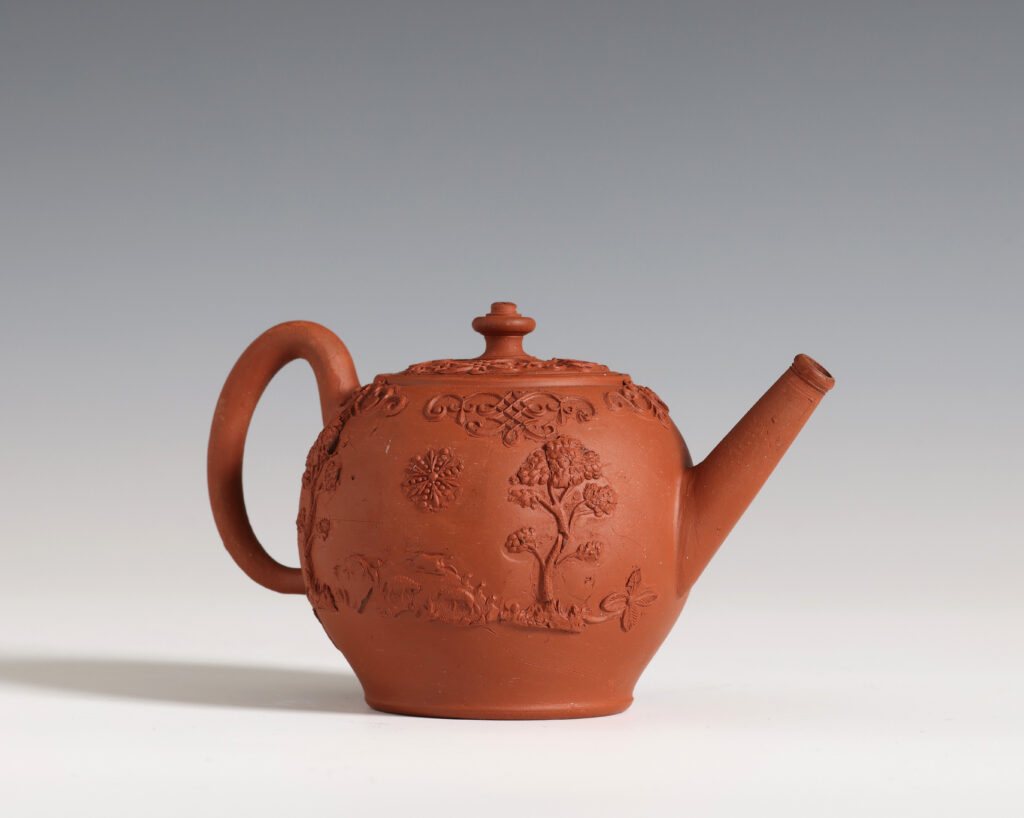
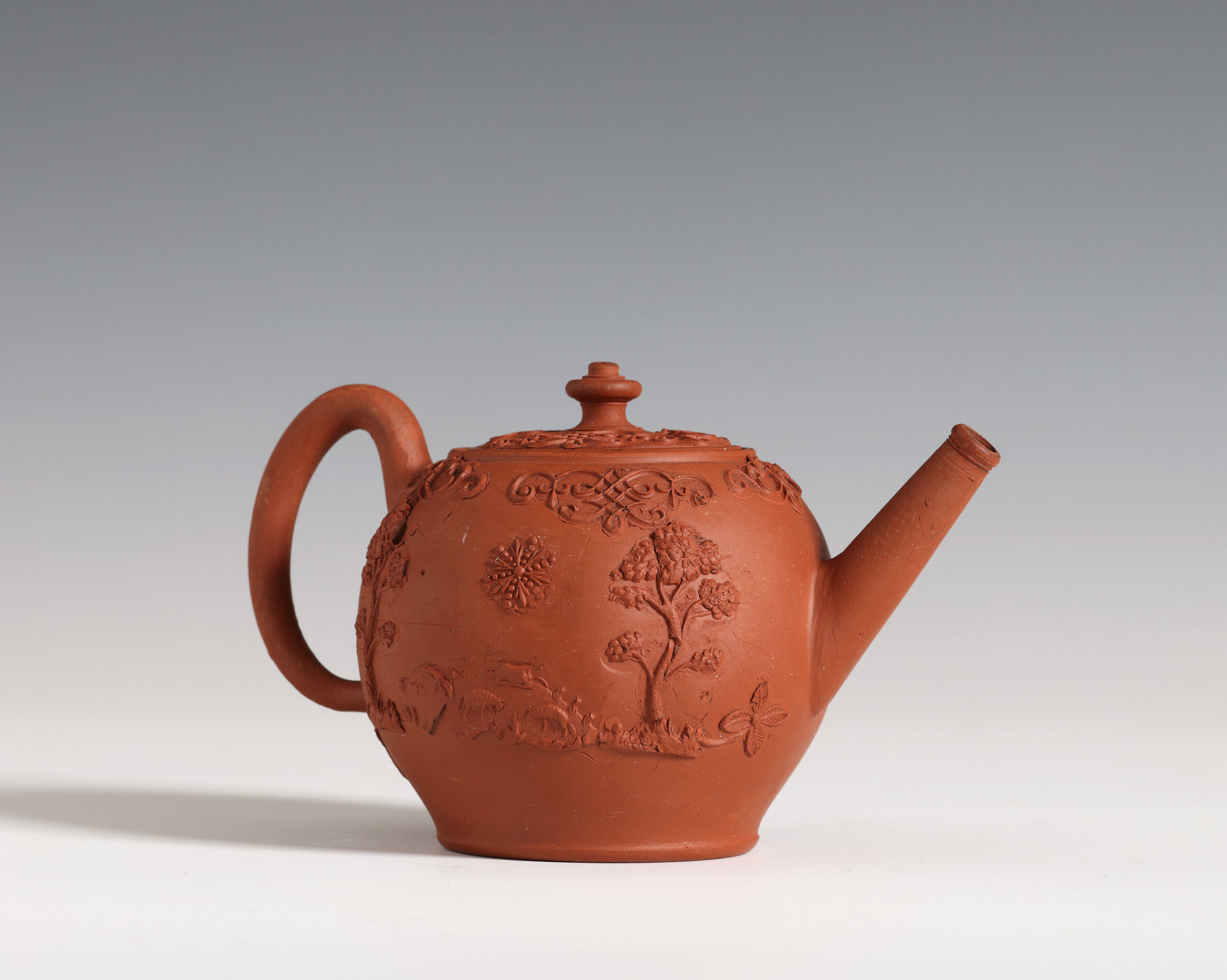
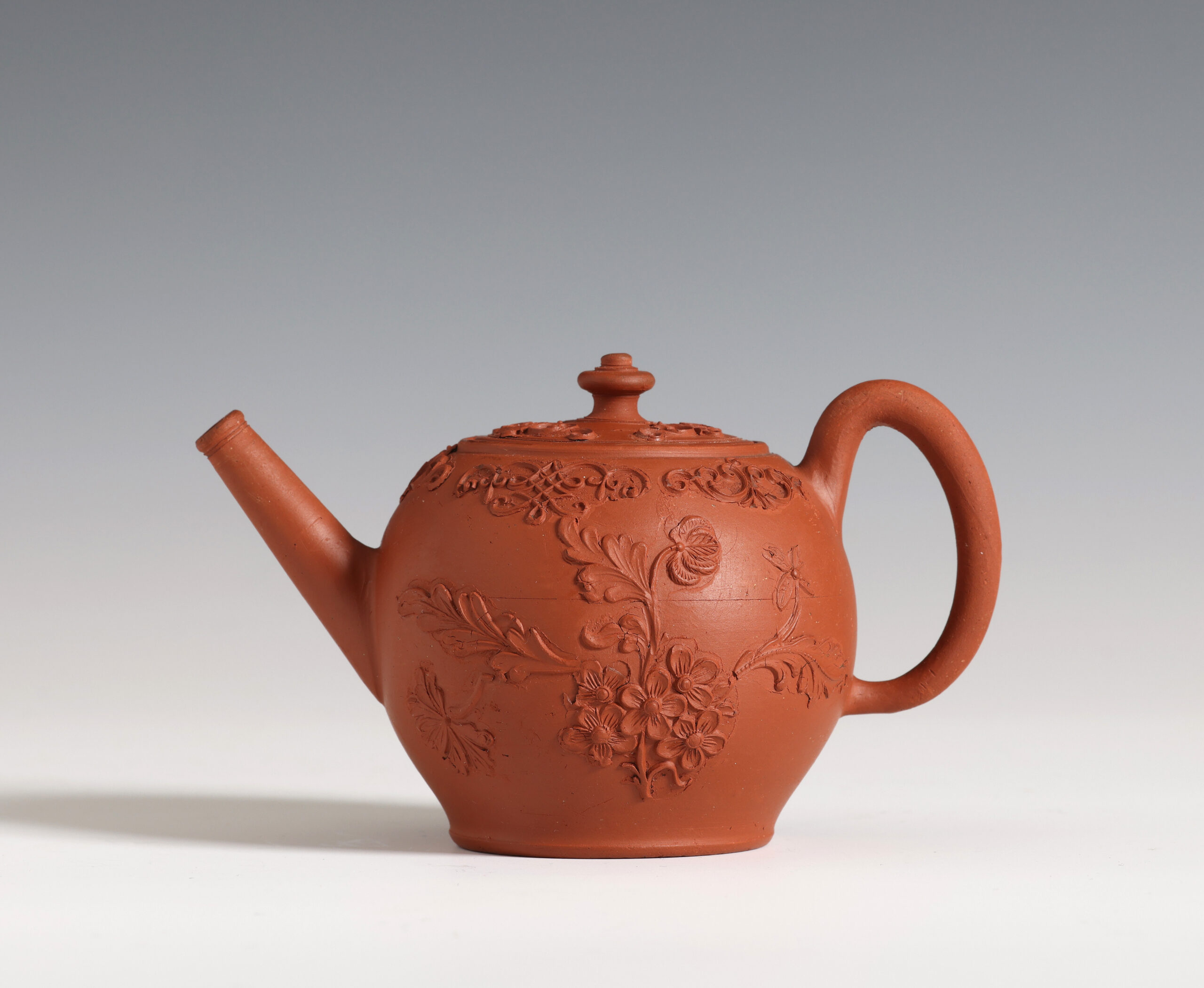
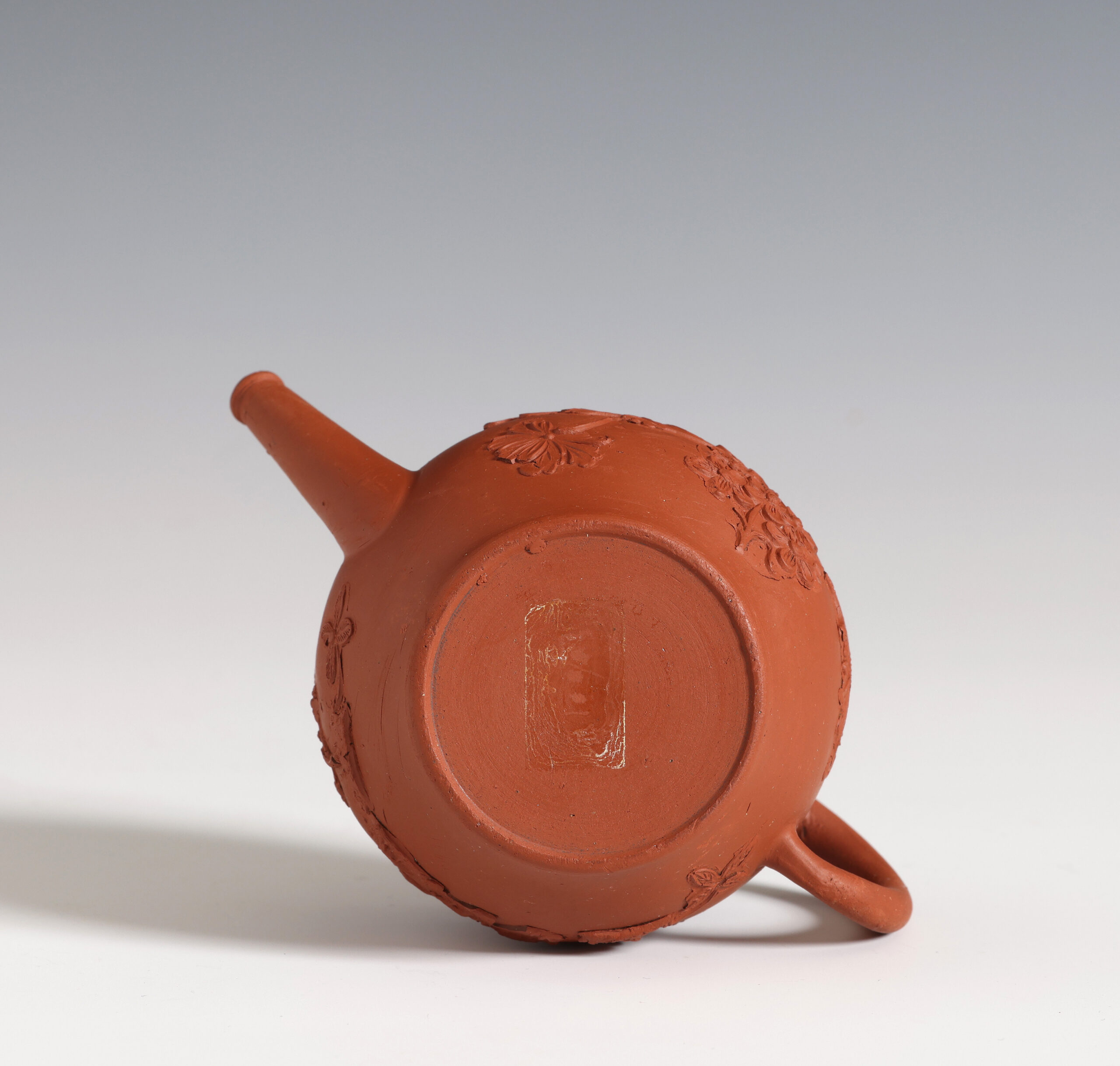
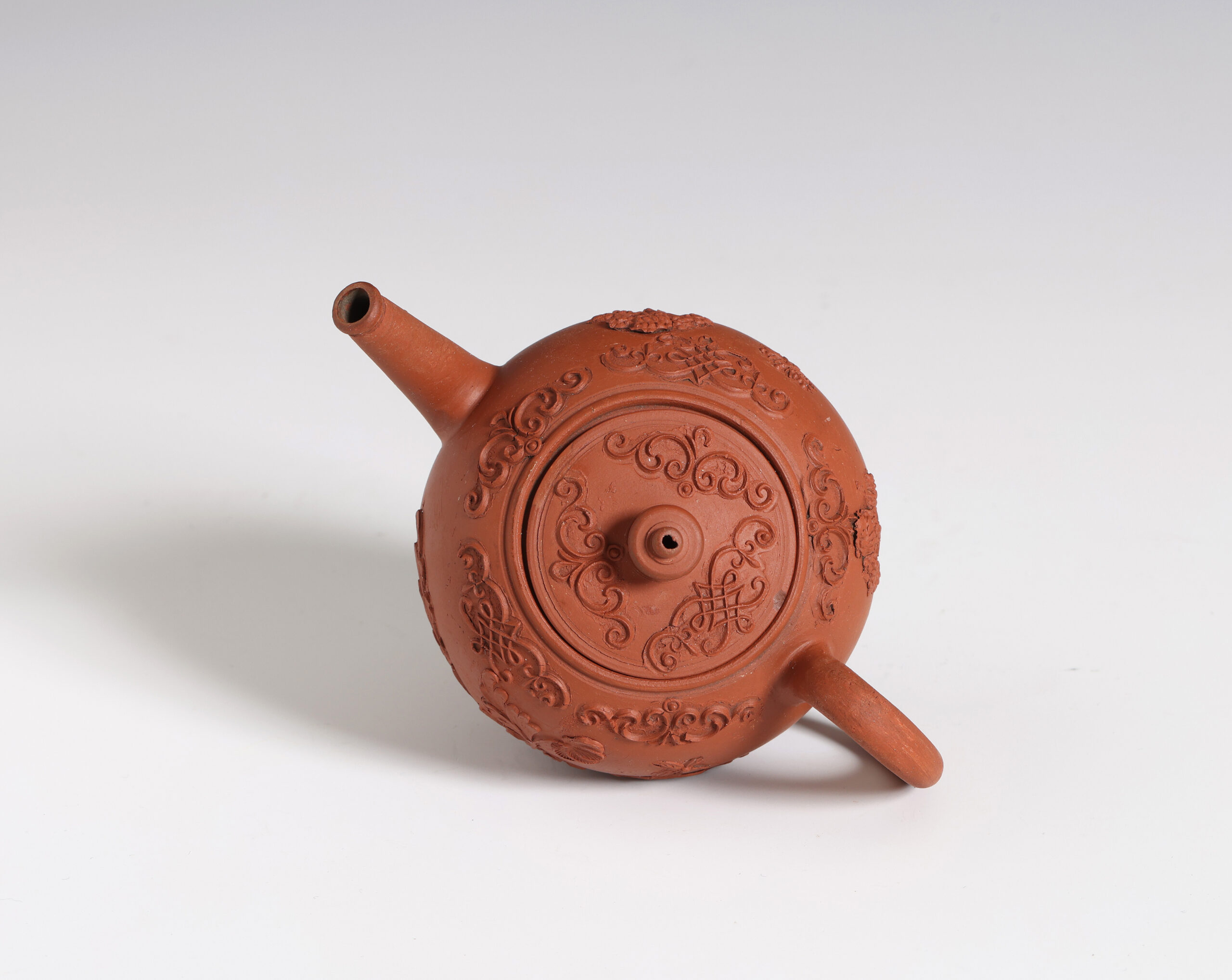
Wheel thrown, and of spherical form with crisply moulded applied sprigging. One side with a floral spray, the other with sheep in a landscape, the rim and lid are bordered with ornamental scrolls.
The moulded decoration matches closely in style and quality with a coffee pot illustrated in Unearthing Staffordshire[1] that has been shown to match exactly with wasters excavated from the Foley pottery and is attributed to a potter named Thomas Barker, active in the 1760s and 1770s.
After the demise of the red stonewares of the Elers brothers in the late 17th century, red stoneware (as opposed to glazed red earthenware) was not revived in Staffordshire until the late 1740s. Most redware teapots were wheel-thrown with applied sprigged ornament, press-moulded ones were more time consuming to produce and are rarer.
The first recorded reference to the production of red stoneware, according to Robin Hildyard, is in Dr Pococke’s Journey into England from Dublin (1751) which implies that it’s manufacture was then in its infancy. Referring to Madely Hill in the Potteries near Stoke-on-Trent he writes:
‘The red ware, in imitation of china, which they call the dry red china ware, to distinguish it from the glazed, is made of the red clay found here; but as it does not take among the common people, there is but little demand for it;’[2]
Condition:
Restored chip to rim of lid
References:
Barker & Halfpenny 1990
David Barker & Pat Halfpenny, Unearthing Staffordshire, (City of Stoke-on-Trent Museum and Art Gallery, 1990)
Hildyard 2005
Robin Hildyard, English Pottery 1620-1840, (V& A Publications, 2005)
————————————————————————————————————————————
[1] Barker & Halfpenny 1990, pp. 45-46.
[2] Hildyard 2005 p. 71.
Price: £750
