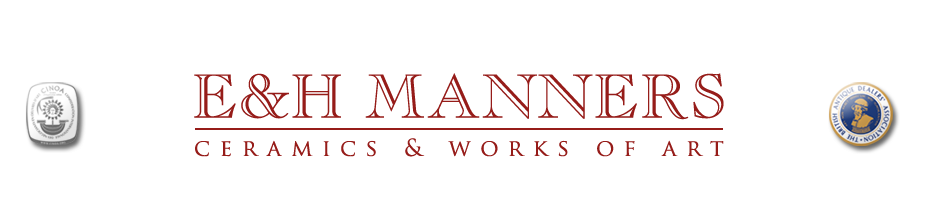
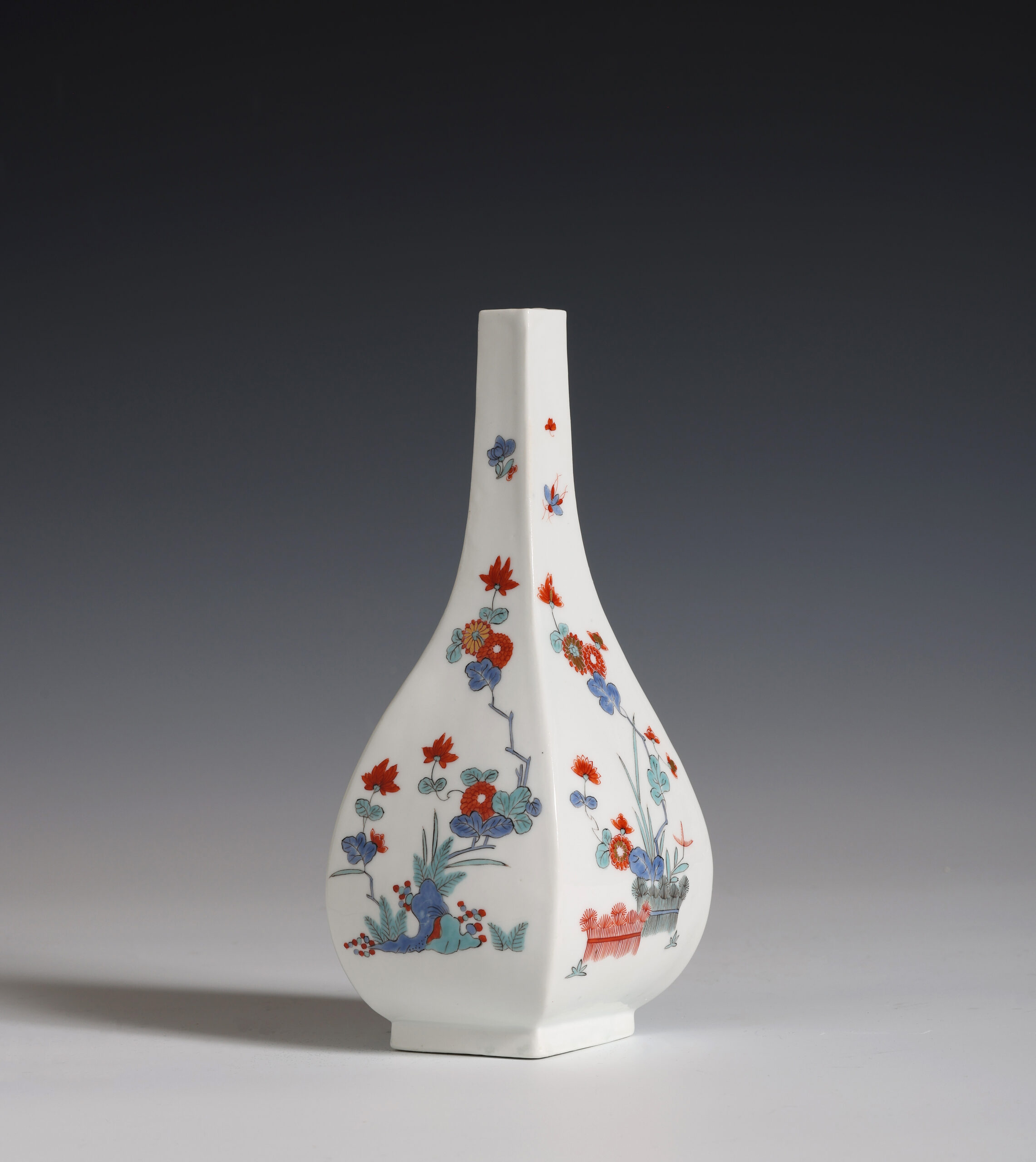
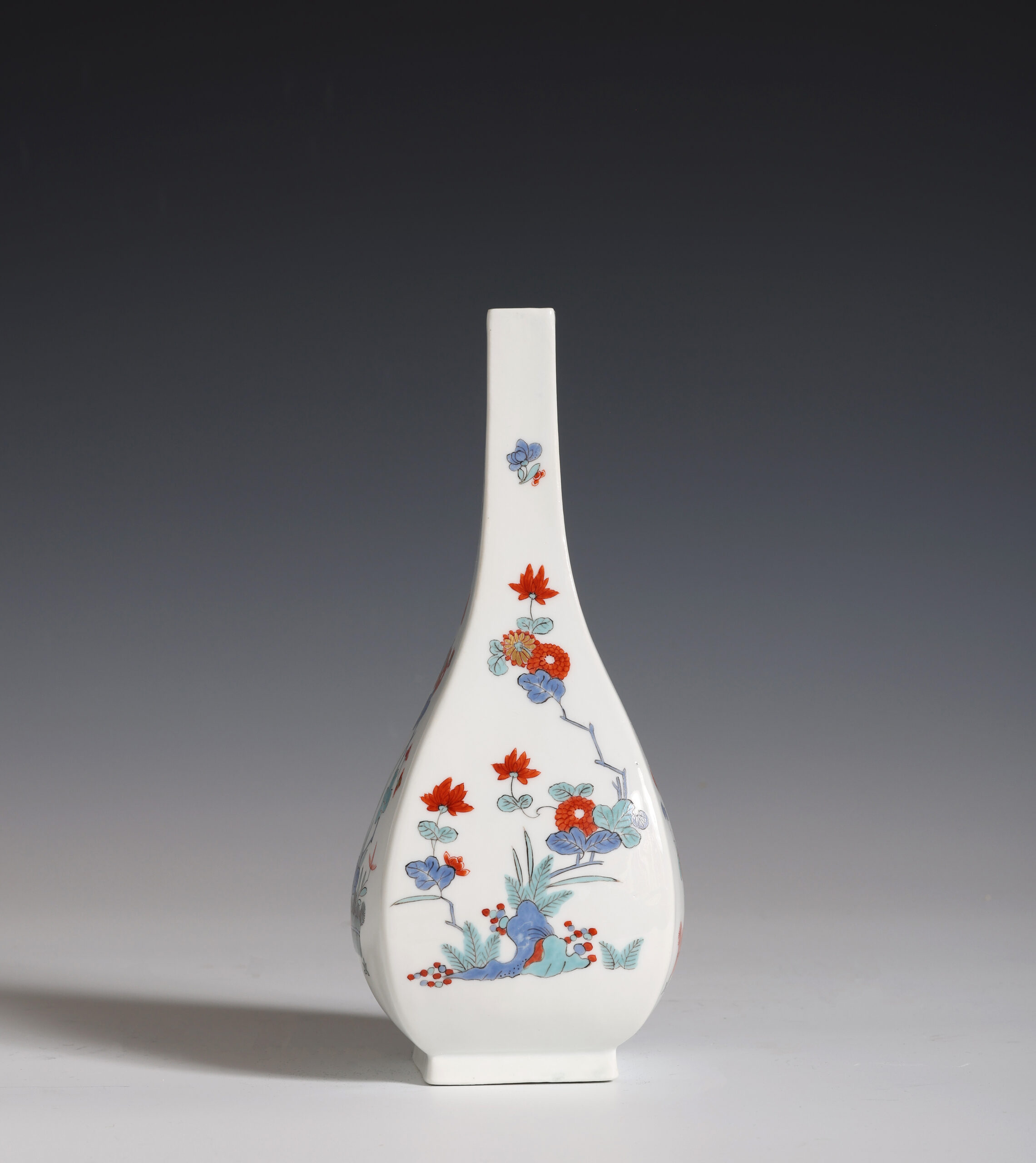
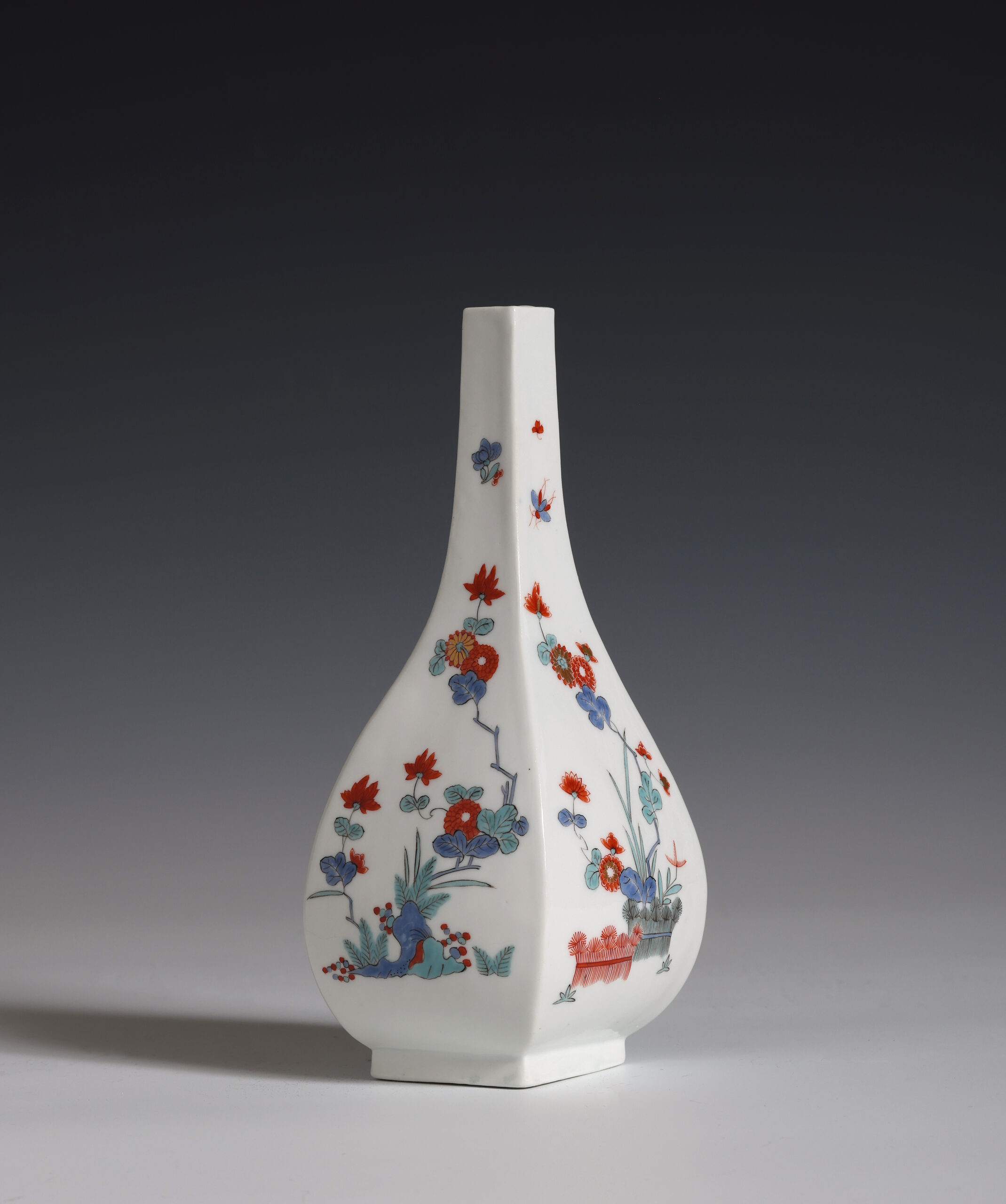
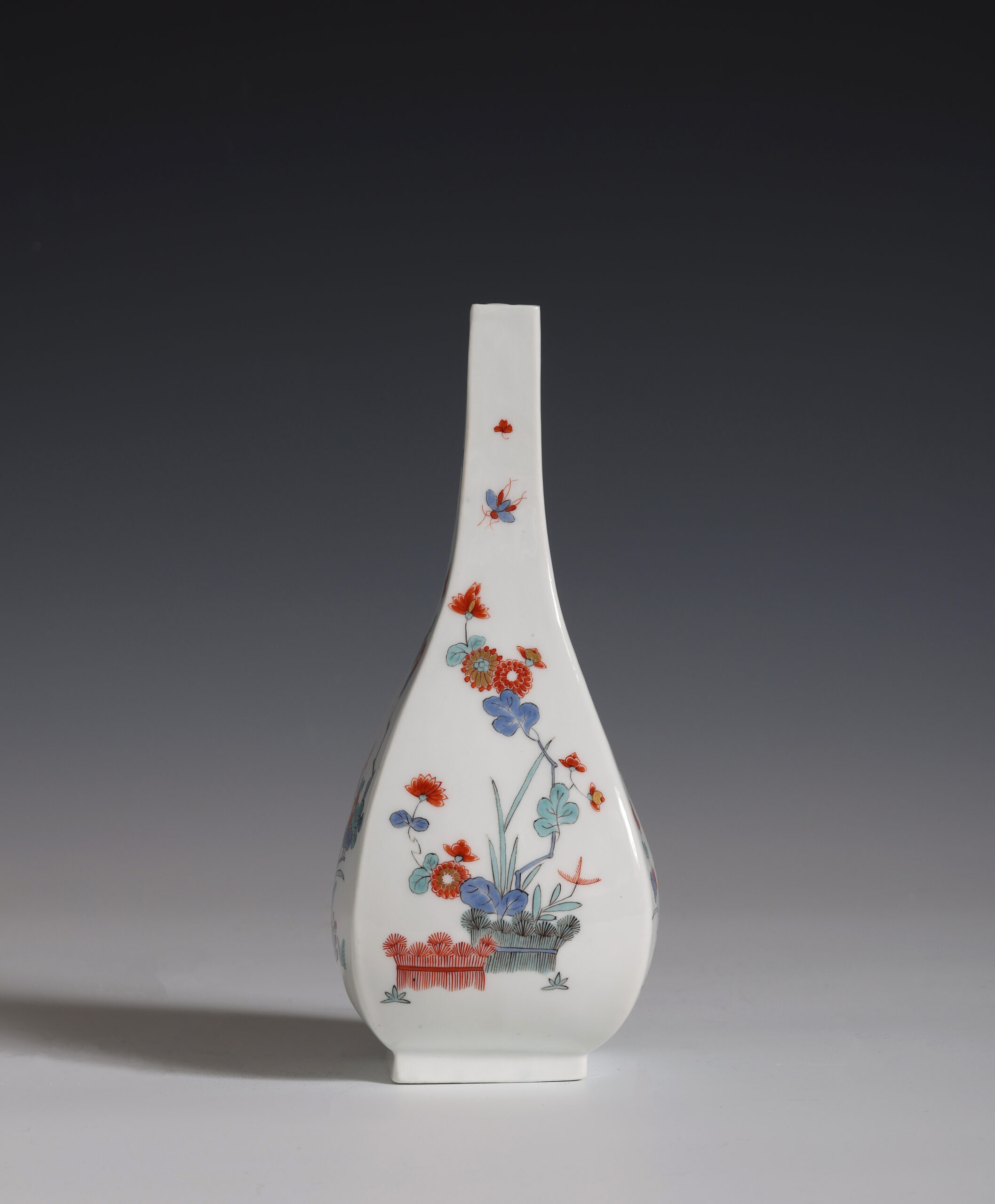
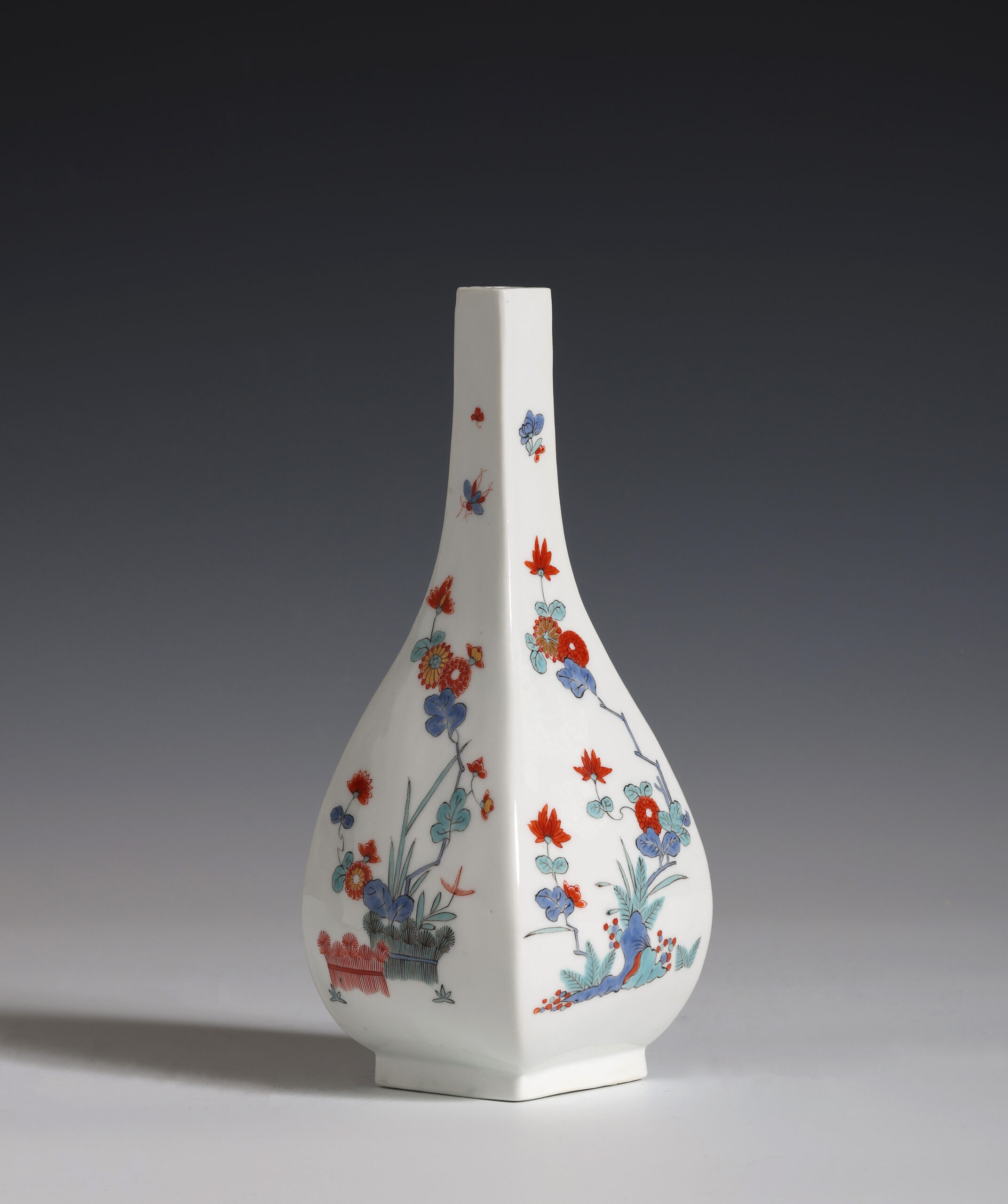
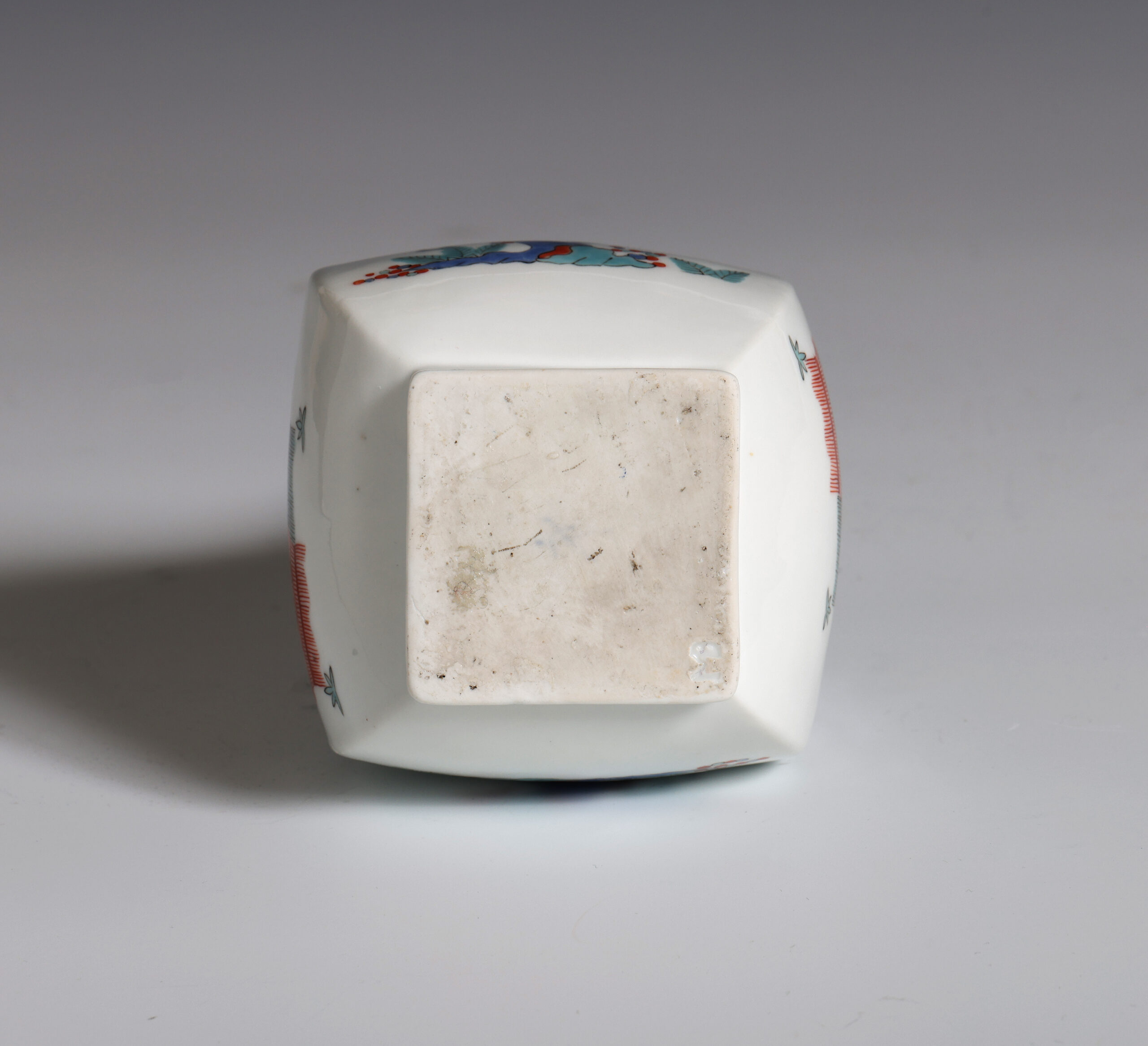
Copying a Japanese sake bottle of square section with a Kakiemon design faithful to the spirit of the Japanese original. While we have not found this exact design in the Japanese porcelain collections of the Staatliche Kunstsammlungen Dresden, they do have a number of other examples of the same form. It seems likely that it would have been an exact copy of a Japanese piece that was in the Royal Collection at the time. Other examples of this form with the same decoration are known with the impressed MB mark.
Augustus the Strong particularly admired these Kakiemon patterns and the final approach along the long enfilade to his throne in the Japanese Palace was decorated with what were described as ‘alten Indianischen Art’ and were part of the scheme in which he identified himself with the emperors of China and Japan who also, like him, produced porcelain.
The taste for Kakiemon designs was also popular outside the court and in Europe more widely. This is highlighted in the controversial Lemaire affair. The Paris merchant Rudolf Lemaire commissioned a large number of pieces in the Kakiemon style from Meissen with the intention of passing them off as genuine Japanese Kakiemon porcelain in Paris. Lemaire requested that Meissen use an over-glaze mark because it could be easily removed. The records of the court case of his prosecution for this fraud are recorded in great detail and subsequently about 4400 pieces were confiscated and incorporated into the Saxon Royal Collection where they had the Japanese Palace inventory mark incised into the paste by a team of glass cutters. Since an underglaze crossed swords is just visible, our flask is likely to have been made just after this episode.
Condition:
Minute chip to rim
Provenance:
Christie’s London, 6.2.1978, lot no 199
Sotheby’s London, 24.11.1998, lot no 24
Angela Gräfin von Wallwitz, 1999
Private collection, St. Gallen, Switzerland
Price: £15,000
