
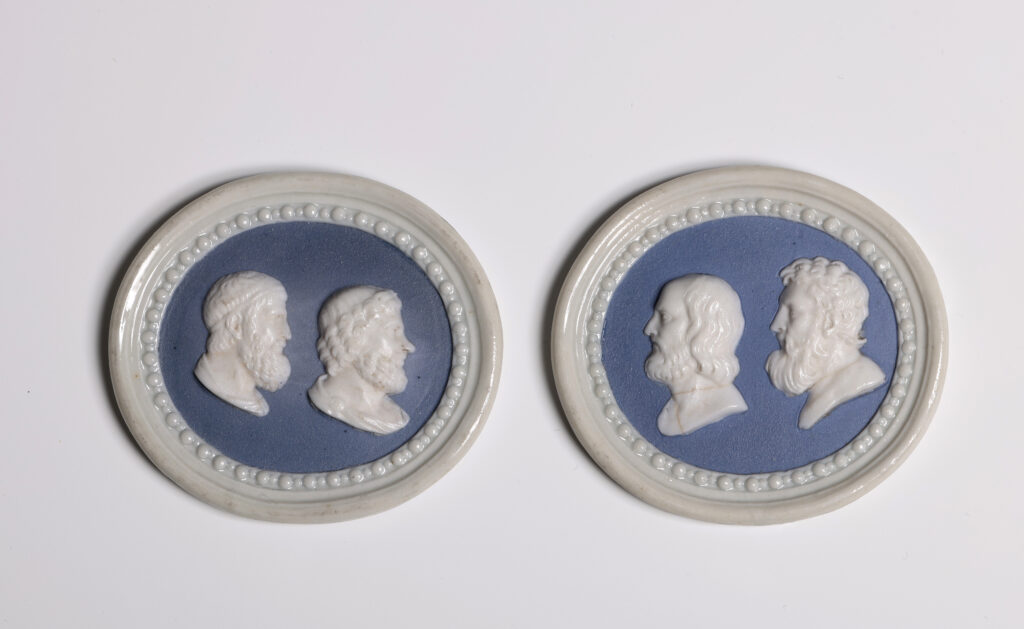
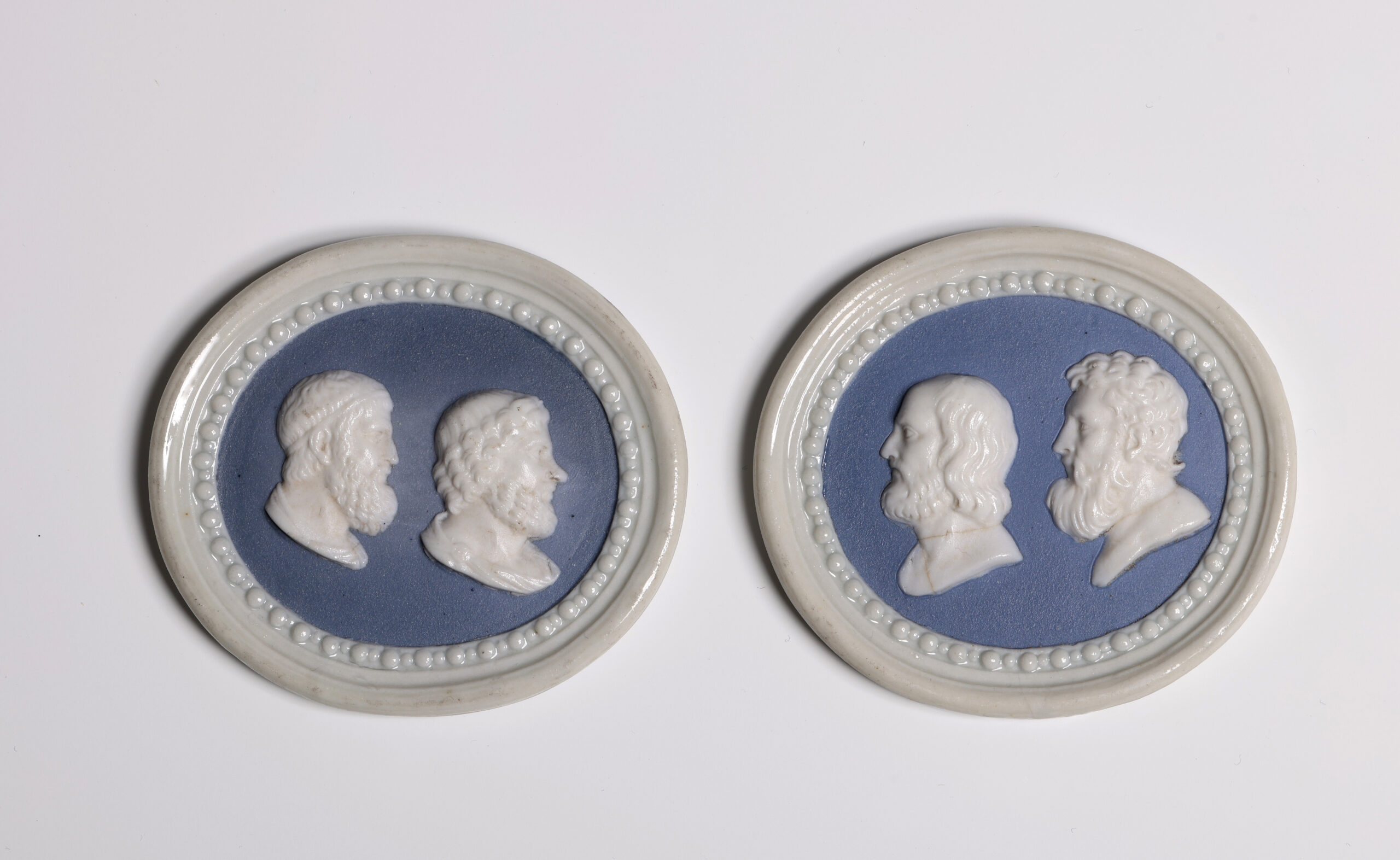
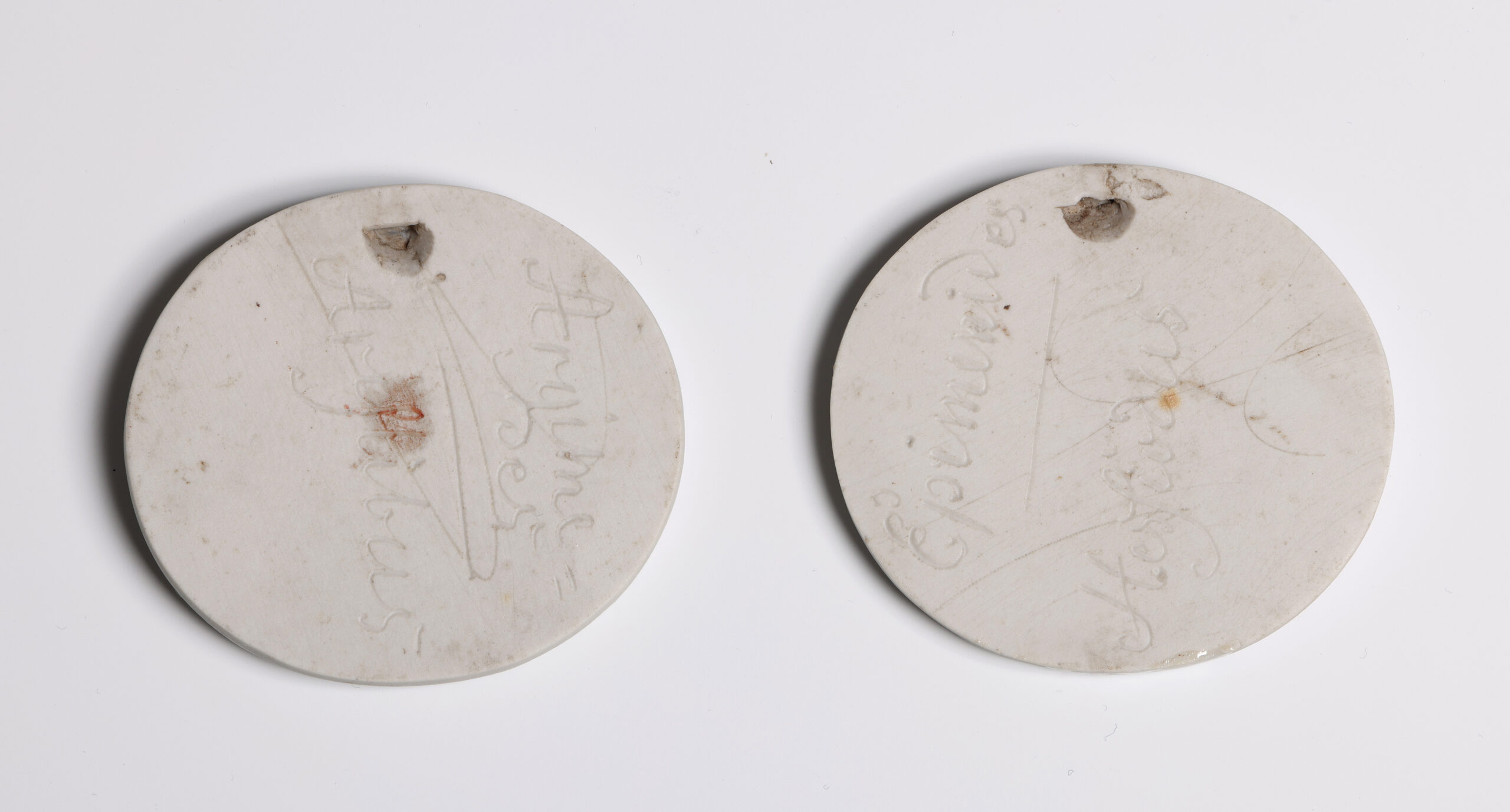
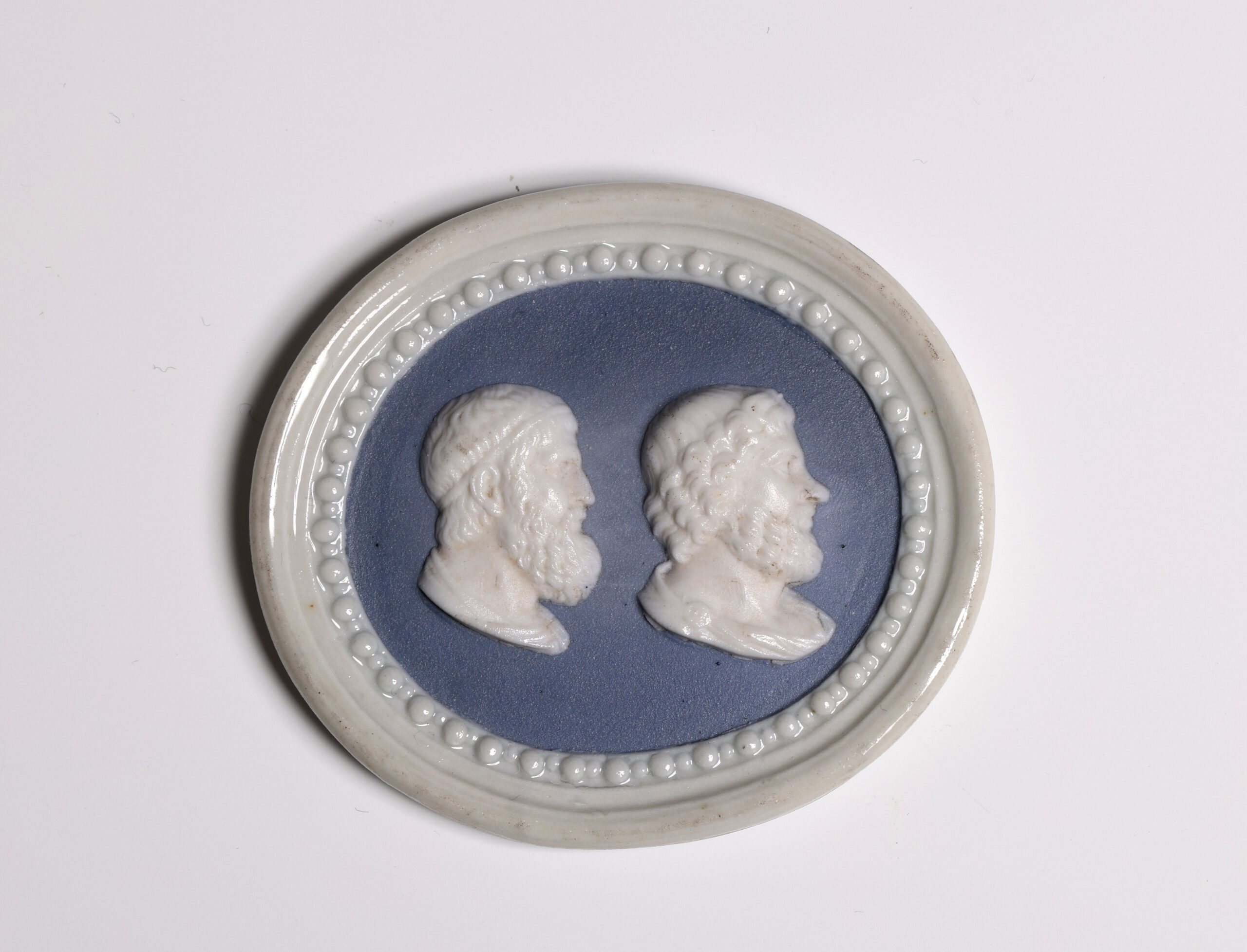
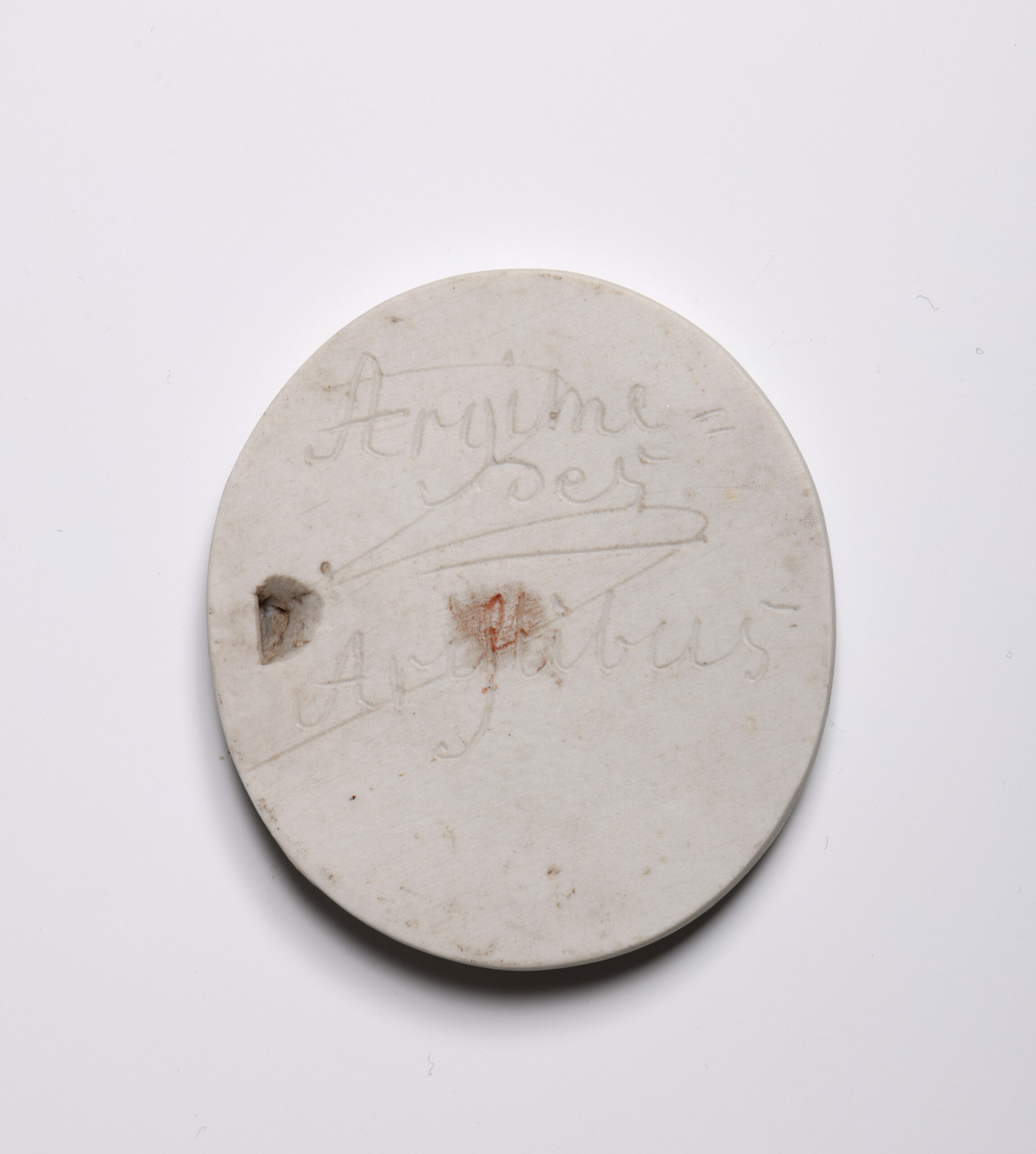
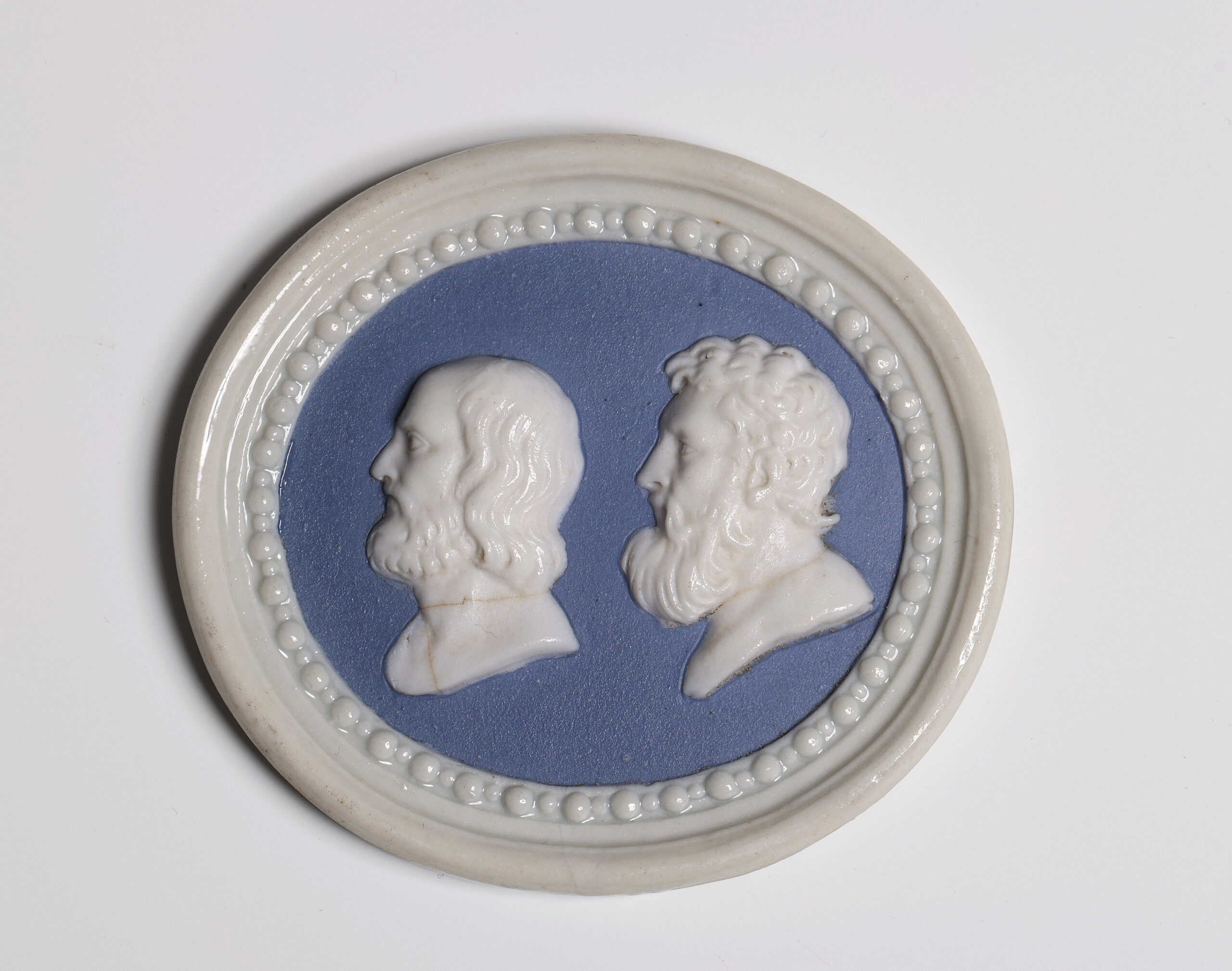
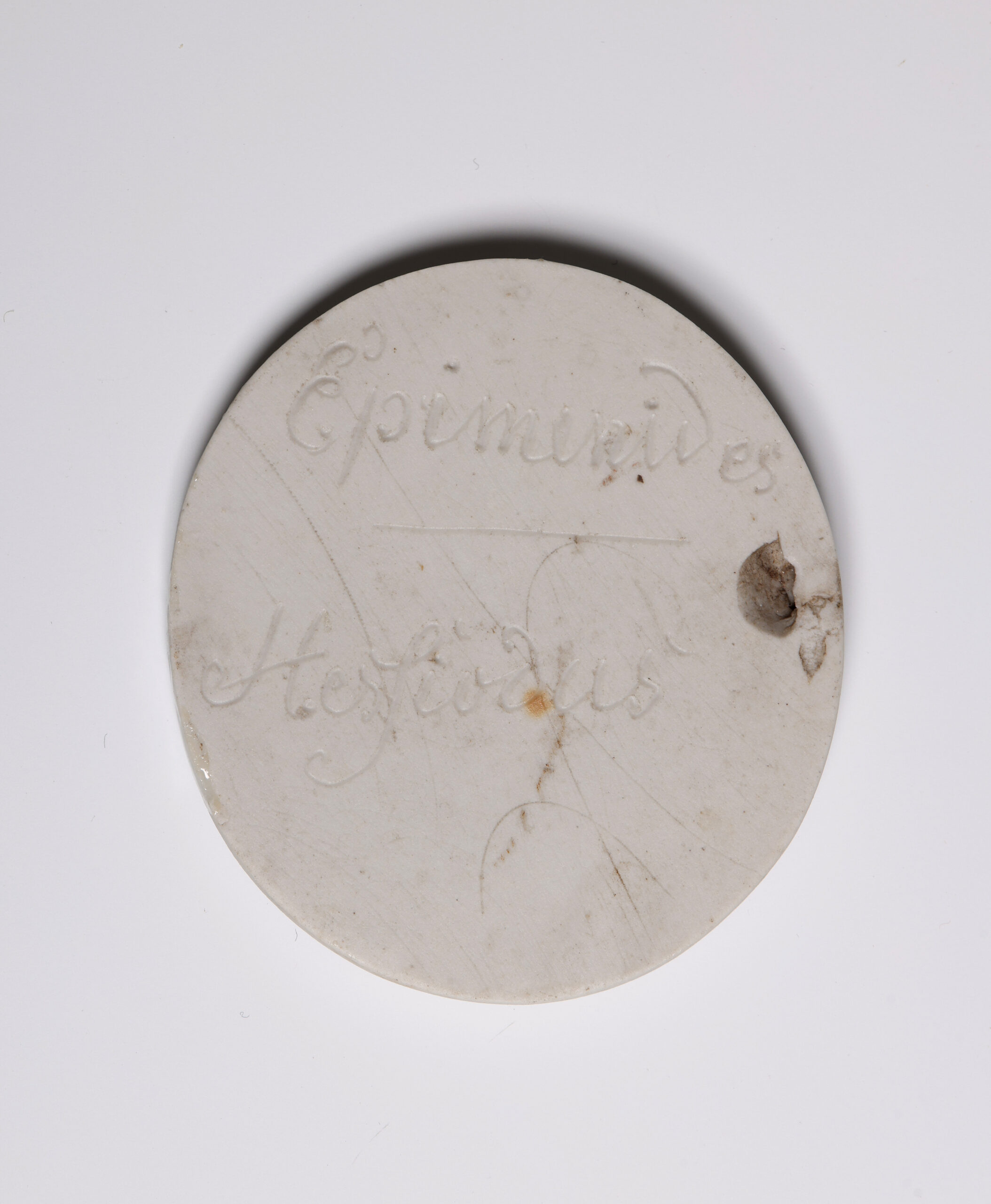
Each applied with two profile busts of Ancient Greeks, one with the astronomers Archimedes and Aristyllus, the other with the poets Epimenides and Hesiod, on a blue ground within a beaded moulded and glazed white frame, pierced for suspension.
The Ilmenau factory traces its origins back to July 8, 1777, when Christian Zacharias Gräbner, a porcelain maker from Großbreitenbach, received a concession from Duke Carl August of Saxe-Weimar-Eisenach to establish a porcelain manufactory in Ilmenau. Initially the factory did not prosper and it was eventually bought by the Duke had himself in 1786.
In 1775 the young Duke Carl August (1757–1828) visited the Wörlitz gardens of Prince Leopold Friedrich Franz of Anhalt-Dessau (1740–1817), whom he greatly admired, together with Johann Wolfgang Goethe (1749–1832). Here he became acquainted with the art-loving Prince of Dessau’s extensive collection of Wedgwood jasperware for the first time. At that time the English products were so expensive that even Prince Leopold had sometimes refrained from buying the goods offered to him personally by Wedgwood. The idea of producing similar products in his own porcelain factory, must have been inspired by this connection and the growing fascination with antiquity in the aristocratic circles on Germany.
Similar medallions are in the Belvedere museum, Weimar and the Stadt Ilmenau Amtshaus.
Condition:
Good , no restoration
References:
Kunze 2010
Kathrin Kunze, Ilmenauer Porzellan und Thüringer Unternehmergeist 1786 – 1838, (Exhibition catalogue: Goethe Stadt Museums Ilmenau, Ilmenau, 2010)
Price: £1,200
