

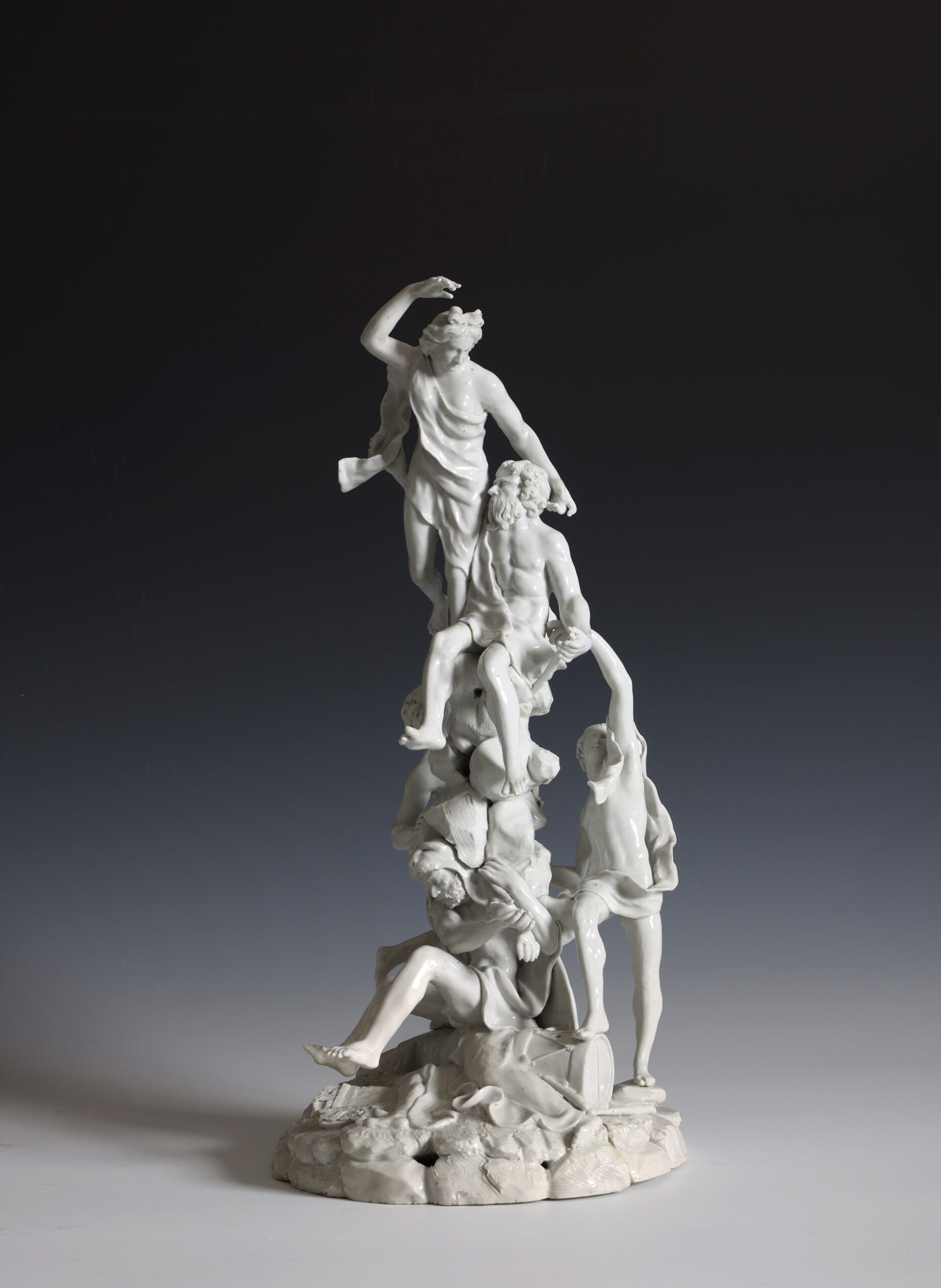
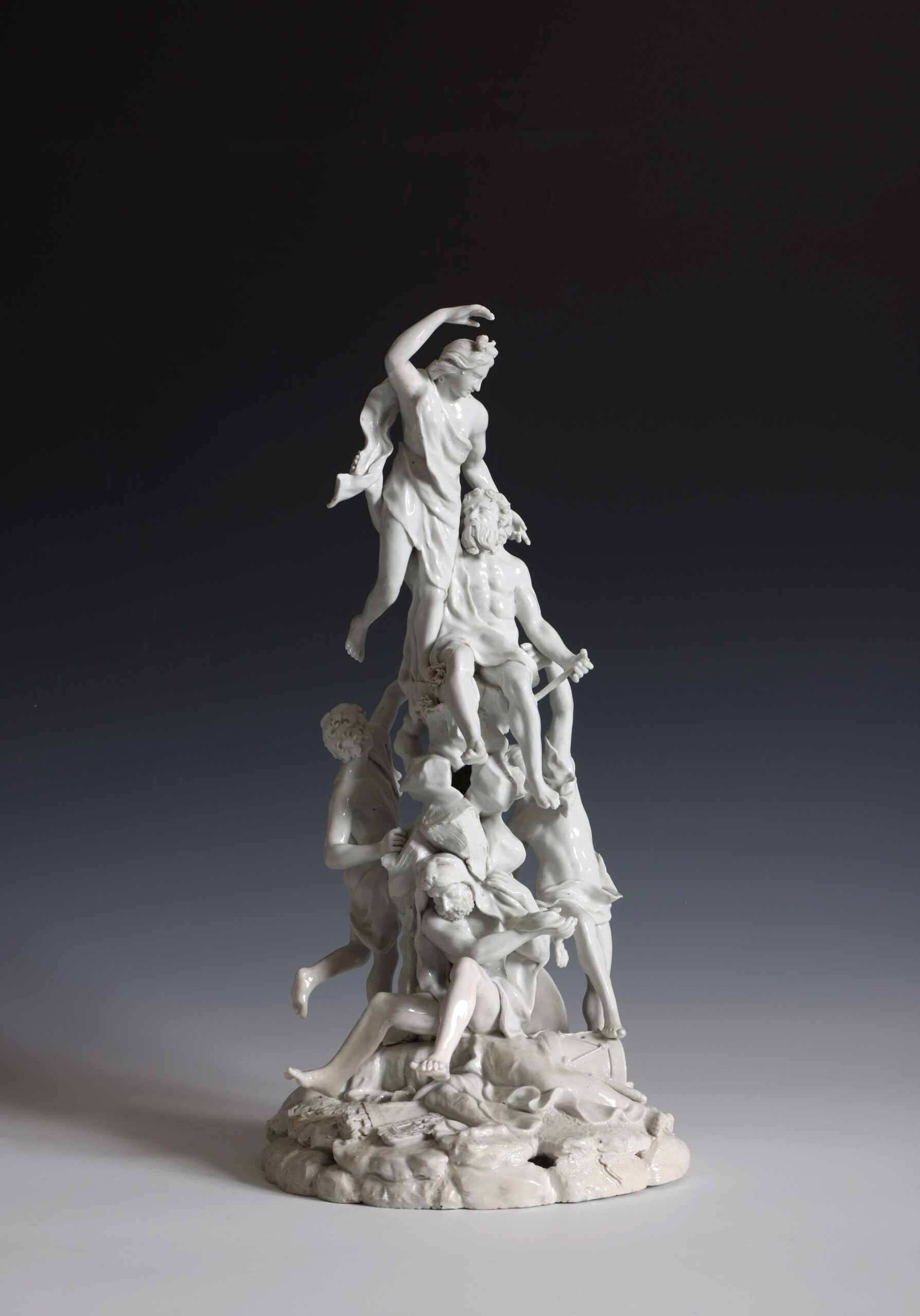
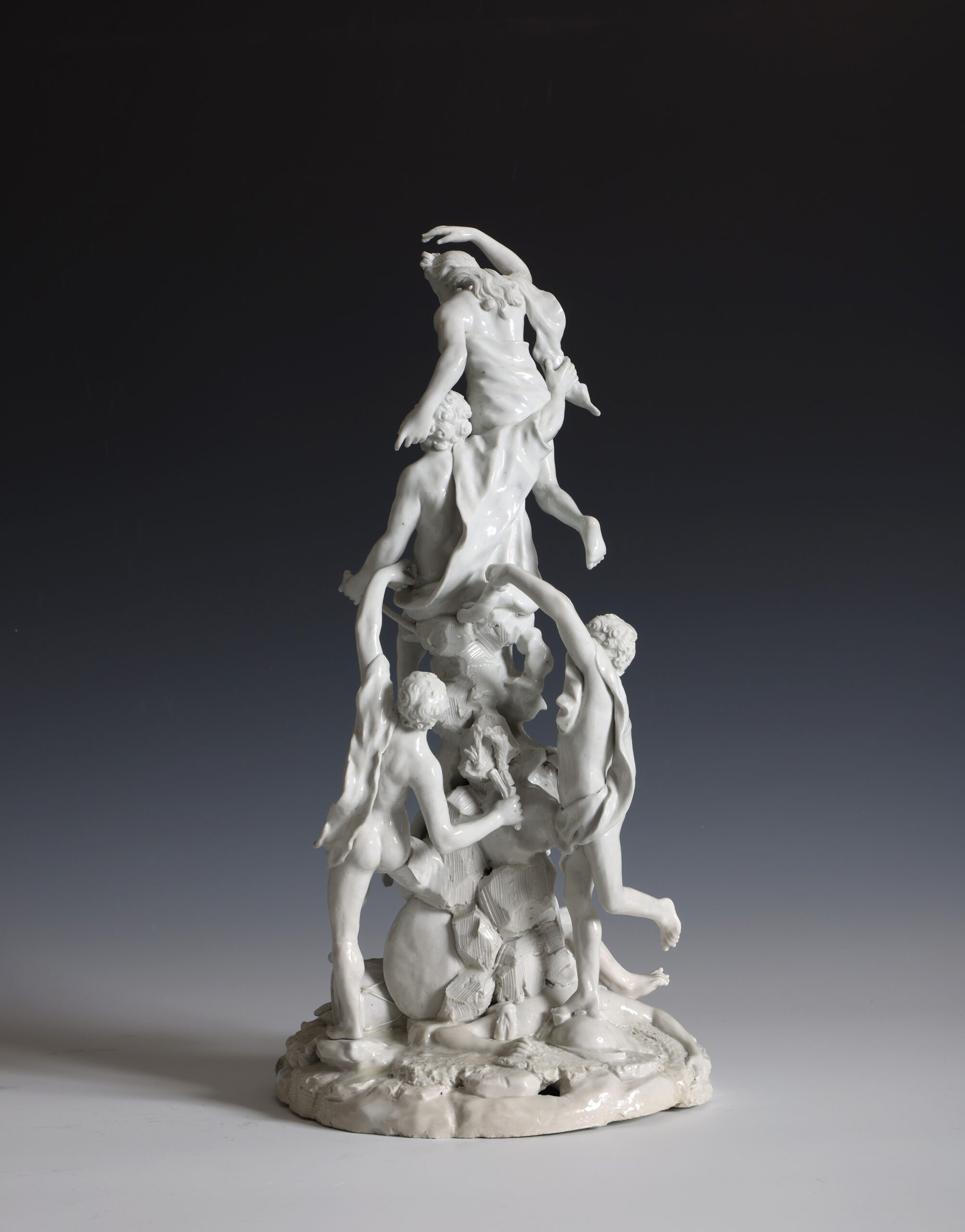
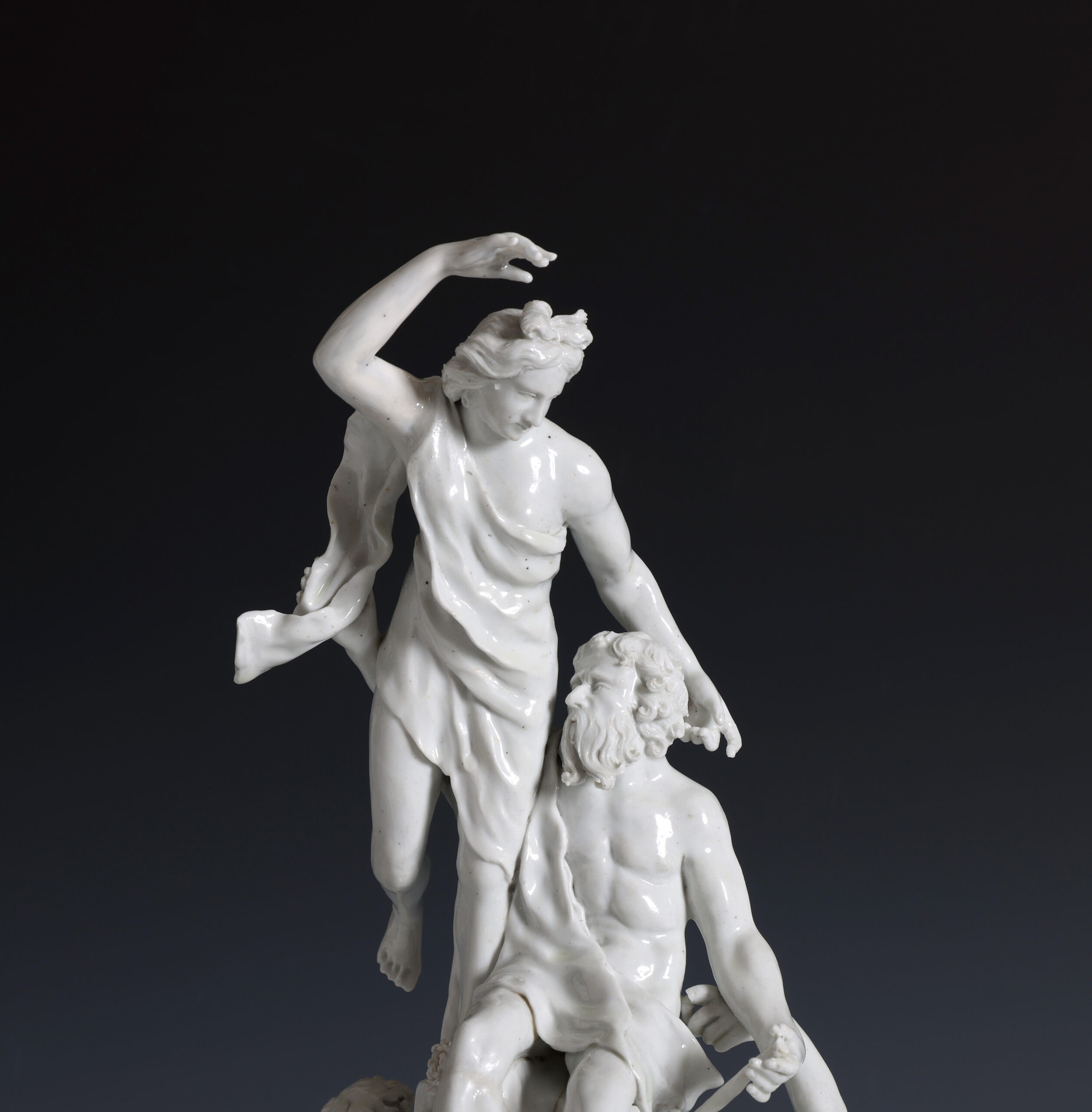
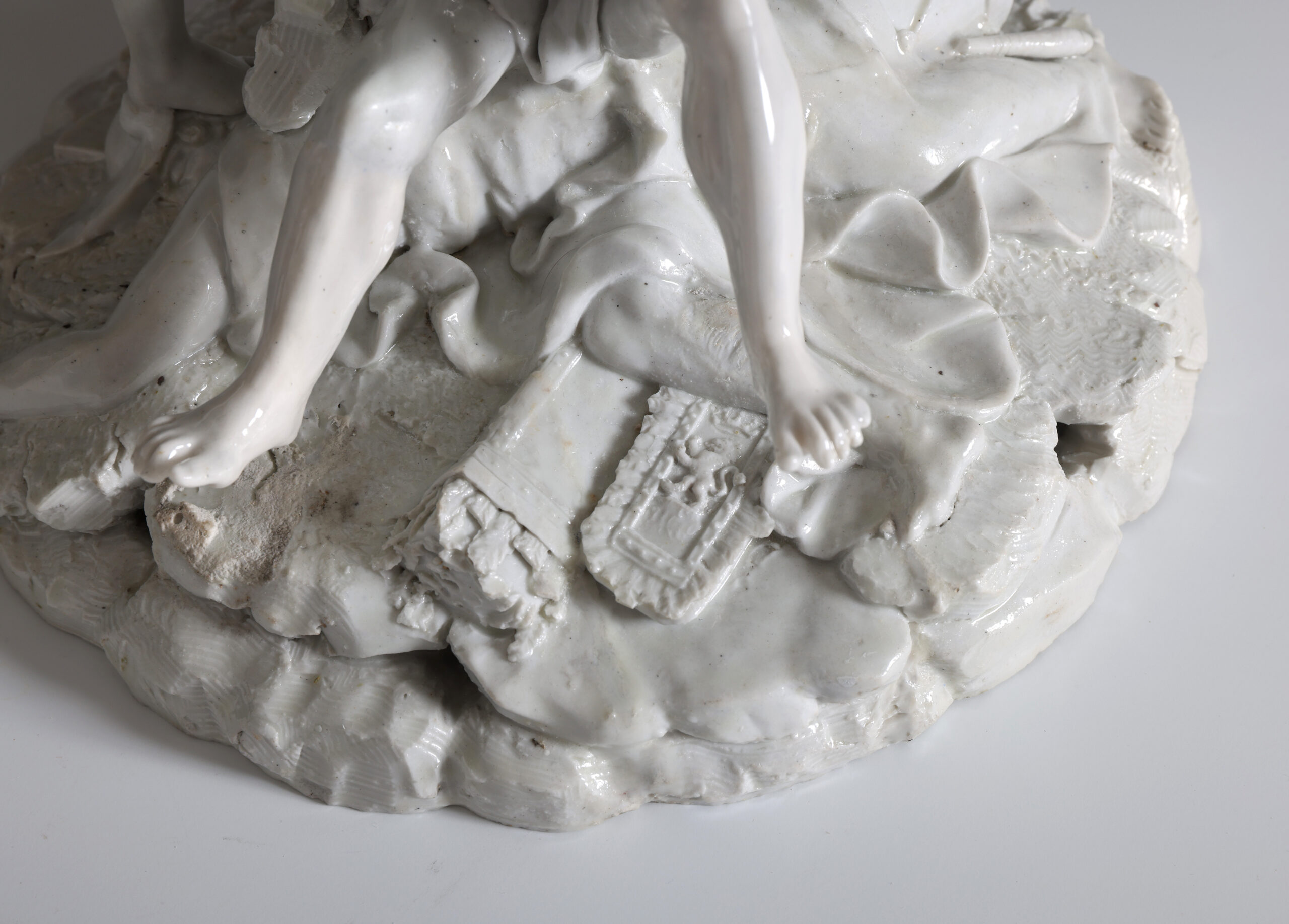
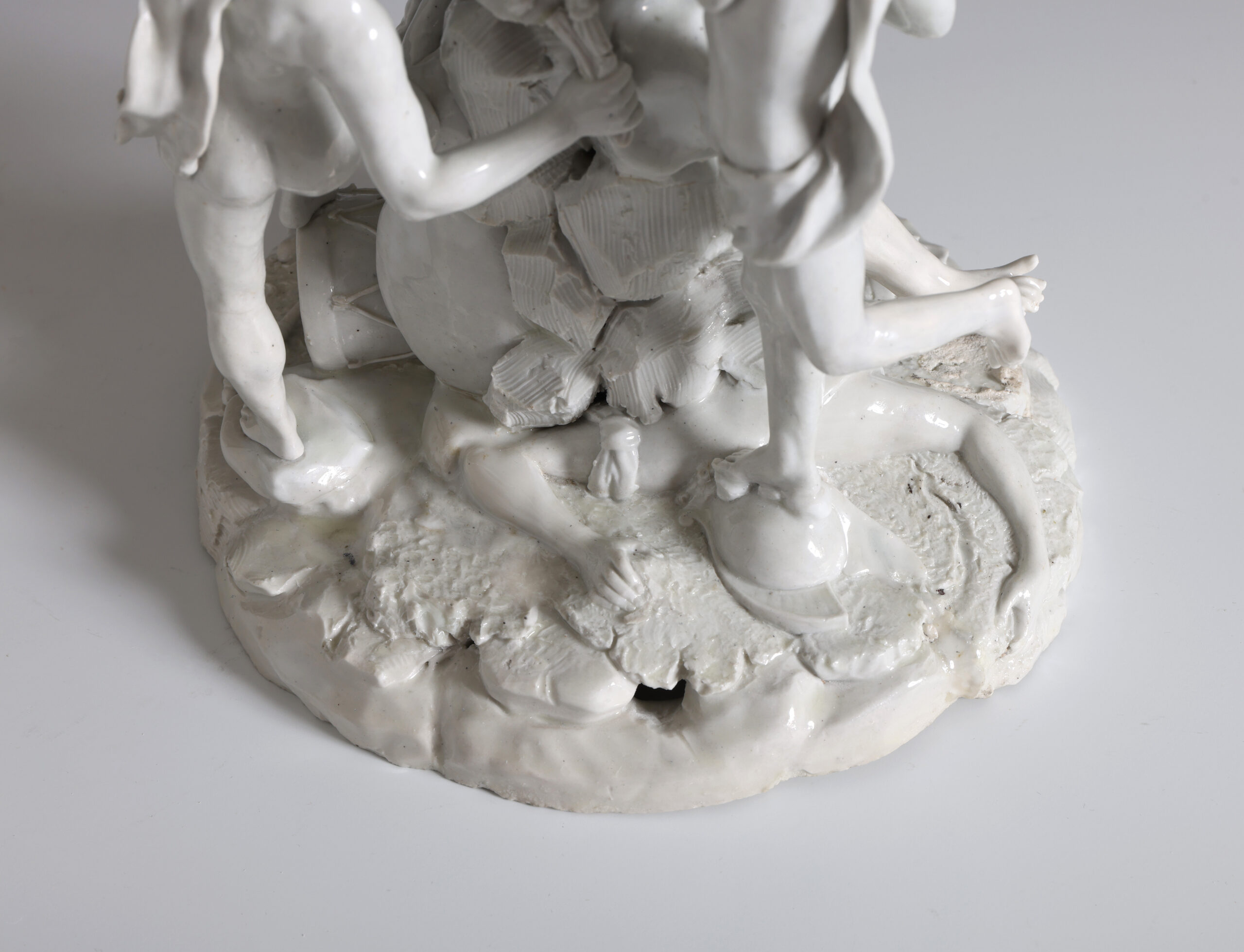
Modelled as Hercules seated on a crushed warrior below other Olympian gods, perhaps Neptune and Amphitrite, flanked by further figures.
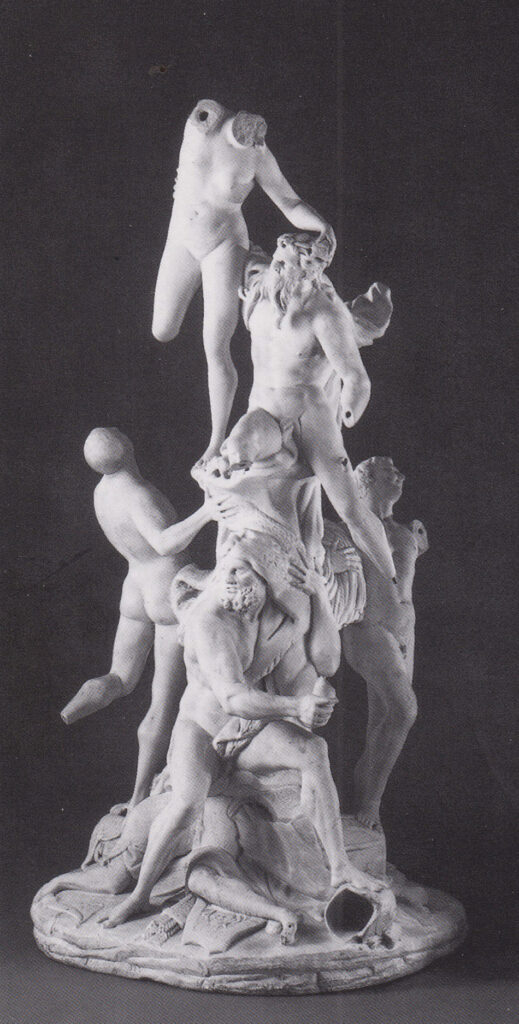
Marble by Francesco Bertos
Sold Sotheby’s New York, 23-24 November 1984, lot 181
Our group follows quite closely a fragmentary marble model by Francesco Bertos that Charles Avery tentatively suggests might represent Asia from a series of the continents, but notes that there are no attributes to support this.[1]

Jupiter defeating the Titans
Museo Duca di Martina, Villa Floridiana, Naples
A group of Jupiter defeating the Titans, which might be the pendant to our group, is in the Museo Duca di Martina, Villa Floridiana, Naples, suggesting that our group is more likely to represent further triumphs of the Olympian Gods. Whilst this is very much in the manner of Bertos, no bronze or marble version is recorded by Avery.
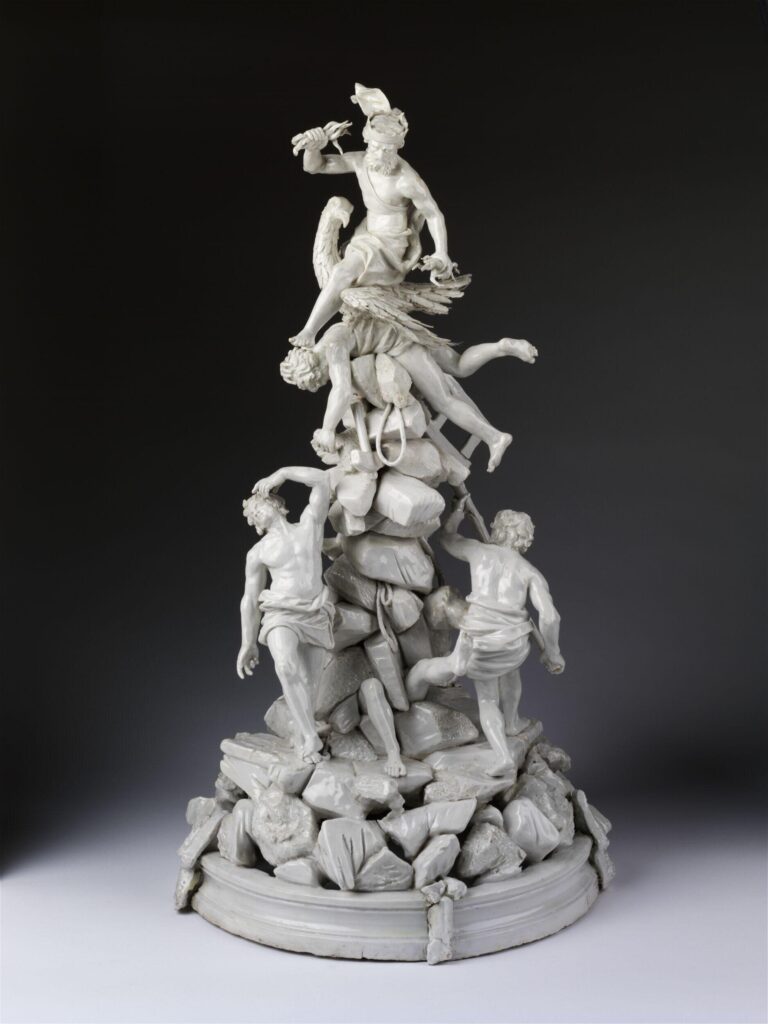
Jupiter defeating the Titans
Victoria and Albert Museum, accession no. 344-1905
Another version on a raised base of Jupiter defeating the Titans in the Victoria and Albert Museum has been attributed to the related Venetian factory of Le Nove. The porcelain of Geminiano Cozzi and that of Pasquale Antonibon of Le Nove both used the same china clay from Mount Tretto in the Dolomites and are difficult to differentiate on the basis of paste and glaze alone. Cozzi figures are rarely marked unlike their wares which almost always bear the painted anchor. There are more precedents for such centrepieces in Cozzi than Le Nove and the modelling seems less consistent with Le Nove, so we feel an attribution to Cozzi is much more convincing.
The distinctive style of Francesco Bertos (1678-1741) is characterised by elaborate pyramidal compositions of figures suspended in air. Although he worked in marble, they were more suited to bronze, as the metal’s tensile strength allowed greater experimentation with sculptural form. Some supporting elements have necessarily been adapted for porcelain.
Bertos was born and died in Dolo, a small town near Padua. He is also documented as working in Rome, Venice and Padua., He died in 1741. Due to his ability to create the illusion of weightlessness, he was accused of witchcraft and brought before the Inquisition which claimed that “It seems impossible that a human hand could have got so far”.[2] He escaped prosecution by demonstrating his skill by sculpting a work before the inquisitors.

We have not unravelled the significance of a heraldic symbol of a Crowned Lion Rampant on a shield by a quiver on the base beside the defeated warrior.
Condition:
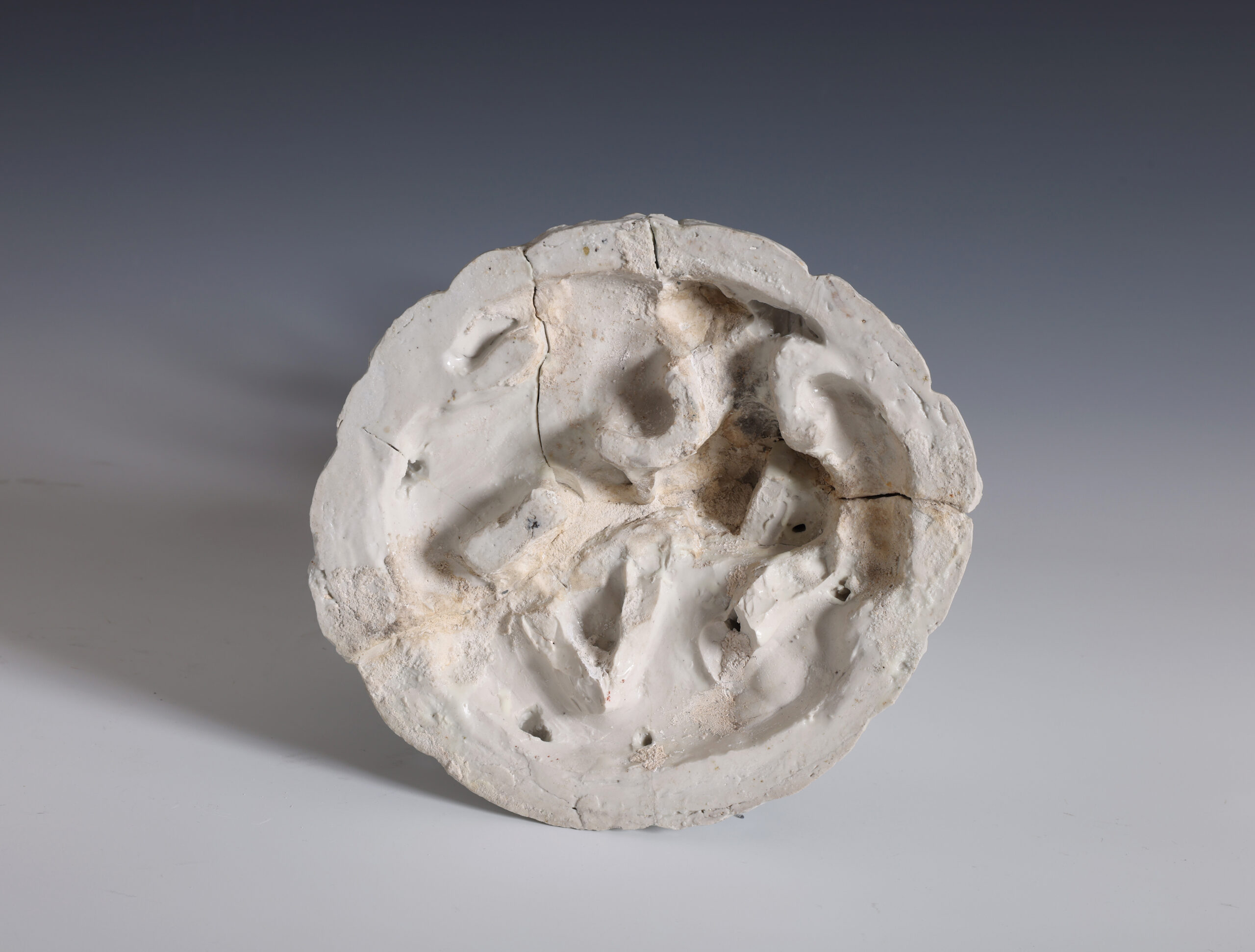
The base broken along old firing cracks into five sections. Two feet restuck and three feet and one arm restored.
References:
Avery 2008
Charles Avery, Bertos: Triumph of Motion, (Umberto Allemandi & Co, 2008)
—————————————————————————————————————————-
[1] Avery 2008, p.184 no 51. Four rather similar bronze groups by Bertos representing the four continents are in the Walters Art gallery, Baltimore, for Europe see: https://art.thewalters.org/object/54.660/
[2] Avery 2008 p. 37.
Price: £15,500
